
Jaw and tooth pain is difficult to place because the nerves supplying the teeth, the jaw joint, the ear and the sinuses all run close together. Pain from one is routinely felt in another, which is why people arrive convinced a particular tooth is the problem when it is not.
Before the nine causes, two questions narrow things down faster than anything else: where exactly does it hurt, and what makes it worse. A tooth that reacts to cold behaves differently from a joint that aches when you chew, and differently again from a sinus that hurts when you lean forward.
Facial pain felt around the cheekbone and toothaches are common complaints that can be confused with each other and negatively affect daily life. There may be a nighttime habit of clenching your teeth (bruxism) if you experience pain in your jaw or teeth, particularly upon waking up. The same holds true for the fact that a cracked tooth can occasionally cause abrupt tooth pain when eating. Tooth pain in the upper jaw and around the cheekbone can also be a sign of problems with nearby structures, like sinusitis.
In this article, we will discuss 9 common causes of jawbone and tooth pain, the underlying mechanisms of each cause, and recommended exercises or treatment methods for related conditions.
Where It Hurts Narrows the Cause
This is the sorting exercise a dentist runs through in the first two minutes of an appointment.
One tooth, sharp, triggered by cold or sweet
Points to the tooth itself: decay reaching the inner layer, an exposed root surface, or a crack. If the twinge stops within seconds of removing the trigger, the nerve is usually still healthy. If it lingers for a minute or more, the nerve is inflamed and that changes the treatment.
One tooth, throbbing, worse lying down
Suggests pressure inside the tooth, typically a dying or dead nerve. Lying flat increases blood pressure in the head, which is why this pain famously peaks at night. It usually needs root canal treatment rather than a filling.
Several upper teeth at once, worse when you bend forward
Often not dental at all. The roots of the upper back teeth sit directly beneath the sinus floor, so sinus inflammation presses on them and several teeth ache together. A single decayed tooth does not behave this way.
In front of the ear, worse through the day, clicking
The jaw joint rather than a tooth. Typically worse after chewing, talking a lot, or a stressful period, and often accompanied by tenderness in the muscles at the side of the face.
Dull ache in the jaw on waking
Usually grinding or clenching overnight. The teeth themselves may be fine while the muscles that worked all night are not.
Pain that moves, or that you cannot locate
Pain travelling along the jaw without an obvious source is the pattern most likely to be referred from elsewhere, including the ear, the neck muscles, or in rarer cases the heart. Jaw pain with chest tightness, breathlessness or sweating is a medical emergency, not a dental one.
When Jaw or Tooth Pain Needs Urgent Care
Most of the nine causes below are dealt with at a normal appointment. These are the exceptions:
- Swelling spreading across the face or into the neck, especially if firm
- Difficulty swallowing, breathing, or opening your mouth fully
- Fever or feeling generally unwell alongside the pain
- Jaw pain with chest pain, breathlessness, nausea or sweating. This can be referred cardiac pain, particularly in women, and needs emergency medical attention rather than a dentist
- Jaw pain after a blow or fall, or if the teeth no longer meet correctly
- Numbness of the lip or chin that does not resolve
Where the problem is clearly dental and none of the above applies, our guides to tooth abscess and gum boils cover what happens next.
1. Tooth decay and pulp inflammation
The inflammation and irritation of the pulp that results from tooth decay is the leading cause of toothaches. When decay that starts in the enamel of the tooth progresses and reaches the pulp tissue, severe pain occurs. As the decay progresses, the pain becomes more severe and constant, although it starts out as short throbbing episodes when eating hot or cold foods.
When a broken tooth or an extremely deep cavity exposes the pulp's nerves, it causes pain similar to that of a root canal. In such cases, you should see a dentist without delay to prevent the infection from spreading.
2. Gum diseases (gingivitis and periodontitis)
Gum disease generally manifests itself with redness, swelling, and bleeding in the gums, but in some cases it can also be perceived as referred pain. Especially in cases of advanced periodontitis, the inflammation spreads to the bone tissue surrounding the tooth and can cause dull pain and a feeling of looseness in the teeth.
Indecent and cold sensitivity are symptoms of gum recession, which is a result of gum disease and causes toothache. These kinds of pains typically come on suddenly in response to certain stimuli and go away as soon as they're no longer present.
3. Tooth fractures and cracks
Cracks in the tooth enamel or a broken piece of the tooth may not always be clearly visible but can cause severe pain. In cases of cracked tooth syndrome, in particular, the patient often does not experience pain even though there is a tiny crack on the tooth that is not visible to the naked eye. However, when biting down on something hard or applying pressure to the cracked tooth while chewing, a sharp pain occurs; when chewing stops, the pain may suddenly disappear. The crack in the tooth structure opens and closes under pressure, causing this.
While some small cracks cause no symptoms, deep cracks can cause sensitivity to hot and cold and constant pain when they affect the tooth's nerve. The fracture may also be accompanied by a throbbing pain and swelling in the surrounding tissues if it is located in close proximity to the tooth's nerve or has reached the pulp.
4. Impacted or erupting teeth
A common issue that can cause pain in both the teeth and surrounding tissues is an impacted tooth, which is a tooth that either cannot erupt fully within the jaw or remains partially erupted. This is particularly common with wisdom teeth. Impacted wisdom teeth that are unable to fully erupt, resulting in pressure in the jaw, can cause soreness in neighbouring teeth and general jaw/cheek pain. The additional pressure exerted on the impacted tooth can result in excruciating pain in the morning, particularly if you have a tendency to grind your teeth at night.
Impacted teeth can cause not only pain, but also inflammation (pericoronitis), swelling, and trismus (limited mouth opening) in the surrounding tissues. Especially in the vicinity of a partially erupted wisdom tooth, the gum can easily become inflamed, resulting in both throbbing pain in the affected area and generalised ear and jaw pain. In fact, teeth buried near the sinuses in the upper jaw can even contribute to sinus-like facial pain by pressing on the sinus floor.
5. Teeth grinding and clenching (bruxism)
Teeth grinding or clenching, which is a prevalent issue that results in facial muscle and tooth pain, may occur unconsciously during sleep or throughout the day. This condition, bruxism, frequently leads to patients experiencing jaw, facial, and head pain upon awakening in the morning.
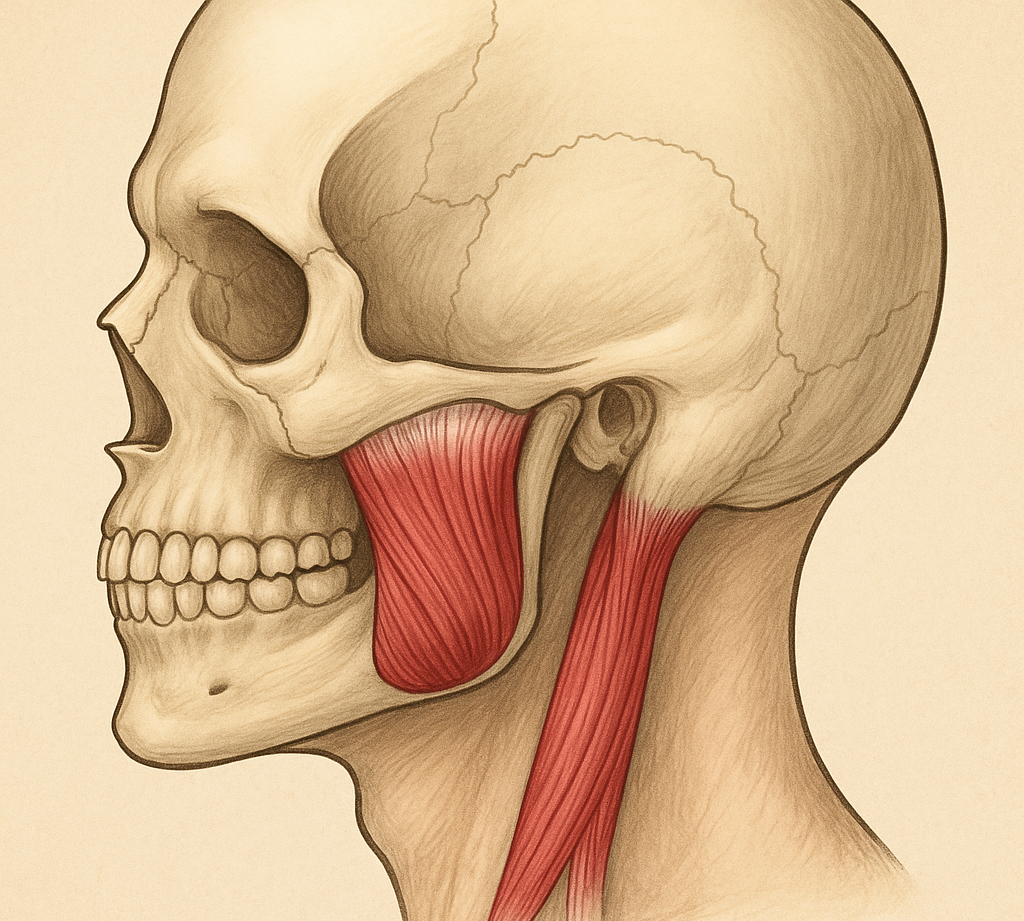
Bruxism-related pain usually subsides within a few hours after waking up in the morning, but in chronic cases, jaw fatigue and sensitivity may also be present throughout the day. The patient may feel tenderness in the masseter muscles when pressing on the cheek area; sometimes clicking and limited movement may also be observed in the jaw joint.
6. Temporomandibular joint disorders (jaw joint pain)
The temporomandibular joint (TMJ), which connects the lower jaw to the skull, is a complex structure that can be subjected to intense stress during movements such as chewing, speaking, and yawning. Any disorder affecting this joint or the surrounding muscles can cause pain both in the joint area and in the face.
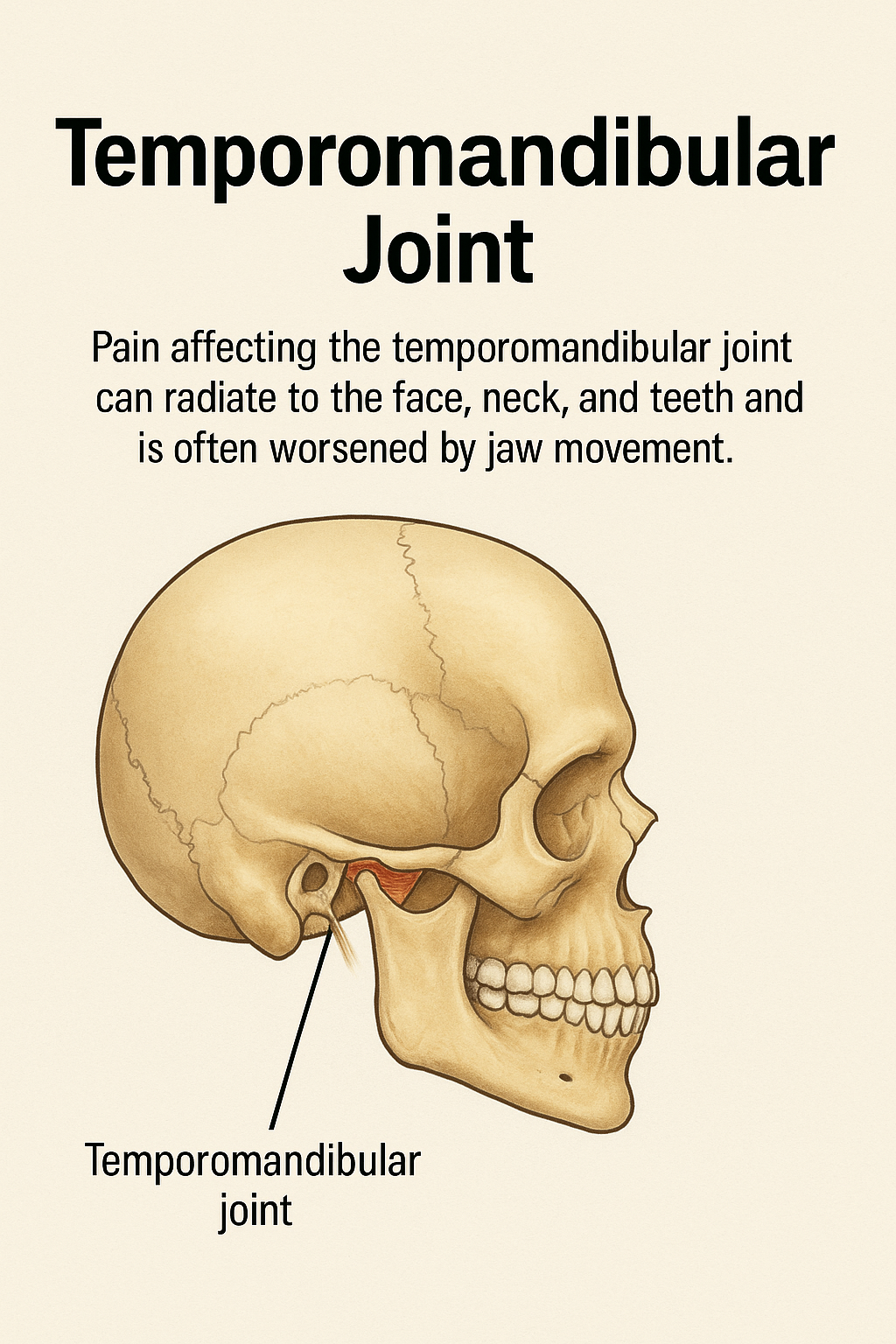
TMJ disorders include temporomandibular joint disc problems, joint inflammation (arthritis), jaw dislocation/subluxation, and muscle-related pain syndrome. Symptoms include clicking sounds in the jaw joint, limited or slipping movement when opening and closing the mouth, and tenderness and pain in the area in front of the ear.
Jaw joint pain is often confused with toothache because the pain can be felt not only in the joint but also in the cheeks, temples, and even the teeth. Inflammation or disc problems in the temporomandibular joint can cause pain that radiates to the cheekbone area and lower jaw teeth.
However, inflammation and irritation in the temporomandibular joint can cause pain in the face, neck, and teeth. Experiencing pain in your teeth and jaw when eating or talking could be due to joint dysfunction. So, it's important to check the jaw joint even if regular dental exams don't reveal anything wrong.
7. Sinusitis (sinus infections) and referred pain
Sinusitis is a significant medical condition that does not originate from teeth but rather affects the upper jaw area. The sinuses are hollow spaces in the cheekbones that are in close proximity to the roots of the upper molars. The maxillary sinus floor is adjacent to the roots of the upper jaw teeth, particularly the molars. Consequently, an infection or an increase in pressure in these sinuses can manifest as toothache-like pain. For the most part, patients are unable to pinpoint the precise location of the pain, which is typically experienced in multiple upper teeth simultaneously.
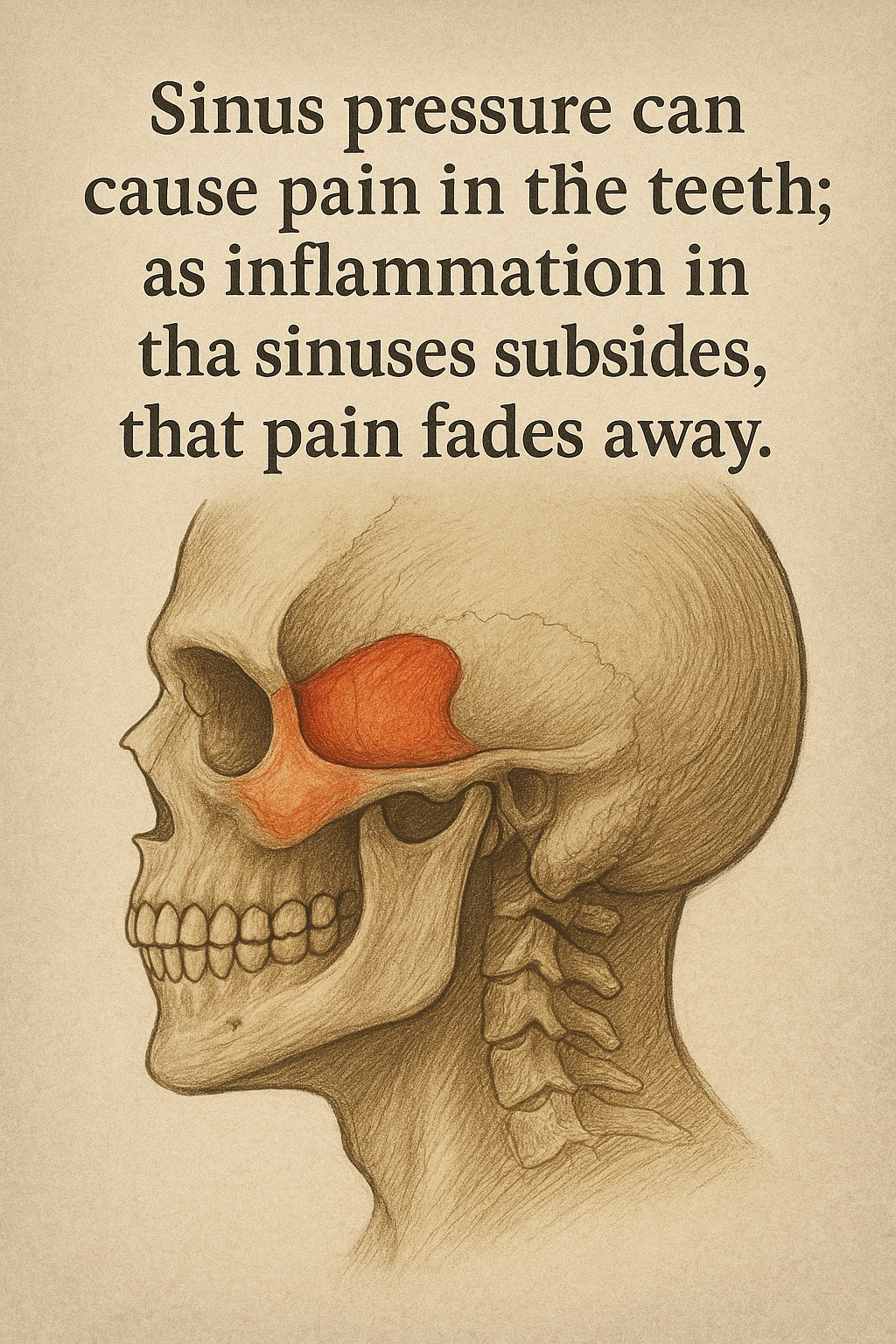
Typically, sinus-related tooth and facial pain is characterised by an increase in pain in response to changes in head position, such as bending forward or lying down. This is due to changes in the pressure of the inflammatory sinus fluid. In addition, tooth pain may be accompanied by symptoms such as nasal congestion, facial fullness, and headache in the presence of sinusitis.
8. Trigeminal neuralgia and neuropathic facial pain
Neurological reasons may be the source of certain facial and dental discomforts. It is a result of compression or damage to a branch of the trigeminal nerve, typically the upper or lower jaw nerve, that causes this condition. Patients with trigeminal neuralgia often believe this pain originates from a tooth and first consult a dentist. This is because the pain can be felt quite sharply in the jaw and tooth area and, in some cases, begins suddenly with triggering movements such as eating, talking, or washing the face.
The pain is usually felt on one side and lasts from seconds to several minutes, in the form of very severe stabbing pains. These episodes can happen multiple times a day, making the patient's life a living nightmare. Patients may sometimes go so far as to have healthy teeth extracted because they may think the pain is coming from the teeth. However, the problem is not with the teeth, but with the transmission of the nerve.
In addition to trigeminal neuralgia, rarer types of nerve pain such as atypical odontalgia (chronic tooth pain with no identifiable cause) or postherpetic neuralgia (pain in the facial nerve following shingles) can also cause chronic pain in the dental region.
9. Closing (biting) problems and old filling/capping issues
If your teeth do not make proper contact with one another, they may be subjected to excessive pressure during chewing. This can result in discomfort in the tooth or the surrounding tissue. Particularly after the placement of a new filling or crown, the patient may experience mild discomfort when biting down, which may indicate that the restoration is too high and necessitates revision (trimming).
Over time, old fillings may loosen or develop edge leakage, which can also cause pain. In addition, a loose filling piece can move when biting, putting pressure on the tooth. When a filling is loose, bacteria can seep underneath it and irritate your tooth and possibly your nerve.
FAQ's
When I eat sweets, I feel a brief twinge, then it goes away. What causes this?
This usually indicates early-stage tooth decay. Short-term sensitivity to sweet, hot, or cold foods stems from minor damage to the tooth enamel. It is important to see a dentist before the decay progresses; a simple filling may be sufficient. Early treatment prevents nerve inflammation and root canal treatment.
My gums are swollen and bleeding, but the pain seems to be coming from the tooth. Could this be caused by the gums?
It is most likely the onset of gum inflammation (gingivitis). When the gum tissue becomes inflamed, the pain sometimes feels as if it is coming from the tooth. In advanced cases, periodontitis can develop, so early detection is important.
When I bite something, I suddenly feel a sharp pain, which goes away when I stop. Could it be a crack?
Yes, this description fits cracked tooth syndrome. When there is a microscopic crack in the tooth, it opens during biting and puts pressure on the nerve.
I wake up with sore and tired jaw muscles in the morning. What could be the reason for this?
This type of pain is usually a symptom of bruxism (teeth grinding). When teeth are clenched unconsciously during sleep, the masseter muscles tense up, causing jaw fatigue in the morning.
Several of my upper teeth hurt at the same time, and the pain increases when I bend forward. What could be the cause of this?
This is a typical symptom of maxillary sinusitis. Increased pressure in the sinuses reflects on the upper tooth roots, making it feel as if all teeth are aching. The fact that the pain increases when the head position changes also indicates that it is sinus-related. Treatment should be performed by an ENT specialist; the toothache subsides as the sinuses are cleared.
I get short, intense attacks on my face, like electric shocks. I think it's from my teeth, but it doesn't go away.
This definition is consistent with Trigeminal Neuralgia. It causes pain in the trigeminal nerve area of the face, similar to a second-long electric shock. It is not caused by teeth; it is a neurological condition. A neurological evaluation is required instead of dental treatment; it is usually treated with medications that reduce nerve pressure.
After getting a new filling, one of my teeth hurts when I bite down. What could be the reason for this?
If the filling is too high, excessive pressure is placed on that tooth during chewing, causing pain. This situation can be easily corrected by a dentist through measurement. When necessary, the filling surface is filed down or reshaped. If treatment is delayed, sensitivity in the tooth nerve may develop.
A small piece of my tooth broke off; it's throbbing right now. What should I do at home, and how will it be treated at the clinic?
Result
If you experience pain in the cheekbone area whose cause you cannot identify, dental clinics should be your first port of call. After that, you may need to be examined by ENT specialists and neurologists. Finding the source of this pain, which reduces your quality of life, should definitely not be neglected, because whether the pain is caused by your teeth or something else, it will continue to increase in intensity and reduce your quality of life if left untreated.
Jaw and Tooth Pain: Common Questions
The questions patients ask us most often about pain in the jaw and teeth.
Tooth pain is usually sharp, localised to one place, and triggered by cold, sweet things or biting. Joint pain is duller, sits in front of the ear, builds through the day and is worse after chewing or talking a lot. Clicking, or tenderness in the muscles at the side of the face, points to the joint. If you cannot decide, note when it is worst, as that pattern often identifies it.
Most often this is the sinus rather than the teeth. The roots of the upper back teeth sit directly beneath the sinus floor, so inflammation there presses on several of them together. The giveaway is that it worsens when you bend forward or lie down, and that it often follows a cold. A single decayed tooth does not make a group of neighbours ache simultaneously.
Lying flat raises blood pressure in the head, which increases pressure inside a tooth whose nerve is inflamed or dying. There are also fewer distractions at night, so the same pain registers more strongly. A toothache that reliably peaks when you lie down usually means the nerve is involved and the tooth needs root canal treatment rather than a filling.
Almost always grinding or clenching during sleep. The teeth themselves may be perfectly healthy while the muscles that worked through the night are exhausted. Other signs include flattened biting surfaces, headaches around the temples on waking, and a partner who has heard the grinding. Treatment begins with a night guard and with addressing what drives the clenching.
Yes, particularly when they are impacted or only partly through. A tooth pressing against its neighbour, or a flap of gum over a partly erupted tooth trapping debris underneath, both produce pain that spreads along the jaw. The pain often feels more diffuse than a straightforward toothache, and it can reach the ear and the side of the head.
It can be. Jaw pain accompanied by chest tightness, breathlessness, nausea or cold sweats may be referred cardiac pain, and that is a medical emergency rather than a dental problem. It is a recognised presentation in women in particular. Ear infections, neck muscle problems and certain nerve conditions can also present as jaw pain with no dental cause at all.
A twinge that stops within seconds of removing the trigger usually means the nerve is still healthy and the problem is at the surface: early decay, an exposed root, or a worn area at the gumline. Pain that lingers for a minute or more after the trigger has gone suggests the nerve is inflamed, which is a different situation and needs treating sooner.
A few days of sensitivity is common while the tooth settles. Pain specifically when you bite down, rather than with temperature, often means the filling is fractionally too high and the tooth is taking more force than its neighbours. That is a quick adjustment and worth booking rather than waiting, because persistent overloading can inflame the nerve.
If the pain is mild and settles on its own, a routine appointment within a week or two is reasonable. Go sooner if it wakes you at night, if a tooth is tender to bite on, or if it has lasted more than a few days. Go immediately if there is facial swelling, fever, difficulty swallowing or opening your mouth, or numbness of the lip or chin.