
What is Zirconium Porcelain Veneers in dental implant treatment? What should be considered for Zirconium Porcelain Veneers in dental implant treatment in Antalya?
Zirconium veneers are quite durable materials and can easily last up to 15 years if the right oral care methods are applied. However, in many patients, it is seen that this period can be extended up to 20 years or more. According to the 10-year clinical observation of zirconium veneers published in the Journal of Oral Rehabilitation, zirconium veneers have a survival rate of 88.2% at the end of 10 years.
Zirconium porcelain veneers treatment in Turkey
Zirconium veneers are produced with a CAD (computer-aided design) production system. The zirconium infrastructure is obtained through scraping the design prepared according to the tooth form on the computer. Zirconium is biologically compatible with body tissues, and it has a light-transmittance structure.
Zirconium has more adhesion resistance than other veneers and has a longer lifespan. Since they do not have metallic structures that are harmful to health, they do not cause irritating allergies such as swelling, bruising or gingival recession, etc., and can be used safely by patients.
What is Zirconium Porcelain Veneers?
Zirconium veneers are obtained by melting the zirconium element at 2800 degrees. With their appearance close to natural teeth and their solid structure, zirconia veneers are securely recommended by dentists.
Who is the best candidate for zirconium porcelain veneers?
Before having zirconia veneers, it is beneficial to comprehend some essential details about dental veneers and the prerequisites for their arrangement.
Free Appointment - Zirconium Porcelain Dental Implants
You can make a free appointment below to have a dental implant in Antalya.
20+ years of dental treatment experience and professional patient services.
Zirconia Veneers Candidates;
1. Severely Stained Teeth
For mild stains, bleaching techniques can provide a productive solution, but for more severe conditions, stains won’t respond to bleaching products.
2. Patients with Cosmetic Issues
Porcelain zirconia veneers are beneficial for covering malformed teeth, cracks, gaps, and chips.
3. Having Enough Tooth Enamel
For a healthy attachment of zirconium veneers, a sufficient amount of tooth enamel must be scraped. So, a healthy bonding process may not be performed in patients with insufficient enamel on their tooth surfaces.


Steps of Zirconium Porcelain Veneers
You can have your zirconium veneers in a few simple steps.
- Anesthesia is administered to the patient in order not to feel pain.
- The teeth to be processed are trimmed to an appropriate amount and measured.
- Temporary teeth are attached to the processed teeth,
- Tooth color selection is made with the patient, and the last measurements are taken.
- In about 5 days, the measured veneers are crafted, and the patient is called for the last session.
- The temporary veneers are removed, and permanent teeth are replaced.
- After the treatment, the dentist orders a few periodic clinic checks to ensure they stick firmly.
How long does zirconia porcelain veneers last?
Zirconium veneers are quite durable materials and can easily last up to 15 years if the right oral care methods are applied. However, in many patients, it is seen that this period can be extended up to 20 years or more. According to the 10-year clinical observation of zirconium veneers published in the Journal of Oral Rehabilitation, zirconium veneers have a survival rate of 88.2% at the end of 10 years. However, it has been observed that 40 percent of the patients also have small chippings on their zirconia veneers.
How much does zirconium veneers cost?
Since dental veneers are made for aesthetic purposes, they are not covered by insurance, so most patients tend to prefer countries that provide advanced quality services with lower treatment costs. Turkey is among the top countries that offer these high-quality treatments with its glorious vacation opportunities. You can review the price comparisons table for zirconium porcelain veneers cost below.
| Turkey Zirconia Veneer Prices | UK Zirconia Veneer Prices | Europe Zirconia Veneer Prices | USA Zirconia Veneer Prices | |
| Prices for single teeth | $150-$250 | £550-£800 | €500-€900 | $800-$2000 |
| Prices for 6 teeth | $650-$1000 | £3000-£3500 | €2600-€3500 | $3000-$6000 |
| Prices for 8 teeth | $800-$1250 | £4200- £4800 | €3500-€4500 | $4000-$6500 |
| Prices for 10 teeth | $1800-$2000 | £5000-£6000 | €5000-€6000 | $6500-$9000 |
| Prices for More than 10 teeth | $2500-$3000 | £8000-£10000 | €8000-€10000 | $12000-$18000 |
Advantages and Risks of Zirconia Porcelain Veneers?
Zirconium veneers are among the most preferred veneers thanks to the many advantages they provide. The most significant advantages are;
- They have a structure that is at least two times stronger than porcelain veneers, and their survival epochs are 20% longer than porcelains.
- Since they do not contain metal, they also do not cause any discomfort in the mouth.
- They are the most compatible veneers with body tissues.
In addition to its advantages, zirconium veneers also have some cons that you need to know. Among the most important of these;
- They require more scraping from tooth enamel than porcelain veneers . (0.8-1.5mm)
- Although they provide the desired appearance from an aesthetic point of view, their light transmittance is not as good as porcelain veneers.
Zirconium Porcelain Treatment in Turkey
Turkey has almost 150 years of experience in modern dental treatments and has proven its quality worldwide. Especially in the last ten years, with the promotional advantages provided by the internet and social media, people from Europe, America, Russia, and many different parts of the world have met with the quality dental services Turkey provides at affordable prices.
Successful dental clinics in Turkey prefer to provide more clinical services in Antalya, taking into account the holiday needs of their patients. If you want to have your dental treatment in Antalya, which is among the most attractive tourists destination in the world, you can visit https://www.antlaradental.com/en/contact


How long stay in Turkey for Zirconium Veneers?
Zirconia porcelain veneers Turkey treatment can typically be completed in 5 days or one week. It is usually sufficient to visit the dental clinic twice for this treatment. It may also be necessary to call the patient for a check-up after treatment. In this case, patients can have their check-ups in their countries.
Zirconium Veneer or Zirconium Crown? The Difference You Are Paying For
This is the most misunderstood point in cosmetic dentistry quotes from Turkey, and it is worth being direct about it. A great deal of work sold as zirconium veneers is in fact zirconium crowns. The two are not the same treatment, they do not remove the same amount of tooth, and a patient who thinks they are getting one and receives the other has not been told something important.
| Veneer | Crown | |
|---|---|---|
| Covers | The front surface and the biting edge | The entire tooth, all the way round |
| Tooth reduced | A thin layer from the front | Every surface, typically 1 to 2 mm |
| Needs | A sound tooth with healthy enamel | Works on a weakened or heavily filled tooth |
| Reversible | No, but far less is lost | No, and considerably more is lost |
Why the terms get mixed up
Zirconia is strong, which means it can be made as a full crown very reliably. It is also opaque compared with glass ceramics, so where a veneer is wanted on a front tooth for appearance alone, zirconia is often not the material of choice. In practice, when a clinic quotes zirconium for a full smile, the restorations are usually full coverage crowns. That can be entirely correct treatment, particularly on teeth that are already filled, worn or discoloured. It stops being correct when healthy teeth are crowned because crowning is simpler than planning.
The question to ask, word for word
For each tooth, is this a veneer covering the front surface, or a crown covering the whole tooth, and why is that the right choice for that tooth? A plan that answers tooth by tooth was made from your mouth. A plan where all twenty are the same was made from a price list. Our crowns versus veneers page covers the clinical threshold, and zirconia crowns covers full coverage work in detail.
Zirconia or E-max: The Trade You Are Making
Strength and translucency pull against each other in ceramics. Understanding that single trade explains almost every material recommendation you will be given.
| Zirconia | E-max, lithium disilicate | |
|---|---|---|
| Strength | Very high | High |
| Translucency | Lower, more opaque | Higher, closest to enamel |
| Masking a dark tooth | Its main advantage | Limited, the darkness shows through |
| Thickness needed | Can be made thinner | Needs a little more room |
| Best position | Molars, bridges, discoloured teeth, heavy bites | Front teeth where appearance leads |
When zirconia is the right answer
- The underlying tooth is dark, root treated, or has a metal post. A translucent material would show it; zirconia hides it.
- The bite is heavy, or there is grinding.
- The restoration spans several teeth as a bridge.
- Back teeth, where load matters more than translucency.
When e-max is the better choice
- Front teeth on a reasonably light underlying shade, where the goal is for nobody to be able to tell.
- Thin veneers on sound enamel, where the bond to enamel does the work.
Many well planned cases use both: zirconia where strength or masking is needed, e-max where the eye goes first. A clinic that uses one material for every tooth in every mouth has chosen for its own workflow. Our e-max veneers page covers the alternative, and zirconium crowns versus porcelain compares it with the older option.
Monolithic or Layered Zirconia, and Why Restorations Chip
Not all zirconia is made the same way, and the difference explains most zirconia failures. It is almost never mentioned in a quote, and it is worth asking about.
Monolithic zirconia
Milled from a single block and then stained and glazed on the surface. There is no weaker layer on top, so it is very resistant to chipping. The limitation is appearance: surface staining gives less depth than built up porcelain, which matters most on upper front teeth. Newer multilayer blocks have narrowed that gap considerably.
Layered zirconia
A zirconia core with feldspathic porcelain built up over it by hand. This looks the most lifelike, because the technician can create depth and translucency rather than paint it on. The weakness is the interface: the porcelain layer is far weaker than the core underneath, and chipping of that veneering porcelain is the single most reported mechanical complication in full arch ceramic work.
How the choice is usually made
Monolithic at the back where the load is, layered or multilayer at the front where the eye is, and monolithic throughout for a grinder regardless of position. If you grind and you are being quoted layered zirconia on your molars, ask why.
One thing that is in your control
A night guard. Grinding is the most common reason ceramic chips, and it is the one risk factor a patient can act on. Ask whether a guard is included in the quote, because it is routinely omitted and it protects the whole investment.
Masking Dark Teeth: What Zirconia Does That Other Materials Cannot
This is the job zirconia is genuinely best at, and it is why the material exists in cosmetic work at all.
The problem with a dark underlying tooth
A translucent ceramic behaves a little like frosted glass. It lets the colour beneath show through, which is exactly what makes it look natural on a healthy tooth and exactly what makes it fail on a dark one. Put a thin translucent veneer over a grey, root treated or tetracycline stained tooth and the result reads as grey, no matter what shade was ordered.
The three ways to solve it
- Lighten the tooth first. Internal whitening of a single dark root treated tooth can lift it enough that a translucent material works. This is the most conservative option and it is frequently skipped.
- Use more thickness. More material masks better, which means reducing more tooth. This is the option that quietly turns a veneer case into a crown case.
- Use an opaque material. Zirconia blocks the underlying colour at normal thickness, which means less tooth has to be removed to achieve the same masking.
Put that way, the choice is clearer than it is usually presented: on a dark tooth, zirconia is often the option that conserves the most tooth, not the least.
The cost of opacity
A fully opaque restoration can look flat next to natural teeth, particularly at the edge where real enamel is translucent. On a single front tooth beside untreated neighbours, this is the hardest case in cosmetic dentistry and it is where an experienced technician matters more than the material. If several teeth are being treated together, the matching problem largely disappears, which is one reason full arch work is often easier to make look right than a single tooth.
Wear on the Opposing Teeth, and Long Term Maintenance
Zirconia is harder than enamel. That raises a fair question: does it wear down the natural teeth it bites against? The answer is more specific than yes or no, and it is the part of the discussion that affects you for the next twenty years.
What the evidence points to
Well polished monolithic zirconia is relatively kind to opposing enamel. Roughened zirconia is not. The decisive factor is not the material itself but the surface finish, and the moment that finish is most often ruined is at fitting, when the biting surface is adjusted with a bur to correct the bite and then not repolished properly before you leave.
What to ask for
- That any surface adjusted at the fitting appointment is repolished, not just glazed over.
- That the bite is checked in side to side movement, not only in straight closure.
- A night guard where grinding is present, which protects both the ceramic and the opposing teeth.
Day to day care
Zirconia does not stain and does not decay, and the teeth underneath and the gums around them still do both. The margin at the gum line is where restorations are lost, so cleaning between the teeth daily is the single most useful habit. Avoid abrasive whitening toothpastes, which dull the glaze without changing the colour. Our periodontal treatment page explains why gum health determines how this work ages, and deep dental cleaning covers what has to be stable before any of it is placed.
Ceramic Braces, Zirconium Porcelain Veneers - Frequently Asked Questions
Ceramic Braces, Zirconium Porcelain Veneers - Antalya - Turkey
There is no pain during the installation of ceramic braces, but some soreness is felt for 2 to 4 days after the insertion, as well as adjustments of braces. Although this pain is not as severe as metal braces, it can still disturb patients at night.
Since less pressure is applied to the ceramic braces, their straightening times are slightly shorter. But it is possible to achieve the same results that metal braces provide. Only for very complex problems may your dentist choose to use metal braces.
Ceramic braces offer effective and successful solutions, but since they are fragile, they must be protected from external impacts and demanding food.
The biggest cons of ceramic teeth braces are that they are not as resistant to staining as metal braces. That is why good care is required, so their discreetness is not lost. Regular brushing that we apply to our normal teeth is enough for their cleaning. For ceramic braces;
- Use a soft toothbrush,
- Use interdental toothbrushes,
- Prefer toothpaste that contains fluoride and does not contain bleachers,
- Brush your teeth regularly.
Zirconium veneer treatments are performed under local anesthesia, so patients do not feel any pain or discomfort during the treatment. However, after the treatment, sensitivity may occur in the gums for a few days, but these sensitivities can easily be overcome with the help of medication.
Zirconium veneers require 0.8 to 1.5 mm of enamel extraction. This amount is between 0.3-0.7 mm in Laminate and Emax veneers. These are the only permanent effects of zirconium veneers on the teeth.
Although zirconium veneers are resistant to staining, after eating certain foods that can cause stains on the tooth surface, such as red wine, a detailed dental cleaning should be done immediately. Apart from that, there is no restriction on the consumption of foods.
Removal of dental veneers can only be possible with professional practice. Dental veneers can be removed with traditional dentistry methods. Still, with the help of laser technology developed in recent years, veneers can be removed more easily and with less damage to the teeth.
Zirconium Porcelain Veneers: Questions Patients Ask Us
The questions that come up most often when comparing zirconia with other ceramics.
Much of the work sold as zirconium veneers is in fact full coverage zirconium crowns. A veneer covers the front surface and the biting edge; a crown covers the whole tooth and removes considerably more. Both can be correct treatment depending on the tooth, but they are different procedures. Ask for each tooth whether it is a veneer or a crown, and why that is right for that tooth.
It depends on the shade of the tooth underneath and the forces on it. Zirconia is stronger and more opaque, which makes it the right answer for dark or root treated teeth, heavy bites, grinding, bridges and back teeth. E-max is more translucent and looks closest to natural enamel, which suits front teeth over a reasonably light underlying shade. Many good plans use both in the same mouth.
Usually because they are layered rather than monolithic. Layered zirconia has a hand built porcelain surface over a zirconia core, and that outer porcelain is far weaker than the core, so chipping of the veneering layer is the most reported mechanical complication in full arch ceramic work. Monolithic zirconia is milled from a single block with no weaker layer and resists chipping much better.
Well polished monolithic zirconia is relatively kind to opposing enamel. Roughened zirconia is not. The surface finish decides it rather than the material, and the finish is most often ruined at the fitting appointment when the biting surface is adjusted with a bur and then not repolished properly. Ask for any adjusted surface to be repolished before you leave.
Yes, and this is what it is genuinely best at. A translucent ceramic lets the colour beneath show through, so a thin translucent veneer over a grey tooth still reads as grey. Zirconia blocks the underlying colour at normal thickness, which often means less tooth has to be removed to achieve the masking than with a translucent material made thicker.
The zirconia itself does not, because it is glazed and non porous, so coffee, tea, red wine and tobacco do not discolour it. What can discolour over the years is the natural tooth at the margin and the thin cement line, which shows as a faint outline rather than overall change. Abrasive whitening toothpastes are best avoided, since they dull the glaze without lightening anything.
Many years, and the ceramic is rarely what ends them. What ends them is decay at the margin, gum recession exposing the junction, or chipping where layered porcelain has been used in a heavy bite. Daily cleaning between the teeth, regular check-ups and a night guard where grinding is present matter far more to longevity than the brand of the material.
No. The shade is fixed when the restoration is made, and whitening gel has no effect on it. That is why any whitening of your natural teeth is done before the shade is chosen rather than afterwards. If you later whiten the surrounding teeth, the restorations stay at their original shade and the mismatch shows, usually first at the canines.
It is among the better choices, provided it is monolithic rather than layered, because grinding chips the weaker outer porcelain of layered restorations. Being suitable is not the same as being safe without protection: a night guard should be part of the plan rather than an extra afterwards, and it protects both the ceramic and the natural teeth biting against it.
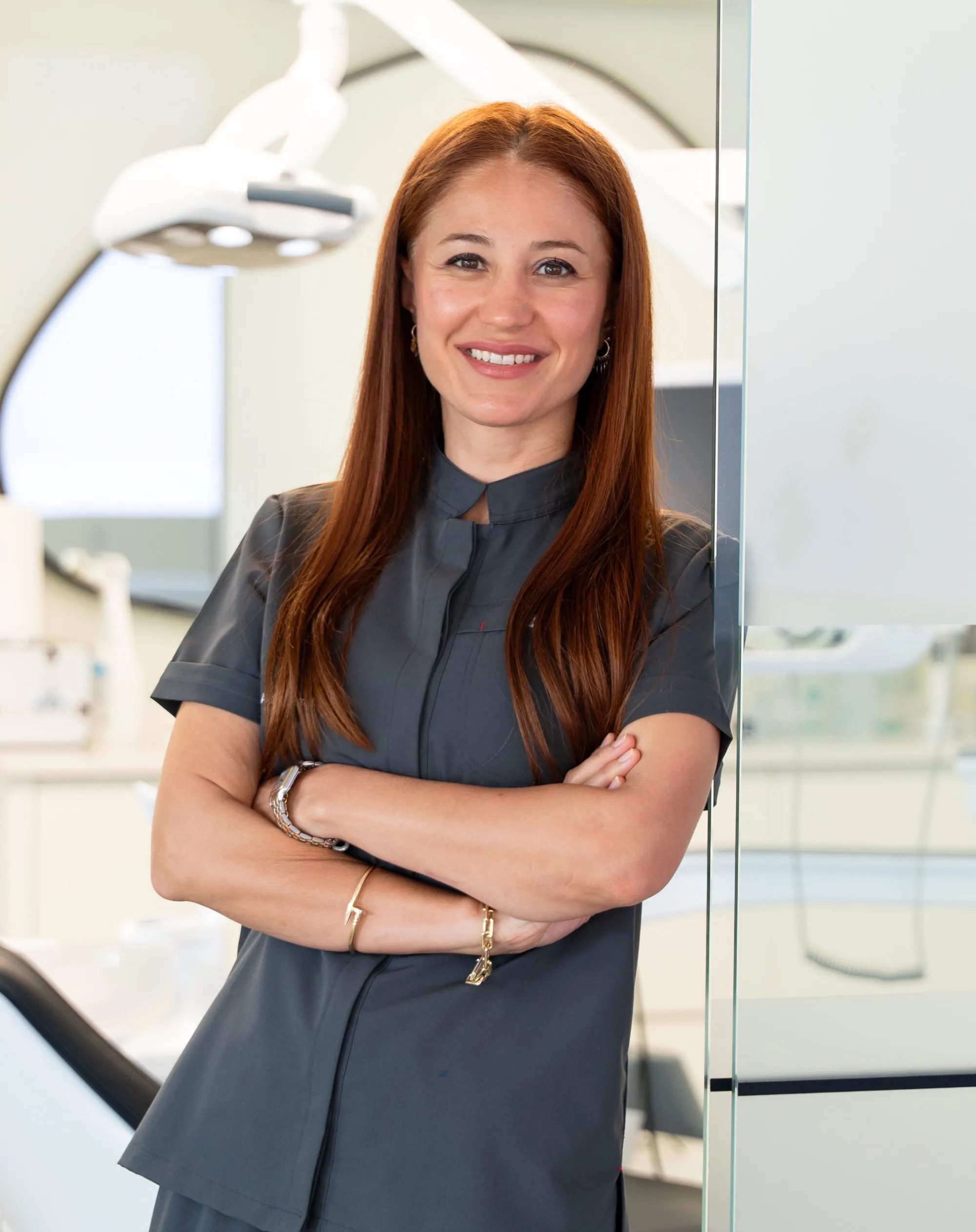
Dt. Dilek Aksu Güler
Cosmetic Dentist, Dental Implant Specialist
Dt. Dilek Aksu Güler specializes in implantology, digital smile design and cosmetic dentistry. She is the founding dentist of Antlara Dental Oral and Dental Health Clinic.