
What is full mouth dental implant treatment?
Full-mouth dental implant treatment is an extensive procedure utilised when all teeth in either the upper or lower jaw are missing. In other words, the patient's complete dentition is permanently substituted with fixed bridge prostheses supported by multiple dental implants embedded into the jawbone. Rather than using a single-piece prosthesis with artificial gums, a full-mouth dental implant treatment involves strategically placing a greater number of implants into the jawbone. Then, multi-piece fixed bridges are constructed on top of these implants to replace only the teeth. This eliminates the need for additional pink acrylic components in the prosthesis if the patient's own gum tissue is adequate and healthy.
What should be considered for full mouth dental implant treatment in Antalya?
A full dental implant is applied if no tooth is left in the jaw or if the remaining teeth need to be extracted. In this method, 6 or 8 implants are placed on the patient, and fixed bridges are applied between these implants. When determining the number of implants placed in the jaw, the dentists should consider the quality and amount of bone, the amount of lost tissue, intraoral and extraoral aesthetics, and implant inclination. Prices of full-mouth dental implants in Turkey can be up to 70 per cent reasonable compared to the UK and European countries.
Full Dental Implants Turkey
Tooth and bone loss is one of the most common aging problems, and if left untreated, they significantly affect the aesthetic appearance of patients, as well as chewing capabilities. Today, most patients prefer full-mouth dental restoration instead of living with this problem. Full dental implants, especially if bone augmentation is needed, are one of the most complex dental treatments. Therefore, well-trained and experienced dentists should be preferred for a successful and long-lasting implant treatment. In addition, implant materials must be proven to be successful in long-term clinical trials.


What is Full Dental Implant Dental Treatment? Which dental clinic is best for me?
A full mouth dental implant is applied if no tooth is left in the jaw or if the remaining teeth need to be extracted. In this method, 6 or 8 implants are placed on the patient, and fixed bridges are applied between these implants. When determining the number of implants placed in the jaw, the dentists should consider the quality and amount of bone, the amount of lost tissue, intraoral and extraoral aesthetics, and implant inclination.
If the patient's bone structure is insufficient, the All-on-four treatment can be applied to the patient. However, in the full dental implants technique, patients can apply more pressure to the molars, especially compared to the All-on-four technique, and more comfortable chewing is provided.
For the four implant option in detail, including costs and the two trips, see All on Four dental implants in Antalya.
Data obtained from the patient's smile design is utilized when placing implants. The diameter and thickness of the implants differ according to the regions where they are used. While narrower and thinner implants are preferred in the upper frontal jaw regions where aesthetics is important, thicker and wider implants are preferred for the rear sides of the jaw.
Straumann - the Swiss quality-is the global leader in implantology with 60 years of experience. At Antlara Dental, you can have these high-quality dental implants with 25 years of experienced dentists and orthodontists.
What is the Success Rate of Full Dental Implants?


Full mouth dental implant treatments have a high success rate as well as being long-lasting treatments. Here are the detailed success rates of this treatment. Here are the numbers:
- %97 success rate over 5 years
- %94 success rate over 15 Years
According to a NIH (National Institutes of Health) study, the success rate of implants was found to be around 94% even after 15 years. The health of the patient, the quality of their bones, and the skill of the surgeon carrying out the operation are all critical variables that determine the treatment's success.
Unlike dentures, implants don't change shape inside the mouth because they are made of biocompatible and long-lasting materials like titanium and zirconium. Infections around the implant (like peri-implantitis) or changes in the patient's overall health are the main things that put them at risk.
In a well-cared-for patient, bone loss around the implant remains minimal. For this reason, the survival rate of implants in the mouth remains high even after 15 years and beyond. The prostheses (bridges) on the implant may need to be replaced after 10-15 years, depending on the material's lifespan (for example, porcelain may need to be replaced for aesthetic reasons or due to wear).
Free Appointment - Full Mouth Dental Implants
You can make a free appointment below to have a full mouth dental implant in Antalya.
20+ years of dental treatment experience and professional patient services.
How Painful Are Full Dental Implants?
Full-mouth dental implant treatments are made under local or general anesthesia, depending on the patient, so patients don’t feel anything other than the vibrations of dental tools. However, some sensitivity occurs after the placement of implants which can easily be managed with medicine.
Are you asleep for Dental Implants? Will I receive general anesthesia? or local anesthesia?
Most dental implant treatments are made under local anesthesia so patients can see everything during the surgery. However, for some patients who have uncontrolled fears of this treatment, general anesthesia is administered.
Will my mouth hurt after dental implant treatment?
After the implant treatment, the sores in the mouth completely disappear within one to two weeks. During this period, the dentist prescribed some medicine to manage these sores.
How Should I Care For A New Dental Crown?
The most important points that you should pay attention to for proper dental crown maintenance are as follows;
- You should avoid tough and sticky foods,
- You should continue to brush and floss as you would do with your regular teeth.
- You should use the night guard recommended by your dentist, if you have grinding habits.
- You should have regular checkups with your dentist.
How Many Teeth Are in Full Dental Implants?
A healthy jawbone can support up to 12 implants, but it is obligatory to apply a minimum of 6 implants for a full mouth dental treatment for each jaw. For a healthy and long-lasting full dental implants treatment, 8 implants for each jaw provide better results. The most significant advantage of 8 implants compared to 6 one is that the dentist can pide the mouth into 4 separate regions. However, he can only pide the mouth into 2 different regions into 6 implants. So, the pressure applied on each implant section decreases significantly in the 8 implants treatment model.
Who Is a Good Candidate For Full Dental Implants?
The first requirement for the best candidate for a whole-mouth dental implant is to have a good general health condition. The patient should also have some requirements for this treatment. Here are some of them;
Chronic disorders
Full mouth implant Turkey treatment can be performed on patients of any age; however, it is important to ensure that patients with systemic disorders that may hinder treatment are adequately managed. Patients need to get treatment for diabetes or high blood pressure that is out of control.
Gum Health
In implant treatments, the patient must have no gum diseases, or they should ultimately be removed from the gums. Any surgery without curing gum disease increases the risks of bone infection, thus implant failure.
Bone Density
For whole teeth implants restoration, patients must have the sufficient bone density to support implants. For patients with insufficient bone structure, the All-on-four treatment method or bone strengthening surgeries can be preferred. These surgeries are;
Bone Augmentation
In this treatment, reinforcement is made through bone powder, or bone pieces are taken from different parts of the patient's body.
Sinus Lifting
This treatment is performed by adding bone tissues to the lower part of the sinus area.
Smoking
Furthermore, smoking constitutes a notable risk factor; specifically, implant success rates may be diminished and the healing process potentially complicated in smokers. Consequently, patients considering implant therapy are strongly encouraged to cease smoking, if feasible.

How Full Dental Implants Procedure is Done?
The full mouth dental implant treatment process and stages
Full mouth implant treatment can be considered a five-stage procedural process. Maintaining oral health during the entire process, from planning to the placement of permanent prostheses, greatly influences treatment success.
Initial Examination and Planning:
Treatment begins with a comprehensive oral examination and radiographic evaluation. The dentist or oral surgeon assesses the thickness, height, and density of the jawbone using panoramic X-rays and, in most cases, 3D jaw tomography (CBCT). Additionally, during this planning phase, any teeth in the mouth that are inoperable and necessitate extraction are located. During the planning phase, it is crucial that the patient communicate their aesthetic expectations to the dentist. They should discuss their opinions with the dentist regarding the colour, size, and shape of their teeth.
Preparation Stage (Tooth Extraction and Bone Grafting if Necessary):
The first step in treatment is to extract the problematic teeth. Typically, tooth extractions are carried out under local anaesthesia with atraumatic techniques that result in little tissue damage. Following the extraction, the dentist reinforces regions with diminished bone density through the application of bone grafts. The procedure can be carried out using either biocompatible synthetic bone powder or grafts extracted from the patient's own bone.
And if it's been a long time since the tooth was extracted, the sinuses might droop in the direction of the tooth root. If this is the case, the dentist will need to lift the sinuses so they are above the implant site. During this procedure, the sinus level is carefully elevated, and bone powder is added to provide sufficient bone support between the sinus and the implant.
Surgical Placement of Implants:
The procedure of drilling implant sites and the placement of implants is conducted under local anaesthesia. For that reason, the operation will not cause you any pain. It usually takes about two hours to do full mouth implant treatment, which involves placing six or eight implants in one jawbone.
Osseointegration and Temporary Teeth:
Once the implants are in place and the wounds are fully healed, the cells in the jawbone that surround them grow. This makes the implant look like it is a natural part of the jawbone. It could take up to 6 months for some patients for this osseointegration process to finish, while it could take 3 months for others. When the osseointegration process is over, the implants are strong enough to handle the weight that is put on them. After tests, the permanent implants can be put in place.
Preparation and Fitting of Permanent Fixed Prostheses:
In this stage, the implants are initially exposed (if they were previously covered) and healing caps are affixed. After a few weeks, the gum tissue surrounding the implant has formed, and then the impression-taking procedure starts. To determine the optimal placement of the implants within the mouth and its supporting tissues, precise measurements are taken. When dental technicians have these dimensions, they can create a one-of-a-kind fixed bridge prosthesis. When planning a full mouth implant treatment, it is common practice to use multiple bridge pieces per jaw. For instance, an upper jaw with eight implants would typically require a three-piece bridge.

How Many Days Do Full Dental Implants Take?
For a patient with a healthy jaw and bone structure, whole teeth implants treatment is applied in two different treatment processes. At the first visit, the necessary consultation and bite records are taken, the holes are drilled for the implants, and the implants are placed in their places. Usually, the patient gets temporary implants within the same day. After the treatment, the patient waits for at least 3 months for the implants to fully fuse to the jawbone. After the patient's healing process is completed, permanent implants, bridges, and crowns are placed. The second visit to the dental clinic can take up to 5 days or a week, depending on the success of the rehearsals.
The Lifespan of Full Dental Implants
In addition to being an effective and permanent solution, full dental implants treatments also help patients to stop jawbone resorption. Although the life expectancy of this treatment is considered to be 25 years, the exact success rates in this treatment are as follows;
- %97 success rate: over 5 years
- %94 success rate: over 10 Years
- %91 success rate: over 15 Years
The maximum lifespan of a dental implant can only be achieved with proper oral care; however, some diseases that lead to osteoclasis, like diabetes, may also reduce the life span of implant treatment.
Free Appointment - Full Mouth Dental Implants
You can make a free appointment below to have a full mouth dental implant in Antalya.
20+ years of dental treatment experience and professional patient services.
The Benefits Of Full Mouth Dental Implants
There are many functional and aesthetic benefits to full-mouth implant therapy:
Natural and Aesthetic Appearance:
Full-mouth implant treatment comprises a partial implant procedure involving both short and long bridges. Unlike all-on-four and all-on-six, which are fixed-supported full-mouth restorations, this system requires minimal artificial pink aesthetic treatment. The patient's smile, facial features, and the recommended shape and colour of the bridges are all taken into consideration during the design process. Particularly in full-mouth dental implant treatment, the prostheses fit tightly to the gums, leaving no gaps, and you can smile comfortably without needing to hide your teeth behind plastic pieces that move around on the palate.
Improvement in Speech and Chewing Function:
When teeth are missing or removable dentures are worn, it can lead to slurred speech and trouble pronouncing words. In full-mouth dental implant treatment, chewing function also improves significantly. A patient with full-mouth dental implant treatment can chew food 80 to 90% as efficiently as with their natural teeth.
Taste perception:
Full removable dentures have a palate-covering acrylic base. This can reduce taste and cause a gag reflex until the patient adjusts to the dentures. In full-mouth dental implant treatment, the palate is usually left open, especially in the upper jaw where the denture does not cover it. This allows the patient to better taste food and drink and minimises the sensation of a foreign object in the mouth. As the volume of the dentures in the mouth is reduced, comfort increases.
Preventing jawbone loss:
If you lose a tooth, your jawbone will break down over time because it doesn't have a natural tooth root to stimulate it. In this way, implants are very helpful; titanium implants work like real tooth roots, transferring pressure to the jawbone and helping it grow back while stopping it from breaking down. So, full-mouth restorations that are supported by implants also help keep the shape of the face. Without implants, the jaw and face will continue to shrink over time when teeth are missing. This means that someone who gets full-mouth dental implants not only invests in their teeth but also in keeping their jawbone strong.
A Robust and Safe Framework:
Because screws or special adhesives hold the prostheses to the implants, the patient doesn't have to worry that their prosthesis will come loose when they chew, talk, or laugh. The stability of the prostheses gives the person confidence and allows them to go about their daily life without thinking about their teeth. You can feel completely confident when eating, talking or having your photo taken in public places – you know your dentures won't move.
Long Life and Permanent Solution:
Full mouth restorations have been developed as long-term solutions. If any problems develop during these treatments, they can be handled locally as well. If the issue is only with the false tooth structure, it can be fixed by replacing the false tooth structure, with no treatment needed in the implant area. Scientific research shows that implant treatments have very high long-term success rates and that patients continue to use their implants for many years without needing to renew their treatment.
Risks of Full Dental Implants
Full dental implant applications are named complex treatments, especially when the bone restoration is required, and requires a careful treatment process in experienced hands. In these treatments, smile design should be well identified, and implants should be placed according to this design to prevent irreversible failures. A dentist with good aesthetic knowledge is a must for this treatment. At Antlara Dental, you will be accompanied by our aesthetic dentists with 20 and 30 years of experience and our orthodontic experts with more than 25 years of experience.
Among the most critical risks that may occur during this treatment are;
- Infection
- Implant rejection
- Sinus Problems
- Gum Recession around the implants
What are the types of Full Dental Implant Treatments?
There are two different types of full-mouth dental implant methods in general. These are;
- Bridge and Crown application on Implants; In this method, permanent bridges and crowns are placed on 8 implants. In cases where 8 implants are hard to apply, permanent bridges and crowns can be placed on 6 implants.
- The other method in which permanent prostheses are attached to fixed implants is called All-On-Four or All-On-Six.
Things to do before and after full mouth dental treatment?
The dentist requests some examinations before starting treatment. These tests are of great importance to minimize the risks after treatment. These procedures are;
- Blood Test: A blood test allows dentists to determine whether the patient has systemic diseases such as diabetes and high blood pressure.
- Mouth Inspection: Biting, occlusion, gums, and alveolar bone structure are analyzed to determine where to insert the implants and their proper size.
- X-Ray and CT Evaluation: X-Ray examination helps to determine the bone thickness and bone mass, while CT(Computer Tomography) helps to determine the bone height and exact places of implants. After the completion of treatment, the patient is required to use some painkillers to subside the pain that is caused by drilling or orthodontic surgeries. However, the most important thing for post-treatment has an excellent oral hygiene habit. The patient should keep brushing and flossing their teeth twice a day and should also keep away from detrimental habits like smoking.

Full Arch Options Compared: Which One Applies to You
"Full dental implants" is not one treatment. It is a family of ways to replace every tooth in a jaw, and they differ in how many implants are used, whether the teeth are fixed or removable, and how much bone they need. The right one is decided from a CT scan, not from a package name.
| Option | Implants per jaw | Fixed or removable | Usually suits |
|---|---|---|---|
| All-on-4 | 4, the back two angled | Fixed | Reduced bone at the back of the jaw, wish to avoid grafting |
| All-on-6 | 6 | Fixed | Good bone volume, heavier bite, more spread of load |
| All-on-8 or segmented bridges | 8 or more | Fixed, sometimes in sections | Plenty of bone, preference for a bridge that can be repaired section by section |
| Implant supported overdenture | 2 to 4 | Removable, clips onto the implants | Limited budget or bone, difficulty cleaning under a fixed bridge |
| Conventional full denture | None | Removable, rests on the gum | Baseline for comparison, no surgery |
What actually decides between them
- Bone volume and quality, read from the CT scan. This narrows the options more than anything else.
- The opposing jaw. A fixed bridge biting against natural teeth or another fixed bridge takes more load than one biting against a denture.
- Grinding. Heavy bite forces argue for more implants rather than fewer.
- How well you can clean. A fixed bridge needs daily cleaning underneath. Where that is genuinely difficult, a removable option can be the healthier long term choice.
- Whether some teeth can be kept. Covered below, and often overlooked.
Our implant supported bridge page covers replacing several teeth without treating the whole arch.
Fixed or Removable: The Decision Most Clinics Skip
Most quotes for full mouth implants assume a fixed bridge, because that is what patients ask for and what clinics prefer to sell. It is often the right answer. It is not always the only one, and the alternative deserves a fair hearing.
A fixed bridge
Screwed onto the implants and removed only by the dentist. It feels closest to natural teeth, there is no plate over the palate, and nothing moves when you eat or speak. The trade off is cleaning: food and plaque collect underneath, and that area has to be cleaned every day with interdental brushes or a water flosser, plus professional cleaning with the bridge removed periodically.
A removable overdenture on implants
A denture that clips firmly onto two to four implants through attachments or a bar. It does not float or drop like a conventional denture, and it comes out for cleaning, so hygiene is far easier. It can also restore lip and cheek support where a lot of bone has been lost, which a fixed bridge sometimes cannot do without looking bulky.
Who the removable option genuinely suits
- Patients with limited manual dexterity, for whom cleaning under a fixed bridge is unrealistic.
- Patients with severe bone loss where facial support matters as much as chewing.
- Patients currently struggling with a loose lower denture, for whom two implants alone can transform comfort.
- Patients for whom budget makes a fixed bridge impossible at present. An overdenture can often be converted later.
Neither is a lesser treatment. They solve slightly different problems, and a clinic that only ever offers one of them is choosing for its own workflow rather than for you.
Not Enough Bone? What the Options Really Are
Being told you do not have enough bone for implants is common after years of missing teeth or wearing a denture, because the jawbone shrinks once it is no longer stimulated by tooth roots. It rarely means implants are impossible. It means the plan changes.
Using the bone that is there
Angling the back implants, as in All-on-4, lets longer implants reach denser bone while avoiding the sinus in the upper jaw and the nerve in the lower jaw. For many patients this removes the need for grafting altogether.
Building bone up
Where a specific area is too thin or too low, bone graft material can be added, either at the same time as the implants or months beforehand. In the upper back jaw, a sinus lift raises the sinus floor to make room for an implant. Grafting adds time to treatment, often several months, which is why it is identified from the scan before you book rather than on the day. Our dental bone graft page explains the types.
When the upper jaw has very little bone
Where the upper jaw is severely resorbed, longer zygomatic implants anchored in the cheekbone are an option that avoids extensive grafting. They are a specialised procedure with their own risks, and they are considered after the simpler routes have been ruled out, not offered first.
What to ask
- Has my CT scan been reviewed, and does the plan need any grafting?
- If grafting is needed, is it included in the quote, and how much does it add to the timeline?
- Why is this number of implants right for my bone, rather than more or fewer?
Grafting is the single most common source of an unexpected extra in full mouth implant treatment, and the scan answers the question before you travel.
What the Final Bridge Is Made Of
Two quotes for full mouth implants can differ mainly because of the bridge, not the implants. The material affects appearance, weight, durability, repairability and cost, and it is the line item most often left vague.
| Bridge type | Strengths | Weaknesses |
|---|---|---|
| Acrylic on a metal framework (hybrid) | Lighter, gentler on the opposing teeth, easy to repair | Acrylic teeth wear and stain over the years and may need replacing |
| Monolithic zirconia | Very strong, does not stain, resists wear | Heavier, harder to repair if it fractures, needs a precise fit |
| Ceramic layered on a framework | Most lifelike appearance | Layered ceramic can chip, especially with grinding |
Temporary first, final later
Where implants are loaded on the day of surgery, the first bridge is a temporary, usually acrylic, worn while the implants integrate over roughly three to six months. The final bridge is made afterwards. Ask whether both are included, because a quote covering only the temporary is a different quote.
The questions that make quotes comparable
- What is the final bridge made of, and what is the framework underneath?
- Are the temporary and the final bridge both included?
- What happens if a tooth on the bridge chips or the bridge cracks after I fly home?
- Is a night guard included if I grind?
Our zirconium versus porcelain comparison covers the material trade in more depth.
Should Every Tooth Come Out? When Saving Teeth Is the Better Plan
Full mouth implants are sometimes proposed for patients who still have a number of healthy or treatable teeth, because a single full arch plan is simpler to deliver. Simpler is not the same as better, and removing sound teeth is irreversible.
When full arch replacement is usually right
- Most remaining teeth are loose from advanced gum disease with significant bone loss.
- Teeth are broken down below the gum and cannot be restored predictably.
- A failing denture or bridgework has left only a few compromised teeth.
When keeping teeth deserves a serious look
- Several teeth are firm with healthy bone, and the problems are decay or appearance rather than support. Root canal treatment and crowns may save them.
- Gum disease is present but moderate and treatable. Periodontal treatment first can change which teeth need to go.
- Only one jaw is in poor condition. Treating one arch fully and restoring the other conservatively is common.
A practical middle ground
Keeping a few strong teeth now and planning implants around them later is often possible, but it needs to be designed that way from the start so that today's crowns do not block tomorrow's implant positions. Ask the clinic to explain, tooth by tooth, why each one is being kept or removed. A plan that removes everything without that explanation was decided before anyone examined your mouth.
Full Dental Implants in Turkey?
Turkey is among the pioneering countries in modern medical treatments, and you can also easily see this success in dental treatments. Turkey, which houses almost one million health tourists every year, is preferred by approximately 130 000 foreign tourists for just dental treatment. Sophisticated dental clinics in Turkey are called dental hospitals, and all dental treatments, from aesthetic surgery to complex orthodontic treatments, are performed at these clinics.
In addition to being close to Europe and Russia, Turkey offers excellent holiday opportunities for its visitors.
Full mouth dental implants Turkey package deals;
- Since the treatment fees in Turkey are so affordable, the best quality materials in dental treatments can be preferred without much affecting the overall costs.
- One of the essential factors that affect the success of dental treatment is the dentist's experience. You can find well-educated and skilled dentists in Turkey with remarkably reasonable price advantages.
- In addition to having high-quality dental treatment in Turkey, you can also have great holiday opportunities .
At Antlara Dental, we serve in one of the most popular holiday resorts in Turkey. Here you can find aesthetic dentists with more than 20 years of experience and Orthodontists who have worked in the largest dental hospitals in Turkey and published many scientific articles.
After meeting our experienced team, our patients have more confidence in our clinic. We are struggling to maintain this confidence that we build as Antlara Dental.
How Much Full Dental Implants Cost in Turkey?
Full mouth dental implants in Turkey's price can be up to 70 percent reasonable compared to the UK and some European countries. Here is a comparison of the cost of full-mouth dental implants in Turkey and the UK.
| Turkey | Europe / UK | |
| Single Tooth Implant | 400£ – 1000£ | 1000£ – 3500£ |
| Full Mouth Implant | 6000£ – 10000£ | 10000£ – 35000£ |
One of the important factors affecting full-mouth dental implant cost is orthodontic treatments performed in the mouth. Below you can see the comparison of these treatment prices between Turkey and the UK.
| Turkey | Europe / UK | |
| Bone Grafting | 150£ – 300£ | 600£ – 800£ |
| Sinus Lifting per side | 150£ – 200£ | 650£ – 1000£ |
Full Mouth Dental Implants: Questions Patients Ask Us
The questions that come up most often when planning to replace a full arch of teeth.
Full mouth implants is the general term for replacing every tooth in a jaw with implant supported teeth. All-on-4 is one specific way of doing it, using four implants with the back two angled. Other options include All-on-6, All-on-8 or segmented bridges on more implants, and removable overdentures that clip onto two to four implants. Which one suits you is decided from a CT scan.
Typically between four and eight per jaw for a fixed bridge, and two to four for a removable overdenture. The number is set by bone volume and quality, the forces your bite produces, whether you grind, and what the opposing jaw is like. Replacing every tooth does not require one implant per tooth. Ask why the number proposed is right for your bone rather than more or fewer.
Neither is better overall. A fixed bridge feels closest to natural teeth and has no palate plate, but it must be cleaned underneath every day. A removable overdenture clips firmly onto implants, comes out for cleaning, and can restore lip support where much bone has been lost. It suits patients with limited dexterity, severe bone loss or a tighter budget.
Usually yes, with a different plan. Angled implants as used in All-on-4 often avoid grafting. Where an area is too thin, bone grafting or a sinus lift can build it up, adding several months. Where the upper jaw is severely resorbed, zygomatic implants anchored in the cheekbone may be considered after simpler options are ruled out. The CT scan decides which applies.
The main options are acrylic teeth on a metal framework, monolithic zirconia, and ceramic layered on a framework. Acrylic is lighter and easy to repair but wears and stains over time. Zirconia is very strong and stain resistant but heavier and harder to repair. Layered ceramic looks most natural but can chip, particularly with grinding. Ask what both the bridge and the framework are made of.
Where immediate loading is suitable, you leave with fixed temporary teeth the same day, usually acrylic. The final bridge is made after the implants have integrated with the bone, typically three to six months later, so most patients make two trips. Check that the quote includes both the temporary and the final bridge, since some include only one.
Not necessarily. Full arch replacement is usually right when most teeth are loose from advanced gum disease or broken down beyond repair. Where several teeth are firm with healthy bone, root canal treatment, crowns or gum treatment may save them, and sometimes only one jaw needs full replacement. Ask the clinic to explain tooth by tooth why each is being kept or removed.
A fixed bridge is brushed like natural teeth, and the area underneath it is cleaned every day with interdental brushes, implant floss or a water flosser, because that is where plaque collects and peri-implantitis starts. Professional cleaning and check-ups follow, with the bridge removed periodically. A removable overdenture is taken out and cleaned, and the implant attachments are brushed.
The implants themselves can last for decades when the gum and bone around them stay healthy. The bridge on top wears and may need repair or replacement at some point, more often with acrylic than with zirconia. What determines longevity most is daily cleaning, not smoking, managing grinding, and regular professional maintenance, rather than the brand of implant alone.
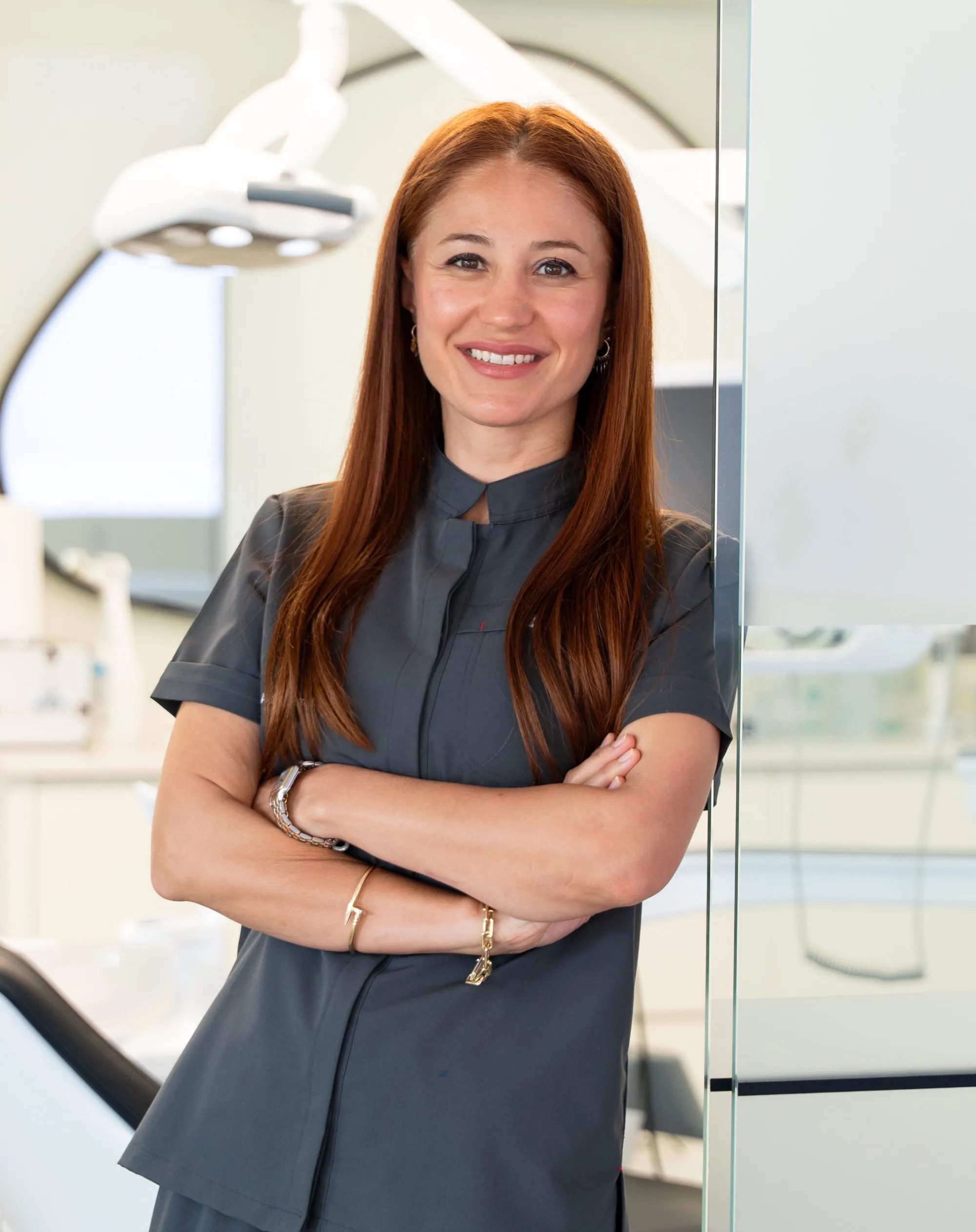
Dt. Dilek Aksu Güler
Cosmetic Dentist, Dental Implant Specialist
Dt. Dilek Aksu Güler specializes in implantology, digital smile design and cosmetic dentistry. She is the founding dentist of Antlara Dental Oral and Dental Health Clinic.