
What is deep dental cleaning? What should be considered for deep dental cleaning in Antalya?
Deep dental cleaning treatment is not just for unhealthy mouths; even if you have good oral care habits, you should check if you need it. The material used for the treatment has no significant effect on the dental deep cleaning cost. In this treatment, the prices consist almost entirely of the sum of the fee requested by the clinic and the dentist.
Free Appointment - deep dental cleaning?
You can make a free appointment below to
have a deep dental cleaning? in Antalya.
20+ years of dental treatment
experience and professional patient
services.
Deep Dental Cleaning Treatments and Cost
Deep dental cleaning treatment is not just for unhealthy mouths; even if you have good oral care habits, you should check if you need it. If you are caring about your oral hygiene, your priority should be to get rid of plaque and tartar in the mouth.
As we age, tartar builds up faster, but generally, inpiduals will vary greatly in the formation of tartar on the tooth surface. The formation of plaque, which develops rapidly with old age, causes the teeth to fall out with the help of other factors, such as bone resorption (osteoclasts). For this reason, early deep dental cleaning is of great importance for a healthy mouth in old age.
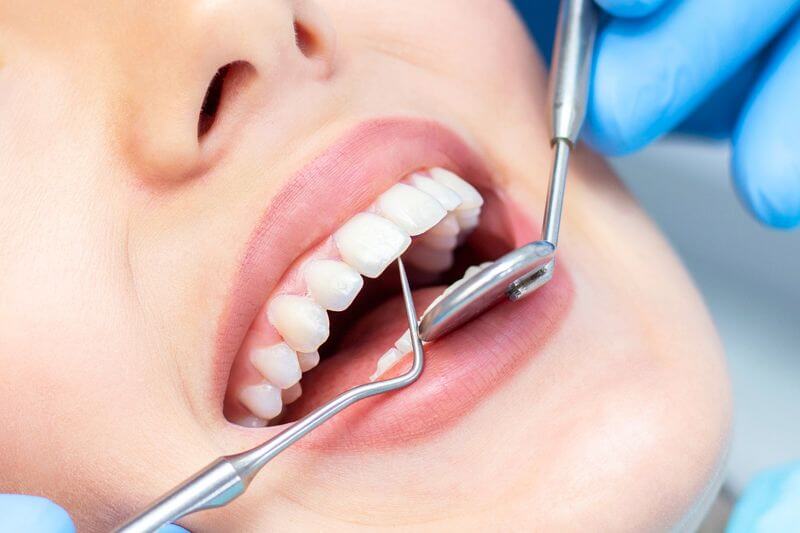
What Is Dental Deep Cleaning?
Deep dental cleaning, known as SRP (Scaling and root planning), scrapes tartar and plaque on tooth surfaces and under the gums with conventional dentistry equipment or ultrasonic dental devices. The treatment, as the name suggests, is completed in two sessions. The first is scaling, and the latter is root planning.
The rate of tartar and plaque formation in adults over 30 is 50%, which is 75% in those over 65, which indicates that aging accelerates the formation of tartar. But the leading causes of tartar and plaques may include;
- Diabetes, heart diseases,
- Genetical history,
- Hormonal changes that happen during the pregnancy,
- Failed dental restorations such as a filling or a root canal,
- Crooked teeth,
- Poor oral hygiene,
- Smoking
- Stress
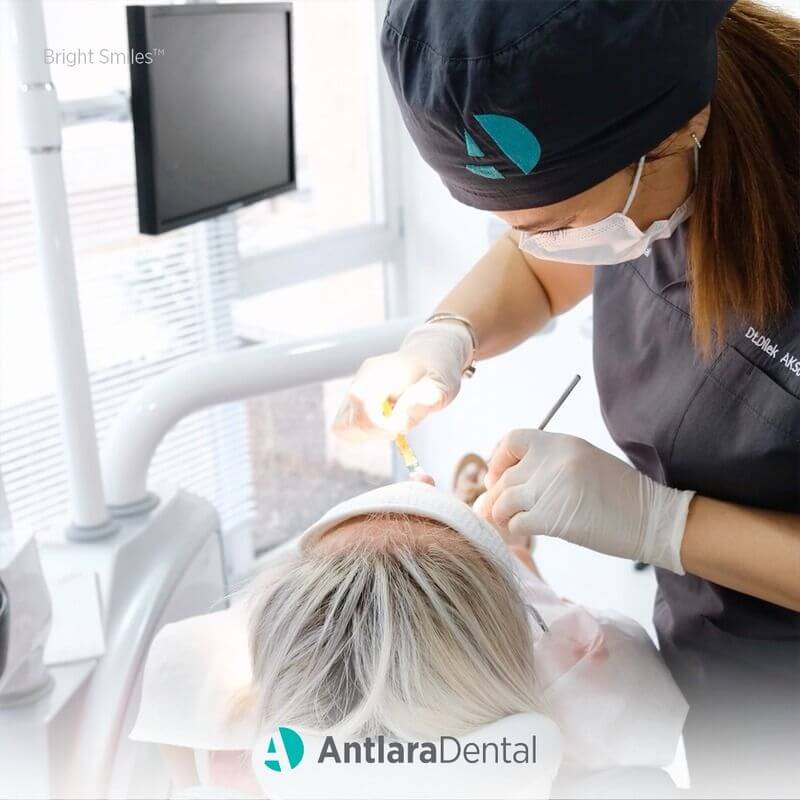
Dental Deep Cleaning Benefits
Prevents Improvement of Periodontal Disease
Since all the bacteria and tartar in the mouth are cleaned, the infections and plaques will no longer spread.
Eliminate Current Infection
After treatment, the mouth is free from tartar and germs.
Promotes Healing
Tartar and plaque prevent the gums from sticking to the teeth. When you get rid of them, your gums renew themselves and stick to the tooth root healthier.
Eliminates Bad Breath
Plaques contain bacteria that cause bad breath. When you get rid of plaques, your bad breath will also disappear.
Save Your Roots and Jawbones
The gums are like protective armor. Protecting them is more important than your teeth. If the gums cannot function well, the tooth roots and jawbone suffer greatly.
Is There Any Risk of Dental Cleaning?
The most common complication of deep teeth cleaning is 5 to 7 days of gum sensitivity. Other than that, there is no common risk. Although quite unlikely, there is a risk of bacteria penetrating the bloodstream during the treatment.
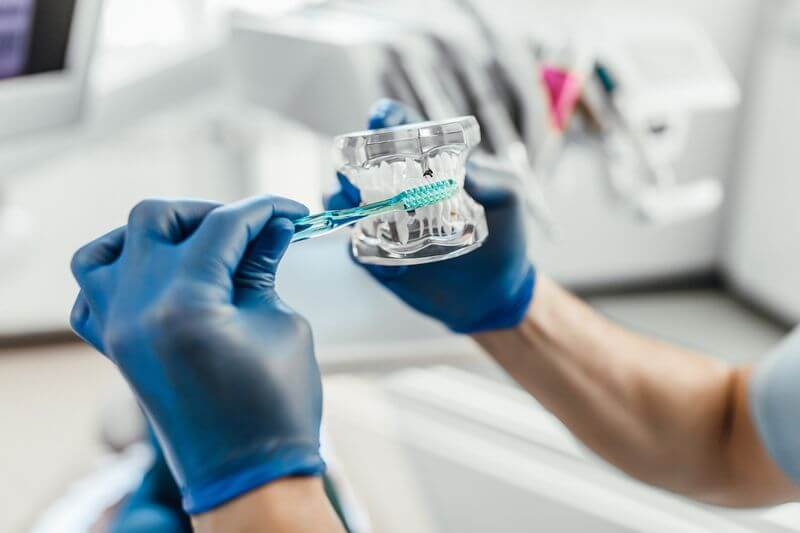
What Does Deep Cleaning Teeth Involve?
You can have your deep tooth cleaning done with two different one-hour visits to the dentist. At your first visit, called scaling, your dentist would remove all the plaque and tartar under the gums. The dentist may do the surgery with manual dentistry tools or ultrasonic or electrical tools.
In the second stage, called root planing, the dentist cleans the tooth roots and softens them to ensure that the gums firmly adhere to the roots.
Why Do You Need Deep Teeth Cleaning?
For deep dental cleaning, you should keep an eye out for the following warning signs;
- Invariably imperfect taste or breath
- Unfastening teeth
- Gums that easily bleed
- Swollen gums
- Receded gums
If you look at dental deep cleaning before and after photos, you can better understand whether you should take this treatment or not.
What to Expect After Deep Cleaning of Teeth?
A shiny smile will be waiting for you after the treatment. However, to maintain this smile, you should pay close attention to oral care and not miss your dentist’s check-ups. In addition, the sensitivity in the gums continues for a week after a deep dental cleaning. This period may be extended or shortened by a few days depending on the extent of the treatment.
What Is the Cost of a Deep Teeth Cleaning?
The material used for the treatment has no significant effect on the dental deep cleaning cost. In this treatment, the prices consist almost entirely of the sum of the fee requested by the clinic and the dentist. For this reason, deep cleaning treatments are at very affordable levels in countries where labor wages are low, such as Turkey. You can check out the table below to see it better.
Deep Cleaning Prices;
- The USA $600-$1000
- UK £400-£1000
- Turkey £100-£150
How Long Does a Dental Deep Cleaning Take?
Deep dental cleaning treatment usually requires two different consecutive visits to the dentist. These visits can take up to 1 hour on average. Within 3 months after treatment, the dentist calls the patient for a check-up.
How Often Should Teeth be Deep Cleaned?
According to the American Dental Association, patients should get their teeth cleaned at least twice a year, for those who don’t follow this rule should have deep dental cleaning procedures when needed.
Deep Dental Cleaning Treatment in Turkey
If you are looking for a country where experienced and well-trained dentists serve in European standards without shaking your budget, Turkey is one of the best countries in this regard. Moreover, you will also be offered a good holiday as a bonus. Come to Antalya and feel the experience of our dental team.
Why is Deep Dental Cleaning Cheaper in Turkey?
There is a massive difference for each country in dental prices.
The reasons why Turkey offers more affordable dental prices may include;
Workers' wages are low,
The government receives almost no taxes from health tourism revenues,
The monthly expenses of the clinics are far below that of Europe.
Routine Clean or Deep Clean: What Is Actually Different
These two appointments are often quoted at very different prices, and patients are rarely told why. The difference is not how long it takes or how thorough the hygienist is. It is where the instrument goes.
| Routine scale and polish | Deep cleaning | |
|---|---|---|
| Where it works | Above the gum line and just below it | Inside the pocket, down the root surface |
| What it treats | Plaque, tartar and surface staining | Deposits on the root that are driving active gum disease |
| Anaesthetic | Not usually needed | Usually, because the instrument works below the gum |
| Appointments | One | Commonly two to four, by area of the mouth |
| Afterwards | Teeth feel smooth, nothing else changes | Gums shrink as swelling settles, teeth can be sensitive for weeks |
| Follow-up | Next routine recall | Re-measurement of the pockets six to eight weeks later |
A healthy space between gum and tooth measures 1 to 3 mm, and a toothbrush reaches roughly that far. Once a pocket is deeper, there is a surface inside it that you cannot clean at home no matter how carefully you brush, and that is the surface deep cleaning addresses. Which category you fall into is decided by measuring, not by looking, and our periodontal treatments page explains what those measurements mean.
What Happens During the Appointment
Measuring first
A probe is walked around each tooth and the pocket depths are recorded, along with which sites bleed. Radiographs show the bone level. This chart decides how many appointments are needed and which areas are treated, and it is also the baseline the result is measured against afterwards. Ask for a copy of it.
Local anaesthetic
The area being treated is numbed. This is routine rather than a sign that something difficult is happening: the instrument is working on the root surface inside the pocket, which is sensitive, and the work is slower and more careful when the patient is comfortable.
Removing the deposits
Ultrasonic instruments break up and flush out the hardened deposits, and hand instruments finish the root surface so it is smooth. Smoothness matters because a rough root surface collects plaque again much faster. This is slow work. A quadrant of the mouth typically takes forty five minutes to an hour, which is why it is usually split across appointments rather than done in one sitting.
The re-assessment, which is part of the treatment
Six to eight weeks later the pockets are measured again and compared with the first chart. Pockets that have become shallower and stopped bleeding have responded. Sites that have not may need re-treating or referral for surgical access. A clinic that does not book this appointment has no way of telling you whether the treatment worked, and you have no way of knowing either.
What to Expect in the Weeks Afterwards
Some of what follows surprises patients who were expecting only a cleaner mouth, so it is worth setting out honestly in advance.
Sensitivity to cold
Common, and usually the most noticeable effect. Removing the deposits exposes root surface that was covered, and root is more sensitive than enamel. It typically settles over a few weeks. A desensitising toothpaste used consistently, rubbed onto the sensitive area rather than just brushed and rinsed away, is the most effective thing you can do.
Gums that look as though they have receded
They have, slightly, and this is the treatment working rather than failing. Inflamed gum is swollen gum, and when the inflammation resolves the tissue shrinks back to where the actual bone level is. Teeth can look a little longer and small gaps can open between them. The alternative was keeping the swelling, which was hiding continuing bone loss.
Tenderness and slight bleeding
For a few days. Soft food, ordinary painkillers if needed, and a salt water rinse help. Keep brushing the area gently rather than avoiding it, because avoiding it is what lets the inflammation return.
What is not normal
- Pain that increases after the third or fourth day rather than settling.
- Swelling of the face, or fever.
- A tooth that becomes noticeably loose.
- Bleeding that does not reduce after the first few days.
Any of those is worth reporting rather than waiting out.
Do You Actually Need It? How to Tell
Deep cleaning is sometimes recommended when a routine clean would do, and patients are right to ask. The test is simple enough that you can check it yourself.
Ask for the numbers
Deep cleaning is indicated where pockets measure 4 mm or more and those sites bleed when probed. If your chart shows depths of 1 to 3 mm throughout with no bleeding, you do not need it, whatever the amount of visible tartar. A clinic should be able to show you the chart and point at the sites in question.
Signs that usually accompany a genuine need
- Gums that bleed when you brush or floss, consistently rather than occasionally.
- Persistent bad breath or a bad taste that cleaning does not fix.
- Gums that look red and puffy, or that have pulled away from the teeth.
- Bone loss visible on a radiograph.
- A tooth that has started to feel slightly mobile.
When the honest answer is that deep cleaning is not enough
Where pockets are deeper than about 5 to 6 mm, instruments often cannot reach the base of the pocket from above the gum, and cleaning alone will not resolve those sites. Being told that surgical access may be needed after the re-assessment is a sign of a careful plan, not of a problem. Our periodontal treatments page covers what follows, and gum disease treatment explains the condition itself.
Where Deep Cleaning Fits if You Are Travelling for Dental Work
Most patients who come to Antalya are here for crowns, veneers or implants, and deep cleaning tends to appear in the plan as something they were not expecting. It is worth understanding why it comes first rather than being added on.
Before crowns and veneers
The margin of a crown or a veneer sits at the gum line. Inflamed gum bleeds and weeps during preparation and bonding, which compromises the seal, and gum that shrinks afterwards leaves that margin exposed as a visible line. Treating the gums first is what stops a new smile from developing dark edges within a year. Our zirconia crowns and dental veneers pages assume healthy gums as the starting point.
Before implants
Placing an implant into active gum disease invites the same bacteria to attack it, and the disease progresses faster around an implant than around a natural tooth. Gum treatment is not a delay to implant treatment, it is part of it. Dental implant treatment follows the same rule.
Fitting it into the trip
A full mouth needing treatment across four quadrants, plus a re-assessment six to eight weeks later, does not compress into a single week. In practice we either treat the areas that matter for the planned restorative work and leave the rest to your dentist at home, or we stage the trip. Which one applies is decided from your x-rays before you book flights, not on arrival.
What to take home
Your pocket chart from before and after, your radiographs, and a written note of what was treated. Maintenance happens at home, usually every three to four months rather than every six for anyone with a periodontal history, and your dentist there needs the baseline to compare against.
Deep Dental Cleaning FAQ
Deep Dental Cleaning - AntalyaDeep dental cleaning treatment is not a tooth whitening treatment, and no hydrogen peroxide-containing products are used in this treatment. However, as a result of the treatment, you will be surprised by the whitening and bright smile on your teeth.
It is very unlikely that you will encounter a situation like that after treatment. However, because tartare surrounds your teeth firmly, patients may think that their teeth have loosened after treatment. But this is a temporary feeling and will disappear as the gum strengthens.
Local anesthesia is applied before the deep cleaning treatment, so no pain is felt during the treatment.
After the treatment, sensitivity occurs in the gums for 4-5 days. This period may extend for another 1-2 days, depending on the size of the treatment.
Deep Dental Cleaning: Questions Patients Ask Us
The questions that come up most often before and after deep cleaning.
A routine scale and polish works above the gum line and just below it, removing plaque, tartar and surface staining. Deep cleaning works inside the pocket, on the root surface itself, which is why it needs local anaesthetic and is usually split across two to four appointments. Which one you need is decided by measuring pocket depths, not by how much tartar is visible.
The treatment is done under local anaesthetic, so it should not hurt at the time. Afterwards the gums are tender for a few days and the teeth can be sensitive to cold for several weeks as the gum tightens and a little root becomes exposed. That sensitivity settles in most people, and a desensitising toothpaste rubbed onto the area rather than simply brushed and rinsed away speeds it up.
Because inflamed gum is swollen gum. Once the inflammation resolves, the tissue shrinks back to where the bone level actually is, which can make teeth look slightly longer and open small gaps between them. This is the treatment working rather than failing. The swelling had been hiding the bone loss, not preventing it.
Commonly two to four, treating the mouth by area rather than all at once, because a single quadrant typically takes forty five minutes to an hour of careful work. A re-assessment six to eight weeks later is part of the treatment rather than an optional extra: the pockets are re-measured and compared with the first chart to show whether the sites have responded.
Ask to see your periodontal chart. Deep cleaning is indicated where pockets measure 4 mm or more and those sites bleed when probed. If the chart shows 1 to 3 mm throughout with no bleeding, a routine clean is enough however much tartar is visible. A clinic should be able to show you the numbers and point at the specific sites.
It does not cause looseness, although a tooth that was already losing bone support can feel slightly more mobile for a short period once the swollen tissue around it settles. That usually firms up as the gum heals and reattaches. A tooth that becomes noticeably loose, or loose weeks later rather than days, is worth reporting rather than waiting out.
Deep cleaning itself is not repeated routinely. What follows is periodontal maintenance, typically every three to four months rather than the usual six, because the bacterial population inside a treated pocket rebuilds within roughly three months and the treated sites are the first to relapse. Those appointments re-chart the pockets rather than simply polishing.
If you have active gum disease, yes, and it comes first rather than afterwards. Crown and veneer margins sit at the gum line, so inflamed gums compromise the seal and gums that shrink later expose a dark edge. For implants the reason is stronger still, because the disease progresses faster around an implant than around a natural tooth. This is usually what makes a treatment plan need two trips rather than one.
Often, where the cause is bacteria in periodontal pockets, which is one of the most common sources of persistent bad breath. It will not help if the cause is elsewhere, such as tonsil stones, dry mouth, sinus problems or digestive conditions. If breath does not improve after treatment and the gums have otherwise responded, the cause is worth looking for outside the gums.

Dt. Dilek Aksu Güler
Cosmetic Dentist, Dental Implant Specialist
Dt. Dilek Aksu Güler specializes in implantology, digital smile design and cosmetic dentistry. She is the founding dentist of Antlara Dental Oral and Dental Health Clinic.