
Invisalign in Antalya usually costs between GBP 800 and GBP 1,200 for a full course, against GBP 2,500 to GBP 7,500 in the UK. Treatment takes 6 to 18 months, and most patients travel to Antalya once or twice rather than every few weeks.
That last point is the one people ask us about most. Invisalign is a long treatment, and nobody can fly to Turkey every six weeks for a ten minute check. The way it actually works is different, and we explain it below.
This page covers what you pay, what changes the price, how the timeline works when you live abroad, who the treatment suits, and the questions worth asking any clinic in Antalya before you book.
Invisalign in Antalya, Turkey: How Clear Aligner Treatment Works
What should be considered about invisalign treatment in dental prodecures in Antalya, Turkey?
If you struggle to smile comfortably due to the appearance of your teeth and do not want to wear braces to solve this problem, invisalign could be the solution for you. Thanks to Invisalign treatments, you can now correct alignment and positioning issues of your teeth without having to have a fixed metal brace. At Antlara Dental in Turkey, you can find the best Invisalign orthodontists at affordable prices.
Invisalign Treatment in Turkey
Invisalign has been in our life since 1997, when Zia Chishti, a computer science and economist student, invented them. In the beginning, Invisalign didn’t gain so much popularity as orthodontists wanted to rely on more experienced techniques, but over time they proved to be beneficial for misalignments and had no side effects.
Today, Invisalign treatment is among the most advanced methods and has been administered to more than 12 million patients. Patients like Invisalign since it requires the least invasive techniques and minimum appointments with the dentist. Here at Antlara Dental in Turkey, you can find the best Invisalign orthodontists at affordable prices.
What are Invisalign Braces?
Invisalign braces are named clear aligners because of their sheer appearance. But their advantages are not limited by their appearance; they also have many other benefits over other braces.
- Easy to apply.
- Easy to take off.
- Easy to clean.
- As effective as other metal braces.
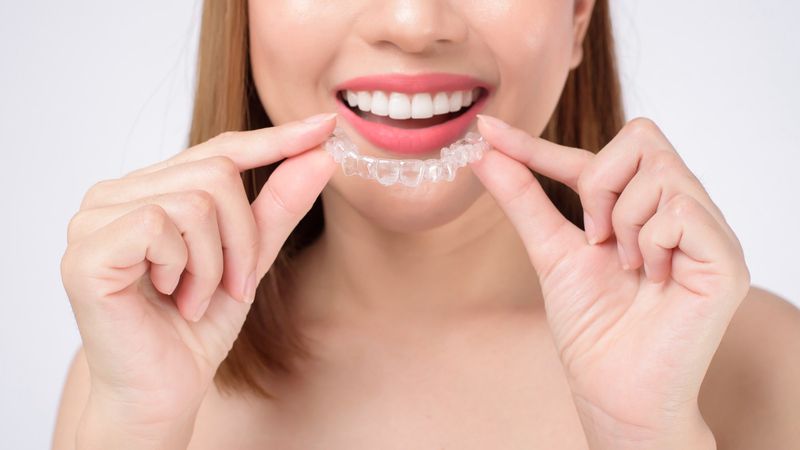
The main element used for crafting the Invisalign aligners is the thermoplastic material, also known as the "smart track." The treatment mainly consists of wearing these transparent and removable covers, which gradually tighten your teeth. You don’t need to wear brackets or braces with this treatment.
How is Invisalign Done?
Those who want to refrain from metal braces are concerned about the Invisalign treatment process. Here is a recap of this treatment.
1. Consultation and Treatment Plan
Even though this stage may seem unimportant, on the contrary, it is highly crucial to find a qualified orthodontist. A dentist for this kind of treatment may not meet the requirements, so it is better to insist on finding a qualified orthodontist.
At Antlara Dental, Ugur Agar is a prominent orthodontist in Turkey and has been serving his patients for more than 25 years. He is also known for his scientific research on orthodontics, with many publications.
At this stage, X-rays and teeth impressions are taken and sent to the laboratory. A lab technician combines all the data and impressions in a computer program and creates a 3D mold from them.
2. Checking and Wearing
Before you visit the office to wear them, the orthodontist checks them. The first aligners may need some refinements. After your orthodontist is satisfied with the aligners, you can continue with them. The Invisalign aligners need to be changed every two weeks with a new set and checked clinically every six weeks.
What Invisalign Costs in Antalya, Turkey
Invisalign is priced by how much work your teeth need, not by a flat rate. The number of aligners in your plan is what moves the figure, so a mild crowding case and a full arch correction are not the same treatment and should not carry the same price.
| Country | Typical full course |
|---|---|
| Turkey (Antalya) | GBP 800 to GBP 1,200 |
| United Kingdom | GBP 2,500 to GBP 7,500 |
| United States | USD 3,000 to USD 10,000 |
| Germany | EUR 2,500 to EUR 9,000 |
Three things move your figure inside that range. The first is the number of aligners, which follows the amount of movement planned. The second is whether you need attachments, the small tooth coloured shapes bonded to the enamel that give the aligner something to push against. The third is refinements, the extra set produced near the end if a tooth has not moved quite as the plan predicted.
Ask for the number of aligners in writing before you pay. A price without an aligner count is not a quote, it is an estimate, and the two are easy to confuse when you are comparing clinics from abroad.
How Long Invisalign Takes
Most cases run between 6 and 18 months. Crowding that is limited to the front teeth can finish nearer the six month mark. Cases that involve bite correction or moving back teeth run longer, and some go past 24 months.
The aligners have to be worn 20 to 22 hours a day. They come out to eat, to drink anything other than water, and to brush. That is the whole rule, and it is also the whole risk. Invisalign is the one orthodontic treatment where the result depends on the patient rather than the clinic, because an aligner sitting in a case on the kitchen table is not moving anything.
You change to the next aligner in the series roughly every 7 to 14 days, depending on what your orthodontist sets. After the active phase you wear a retainer, and that part does not end. Teeth drift back towards their old position for years, so retention is permanent maintenance rather than a final step.
How Treatment Works When You Live Abroad
This is the part that decides whether Invisalign abroad makes sense for you, and it is usually missing from clinic pages.
Invisalign is not like a crown or an implant, where the work happens in the chair over a few days. Your aligners are manufactured as a full series from one digital scan, before treatment starts. Once you have them, the movement happens at home, aligner by aligner, without anyone touching your teeth.
What normally happens
- First visit to Antalya. Examination, photographs, X-rays and a digital scan. Your orthodontist plans the movements and you see the projected result before agreeing to anything. If attachments are needed they are usually bonded on this trip, and you leave with the first aligners in the series.
- The months in between. You change aligners on schedule at home and send photographs at the intervals your orthodontist asks for. Most of the treatment period involves no appointments at all.
- A second visit, if the plan needs it. Some cases finish on the original series. Others need refinements, which means a new scan and a short additional set. Whether that trip is likely should be discussed at the start, not discovered at the end.
Before you book, ask the clinic three things in writing: how they monitor you between visits, whether refinements are included in the price you were quoted, and what happens if you need a second trip. Clinics answer these differently, and the difference matters more than a small gap in the headline price.
Who Invisalign Suits, and Who It Does Not
Clear aligners handle a wide range of cases well, but they are not the answer to everything, and an orthodontist who tells you otherwise is selling rather than diagnosing.
Usually a good fit
- Mild to moderate crowding
- Spacing and small gaps between teeth
- Mild to moderate overbite, underbite and crossbite
- Relapse after previous orthodontic treatment
- Adults who cannot wear visible appliances at work
Where fixed braces are often the better answer
- Severe crowding that needs teeth removed and large movements made
- Significant skeletal bite problems, where surgery may be part of the plan
- Rotating a canine or premolar through a large angle
- Moving a tooth vertically over any real distance
- Patients who know they will not keep aligners in for 20 hours a day
A good consultation ends with a straight answer about which category you are in. If a clinic offers Invisalign for a case that clearly needs fixed appliances, that is worth noticing.
Benefits of Invisalign Treatment
The material used to produce Invisalign alignment is a high-tech smart plastic whose movements can be controlled. This sophisticated technology has the same capacity as other metal braces and some specific advantages over them.
Eat and drink as you wish
If you have a metal brace, there is a long list of things you should abstain from, such as chewy candies, nuts, fresh fruits like apples, and many more. But this is not the case for Invisalign braces; you can eat whatever you want.
Almost Invisible:
The unattractive appearance of metal braces causes many patients to abstain from the treatment. With this revolutionary treatment method, concerns about the ugly appearance almost vanish. The easy take-off feature of these aligners also makes them a popular choice for patients.
Easier Hygiene:
One another problem of having braces is cleaning- especially brackets of metal braces should be cleaned carefully like a normal tooth. Invisalign also makes a difference at this point since they can easily be cleaned with special solutions or liquid soap.
Differences Between Invisalign and Metal Braces Treatment
Those who have imperfections in their teeth have to decide between these two options: metal braces or Invisalign braces. If the main features and requirements of these treatments are clearly understood, it will be easier to choose among them.
Differences Between Invisalign and Metal Braces
| Invisalign Braces | Metal Braces | |
| Visibility | Invisalign braces are almost invisible and can be easily taken off during an important event. | There are many metal braces available, like tooth-colored porcelain, gold, rubber, and behind-the-teeth braces, but they are still visible. |
| Comfort | They only cause a little discomfort when switching with a new one; other than that, they do not cause any significant discomfort. | During the placement, metal braces cause pain and discomfort on the jaw, but they eventually get lost. |
| Hygiene | Daily cleaning habits are enough, but aligners should also keep clean with a solution. | To prevent plaque and debris, more frequent cleaning is recommended. |
| Diet | You can eat anything without restrictions. | You should be more careful when eating hard, sticky, or crunchy things. |
| Effectiveness | Invisalign treatment satisfies its patients with good results as metal braces do, but it doesn't work well for complex issues. | Metal braces can be the only option in complex situations, such as if the tooth movement is hard or if there is an implant among teeth. |
Related: Invisalign vs. Braces: A Complete Guide
Having Invisalign Treatment in Antalya
Antalya has direct flights from most of Europe and the UK, which matters when a treatment may need a second trip. The city is also the reason many patients combine the first appointment with a holiday, since the scan and the fitting take far less time than a week away.
Antlara Dental is in Muratpasa, in the centre of Antalya. The first appointment covers examination, photographs, X-rays and the digital scan, and you see your treatment plan before you agree to it. If you want an opinion before travelling, you can send photographs through our free online consultation and get an initial view on whether aligners suit your case.
If your case turns out to need fixed appliances rather than aligners, the options are covered on our orthodontics and dental braces page, and the two treatments are compared in detail in our Invisalign vs braces guide.
6 Checks Before You Book in Antalya
- Confirm you are seeing an orthodontist. Orthodontics is a specialty that follows dental school. General dentists can provide aligners in many countries, but a complex case belongs with a specialist. At Antlara Dental, orthodontic treatment is carried out by Dt. Ugur Agar, who has practised orthodontics for over 25 years and published research in the field.
- Ask for the aligner count. The number of aligners is the single figure that explains the price. It should appear on your quote.
- Ask whether refinements are included. Many plans need a small additional set at the end. Find out now whether that is covered.
- Ask how you will be monitored from home. Photo reviews, video calls and their frequency. Vague answers here usually mean vague monitoring.
- Ask what the retainer plan is. Retention is part of the treatment, not an afterthought. Find out what you are given, what it costs to replace, and who provides replacements once you are home.
- See the digital plan before you pay. You should be able to look at the projected movement of your own teeth and the predicted end result before committing.
Invisalign in Antalya: Frequently Asked Questions
The questions patients ask us most often before booking.
A full course in Antalya typically runs between GBP 800 and GBP 1,200, compared with GBP 2,500 to GBP 7,500 in the UK. The figure depends on how many aligners your plan needs, whether attachments are required, and whether refinements are included. Ask for the aligner count in writing, because a price quoted without it is an estimate rather than a quote and makes clinics hard to compare.
Most patients travel once. The full aligner series is manufactured from a single digital scan taken at the first appointment, so the movement happens at home rather than in the chair. Some cases need a second trip near the end for refinements, meaning a fresh scan and a short additional set. Ask at the start whether your case is likely to need that second visit.
Mild and moderate overbites respond well to clear aligners, often with the help of attachments or small elastics. Severe cases, particularly those caused by the position of the jaws rather than the teeth, may need fixed braces or a combined surgical plan. An orthodontic assessment with X-rays is the only way to know which group you fall into, and that assessment should come before any quote.
There is pressure rather than pain, and it is strongest in the first two or three days of each new aligner. That feeling is the tooth being moved, so it is a sign the appliance is working. Most people manage with an ordinary painkiller for the first night. If a particular aligner causes sharp pain or a persistent sore spot, contact your orthodontist rather than pushing through it.
Rinse them in cool water every time they come out, and brush them gently with a soft brush and clear liquid soap once a day. Avoid hot water, which distorts the plastic, and avoid toothpaste, which scratches the surface and makes the aligner look cloudy. Cleaning crystals or tablets made for aligners work well once or twice a week for a deeper clean.
Aligners come out for everything except water. Eating with them in damages the plastic, and drinking anything coloured or sugary traps liquid against the enamel, which raises the risk of staining and decay. Hot drinks are the other problem, since heat warps the aligner out of shape. Brush before putting them back in whenever you can, and rinse at minimum.
Contact your orthodontist the same day rather than waiting. Depending on how far through that stage you are, you may be told to go back to the previous aligner, move forward to the next one early, or have a replacement made. Do not simply leave a gap in wear, because teeth begin drifting back within days and that can cost you weeks.
For mild to moderate crowding, spacing and bite issues, results are comparable and the treatment times are similar. Fixed braces remain more predictable for severe crowding, large rotations, vertical movement and skeletal bite problems. The other difference is compliance: braces work whether or not you think about them, while aligners only work for the hours they are actually in your mouth.