
What is orthodontic treatment with ceramic braces? What should be considered about ceramic braces in dental prodecures in Antalya, Turkey?
Ceramic braces, also known as clear braces, straighten teeth and correct bite problems. This type of brace consists of clear or tooth-colored ceramic brackets fastened to the teeth with a wire and rubber band of similar colors, making it more discreet than traditional braces.
Ceramic Braces; Costs, Benefits, and Procedure
Ceramic braces, the new favorite of orthodontics, are widely used in orthodontic treatment with their aesthetic features. Because of their transparent appearance, they are very close to the tooth color. Ceramic braces also eliminate problems caused by metal braces, like distorted appearance.
What Are Ceramic Braces?
Ceramic braces, also known as clear braces, straighten teeth and correct bite problems. This type of brace consists of clear or tooth-colored ceramic brackets fastened to the teeth with a wire and rubber band of similar colors, making it more discreet than traditional braces.
Free Appointment - Orthodontic Dental Treatment
You can make a free appointment below to have a orthodontic dental treatment in Antalya, Turkey.
20+ years of dental treatment experience and professional patient services.
How Ceramic Braces Done?
Dental ceramic braces treatment, as in all other dental treatments, begins with a consultation, X-ray, and the dentist's detailed examination of the mouth and tooth structure. Then, the dentist cleans the infection and plaque formations, and cavities in the mouth.
After the general oral cleaning is completed, the tooth surfaces are thoroughly cleaned with special cleaners. Brackets made of ceramics are glued to the teeth with a unique adhesive, and blue light is applied to them to harden.
Dentists use molar teeth as anchor teeth if the patient's tooth structure is suitable and fix metal bands on them. These bands wrap the molars 360 degrees, and they are set with a special adhesive. In the last stage, the ceramic wire is passed through the brackets and anchored to the molars.


How much longer do Ceramic Braces Take?
Treatment with ceramic brackets takes a little longer because forces must be loaded more slowly into the ceramics compared to metal. Although the duration of the treatment is a little longer, the success rate of ceramic braces is higher than that of metal braces. However, since metal braces also require very long treatment periods, people who are cautious about their aesthetic appearance prefer adult ceramic braces.
What Are the Advantages of Ceramic Braces?
- Ceramic braces are not as painful as metal braces.
- Thanks to their translucent tooth-colored structure, they are almost invisible.
- Since they do not contain metals, they do not cause allergies.
- Ceramic braces are an effective treatment. The 4% error rate observed in metal braces in the first 6 months is 2% in ceramic braces.
- Since their appearance does not disturb the patient, patients pass the treatment process more satisfactorily.

Metal Braces or Ceramic Braces
Metal braces and ceramic teeth braces both have the same function. Although ceramic braces seem advantageous, you should pay attention to the extra price that will cost you. It would help if you also remembered that ceramic braces would likely break, which will cause additional costs.
On the other hand, when you wear metal braces, you should have an allergy test before the treatment. In case of a metal allergy, you can head to ceramic braces or Invisalign braces.
How Much Do Ceramic Braces Cost?
Clinics prefer different brands of ceramic orthodontic braces. None of these brands significantly affects the overall cost. What determines the price is the fee charged by the dentist or the clinic and the extent of the treatment. You can examine the prices of ceramic braces below.
- The USA: $4000-$8000
- UK: £1,900 - £3,500
Do Ceramic Braces Cost More?
Ceramic braces in Turkey prices are 20% to 25% higher than metal braces. This rate may vary in other countries.
How Long Do Ceramic Braces Take?
The installation of ceramic braces is usually completed within 2 to 2.5 hours on the same treatment day. However, if caries, filling, root canal treatment, or orthodontic treatment is required before treatment, the treatment period may be prolonged.
Ceramic Braces Treatment in Turkey
You can reach Turkey almost anywhere in Europe with a single direct flight for your dental treatments, and you can turn your treatment into a holiday in cities such as Antalya in Turkey. The experience of dentists and the superior technology used by the clinics will satisfy you.
Ceramic Braces or Clear Aligners: How to Choose
Most patients looking at ceramic braces are really choosing between two discreet options rather than between ceramic and metal. They work differently, and the honest comparison is not about which is better but about which suits the movement your teeth need.
| Ceramic braces | Clear aligners | |
|---|---|---|
| Visibility | Tooth coloured brackets, the wire is still visible | Barely visible at conversational distance |
| Removable | No, fixed for the whole treatment | Yes, and that is both the advantage and the risk |
| Depends on you | Only for cleaning | Heavily, they need 20 to 22 hours a day |
| Complex movements | Handles rotations, large gaps and bite correction predictably | Excellent for many cases, less predictable for some rotations and vertical movements |
| Eating | Hard and sticky foods restricted | No restriction, they come out |
| Cleaning | Harder, around brackets and wire | Easier, you brush normally |
| Visits | Adjustment roughly every 4 to 8 weeks | Fewer in-person visits, often remote monitoring between them |
The line that matters most is the one about compliance. Aligners only move teeth while they are in the mouth, so a patient who will not wear them for twenty hours a day gets a slower, worse result than the same patient in fixed braces. Ceramic braces work whether you remember them or not, which for some people is the deciding factor.
The second line that matters is the kind of movement needed. Where teeth are severely rotated, where a tooth has to be moved bodily rather than tipped, or where the bite itself is being corrected, fixed appliances remain the more predictable tool. Our Invisalign page sets out how clear aligner treatment works from abroad, and orthodontics covers the full range of appliances. If appearance during treatment matters less to you than cost, metal braces do the same job.
Do Ceramic Braces Stain? What Actually Discolours
This is the question that worries patients most, and the answer separates two different things that get confused with each other.
The brackets
Ceramic brackets themselves are made from a glazed, non porous material and do not absorb stain. A bracket that looked tooth coloured on the day it was fitted still looks tooth coloured at the end of treatment.
The elastic ligatures
The small elastic rings that hold the wire into the bracket are a different material, and those do pick up colour from coffee, tea, red wine, curry and tobacco. They can look noticeably yellow within a few weeks. This is what people are seeing when they say ceramic braces went yellow.
The practical point is that ligatures are replaced at every adjustment visit, so the discolouration resets every four to eight weeks and is never permanent. If it bothers you between visits, there are two things that help: reducing the strongest staining drinks, and asking for self ligating ceramic brackets, which hold the wire with a built in clip and use no elastics at all.
The one stain that is permanent
White marks on the tooth around where a bracket was. These are early decay, caused by plaque sitting undisturbed against enamel, and unlike the ligatures they do not reset at the next visit. They are entirely preventable with daily cleaning around the brackets and are the real reason orthodontists push so hard on hygiene. Our page on deep dental cleaning covers professional cleaning during treatment, and whitening, if you want it, is done after the braces come off rather than during, which our teeth whitening page explains.
Who Ceramic Braces Suit, and Who They Do Not
Ceramic is a cosmetic choice layered onto a mechanical treatment. The orthodontics decides what is possible; the material decides how visible it is while it happens.
Good candidates
- Adults and older teenagers who want fixed treatment without a visibly metal smile.
- Patients whose crowding, spacing or rotation needs more control than aligners offer reliably.
- Anyone who knows they will not wear a removable appliance consistently.
- Patients having upper teeth treated, where brackets show, often combined with metal on the lower teeth where they barely do.
Where ceramic is the wrong choice
- A deep bite where the lower teeth strike the upper brackets. Ceramic brackets are more brittle than metal, and a bracket taking a direct bite force on every closure will fracture. This is assessed before bonding, not afterwards.
- Heavy grinding or clenching. Same reason.
- Contact sports without a mouthguard.
- Untreated gum disease or active decay. Brackets bonded onto inflamed gums and unrestored teeth lock the problem in for the length of the treatment. Our gum disease treatment page covers what has to be stable first.
Where straightening is not the answer at all
If the issue is colour, shape or small chips rather than position, orthodontics is a long route to the wrong destination. Composite bonding or veneers address those directly. Where both apply, straightening first means far less tooth has to be reduced for the veneers afterwards, and that sequence is worth asking about.
Living With Ceramic Braces Day to Day
The first week
Teeth feel tender for three to five days after fitting and after each adjustment, because that soreness is the teeth actually moving. Soft food and ordinary painkillers cover it. The inside of the lips and cheeks may rub against the brackets until the tissue toughens up, and orthodontic wax over the offending bracket solves that in the meantime.
What not to eat
- Hard: nuts, ice, hard crusts, boiled sweets, anything that needs force from the front teeth.
- Sticky: toffee, chewing gum, soft nougat, which pull brackets off.
- Whole and firm: apples, carrots and corn on the cob are fine cut into pieces, not bitten into.
Ceramic brackets are more brittle than metal ones, so these restrictions matter a little more than they would with metal.
Cleaning
This is where orthodontic treatment succeeds or leaves a mark. Brush after every meal, use an interdental brush around and under the wire, and a water flosser if you have one. The vulnerable spot is the gum side of each bracket, which is exactly where the brush tends not to reach.
If a bracket comes off while you are abroad
It is not an emergency. Keep the bracket if it is loose on the wire, avoid chewing on that side, and cover any sharp end with wax. Contact us and we will advise whether it needs attention immediately or at your next scheduled visit. A wire poking into the cheek can be eased back with the blunt end of a pencil or covered with wax until it can be trimmed properly.
How Orthodontic Treatment Works if You Live Abroad
This is the part most clinics leave vague, and it is the part that decides whether the treatment is realistic for you. Fixed braces need adjusting roughly every four to eight weeks, and nobody flies to Antalya that often for a short appointment. There are three honest ways to handle it, and the right one is agreed before you start rather than improvised later.
Shared care with a dentist at home
The appliance is fitted in Antalya and the routine adjustments are carried out by an orthodontist where you live, with the plan, records and progress shared between the two. This works well, and it depends entirely on arranging the home side before treatment begins rather than after.
Treatment planned around trips you were making anyway
Patients who visit Antalya regularly, or who have family in the region, can schedule adjustments around those trips. The treatment takes longer than it would with a local patient, because the interval between visits is longer, and that is a trade rather than a problem as long as it is stated at the start.
Choosing a removable appliance instead
Where the case allows it, clear aligners genuinely suit the international patient better, because the sequence of aligners is made in advance and the number of in-person appointments drops sharply. If your case is suitable, we will say so even though it is the different treatment, and our Invisalign page sets out how that works in practice.
Retainers, which are not optional
Teeth drift back towards their old positions once the appliance is removed. That is biology and it applies to every patient, whichever appliance was used. A retainer, fixed behind the teeth or removable and worn at night, is what holds the result, usually indefinitely rather than for a few months. Ask whether retainers and the appointment to fit them are included in the quoted price, because this is the most commonly omitted item in an orthodontic quote and the one that costs you the whole treatment if it is skipped.
Ceramic Braces FAQ
Ceramic Braces - AntalyaThere is no pain during the installation of ceramic braces, but some soreness is felt for 2 to 4 days after the insertion, as well as adjustments of braces. Although this pain is not as severe as metal braces, it can still disturb patients at night.
The biggest cons of ceramic teeth braces are that they are not as resistant to staining as metal braces. That is why good care is required, so their discreetness is not lost. Regular brushing that we apply to our normal teeth is enough for their cleaning. For ceramic braces;
- Use a soft toothbrush,
- Use interdental toothbrushes,
- Prefer toothpaste that contains fluoride and does not contain bleachers,
- Brush your teeth regularly.
Ceramic braces offer effective and successful solutions, but since they are fragile, they must be protected from external impacts and demanding food.
Since less pressure is applied to the ceramic braces, their straightening times are slightly shorter. But it is possible to achieve the same results that metal braces provide. Only for very complex problems may your dentist choose to use metal braces.
Ceramic braces are more comfortable than metal ones and less painful after adjustment sessions.
Ceramic braces are resistant to staining. However, they can be stained due to the clear bands surrounding the brackets. In metal braces, these bands are more opaque and, therefore, more resistant to staining. So, you should pay more attention to cleaning ceramic braces.
Ceramic Braces: Questions Patients Ask Us
The questions that come up most often before choosing ceramic braces.
The brackets do not, because the ceramic is glazed and non porous. What discolours is the small elastic ring holding the wire into each bracket, which picks up colour from coffee, tea, red wine, curry and tobacco. Those rings are replaced at every adjustment visit, so the discolouration resets every four to eight weeks. Self ligating ceramic brackets avoid the issue entirely, because they hold the wire with a built in clip and use no elastics.
Neither is better overall; they suit different cases and different people. Clear aligners are more discreet and easier to clean around, but they only move teeth while they are worn, so they depend on you keeping them in for 20 to 22 hours a day. Ceramic braces work regardless of compliance and remain more predictable for severe rotations, bodily tooth movement and bite correction.
They are more brittle than metal brackets, so hard and sticky foods matter more than they would with metal, and a deep bite where the lower teeth strike the upper brackets can fracture them. That bite relationship is checked before bonding, and where it is a problem, metal on the affected teeth or a different approach is recommended instead.
In most cases the difference is small, and the treatment time is set by how far your teeth have to move rather than by the bracket material. Where ceramic adds time, it is usually because brackets have had to be re-bonded after breakage or because a more cautious force level was used. For a straightforward case, expect broadly the same timescale as metal.
Yes, although many patients choose ceramic on the upper teeth, where brackets show when you smile, and metal on the lower, where they barely do. Metal is more robust and slightly cheaper, so the combination keeps the cosmetic benefit where it counts. A deep bite is the other reason lower ceramic is sometimes avoided.
Three options exist and one is agreed before treatment begins. The appliance can be fitted in Antalya with routine adjustments carried out by an orthodontist where you live under shared care. Visits can be planned around trips you were already making, accepting a longer overall treatment. Or, where the case allows, clear aligners are chosen instead, since they need far fewer in-person appointments.
Yes, and indefinitely rather than for a few months. Teeth drift back towards their original positions after any orthodontic treatment, which is biology rather than a sign that something went wrong. A retainer is either fixed behind the teeth or removable and worn at night. Ask whether retainers and the fitting appointment are included in the quote, because this is the item most often left out.
It is better to wait. Whitening gel does not reach the enamel underneath a bonded bracket, so you can end up with lighter teeth and a darker patch where each bracket sat. Whitening is done after the braces are removed and the teeth have settled for a couple of weeks. Keeping the teeth clean during treatment matters more, because white marks around brackets are early decay and those do not whiten away.
It is not an emergency. Keep the bracket if it is still threaded on the wire, avoid chewing on that side, and cover any sharp end with orthodontic wax. Contact us and we will tell you whether it needs attention straight away or can wait for your next scheduled visit. A wire pressing into the cheek can be eased back with the blunt end of a pencil until it can be trimmed properly.
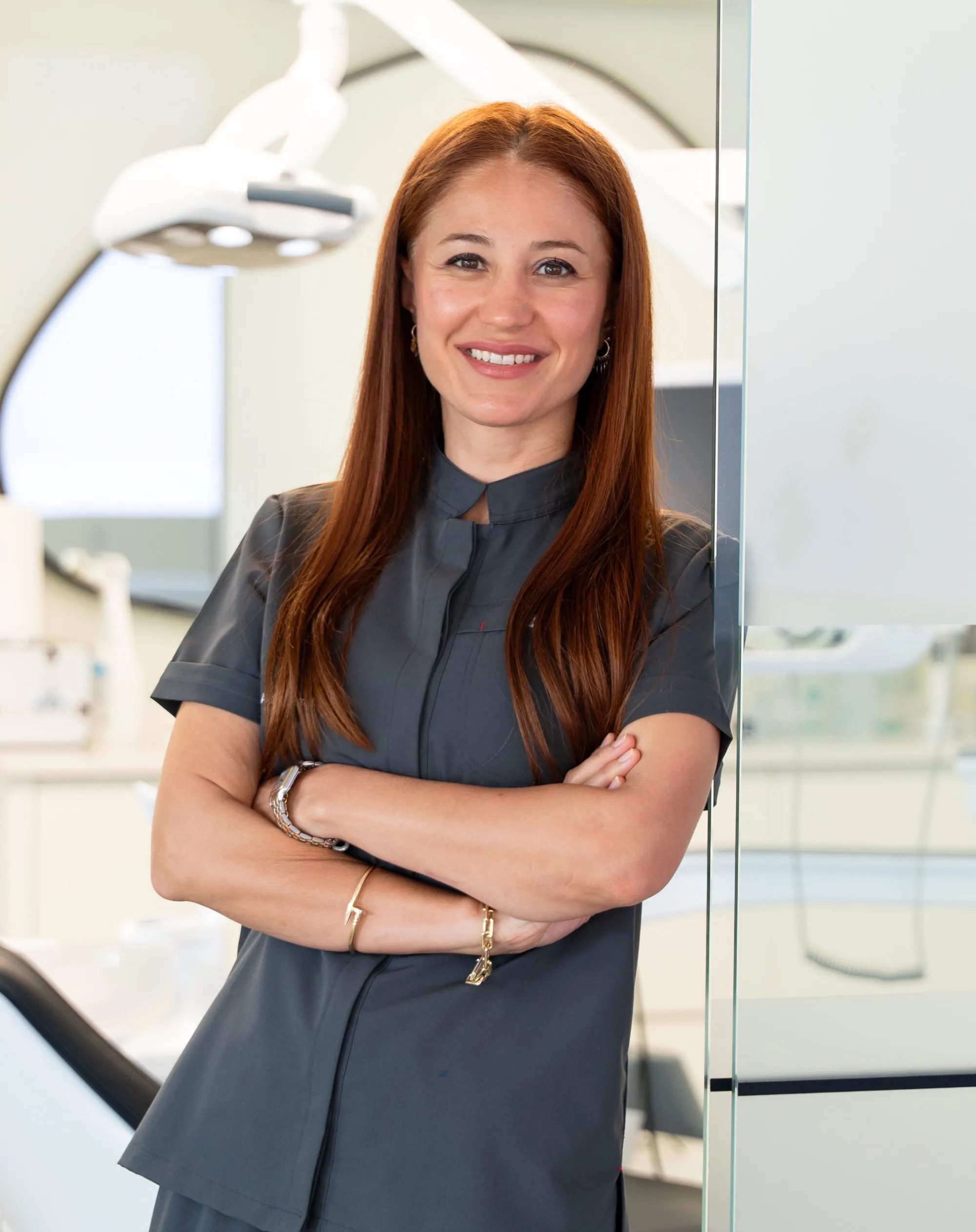
Dt. Dilek Aksu Güler
Cosmetic Dentist, Dental Implant Specialist
Dt. Dilek Aksu Güler specializes in implantology, digital smile design and cosmetic dentistry. She is the founding dentist of Antlara Dental Oral and Dental Health Clinic.