
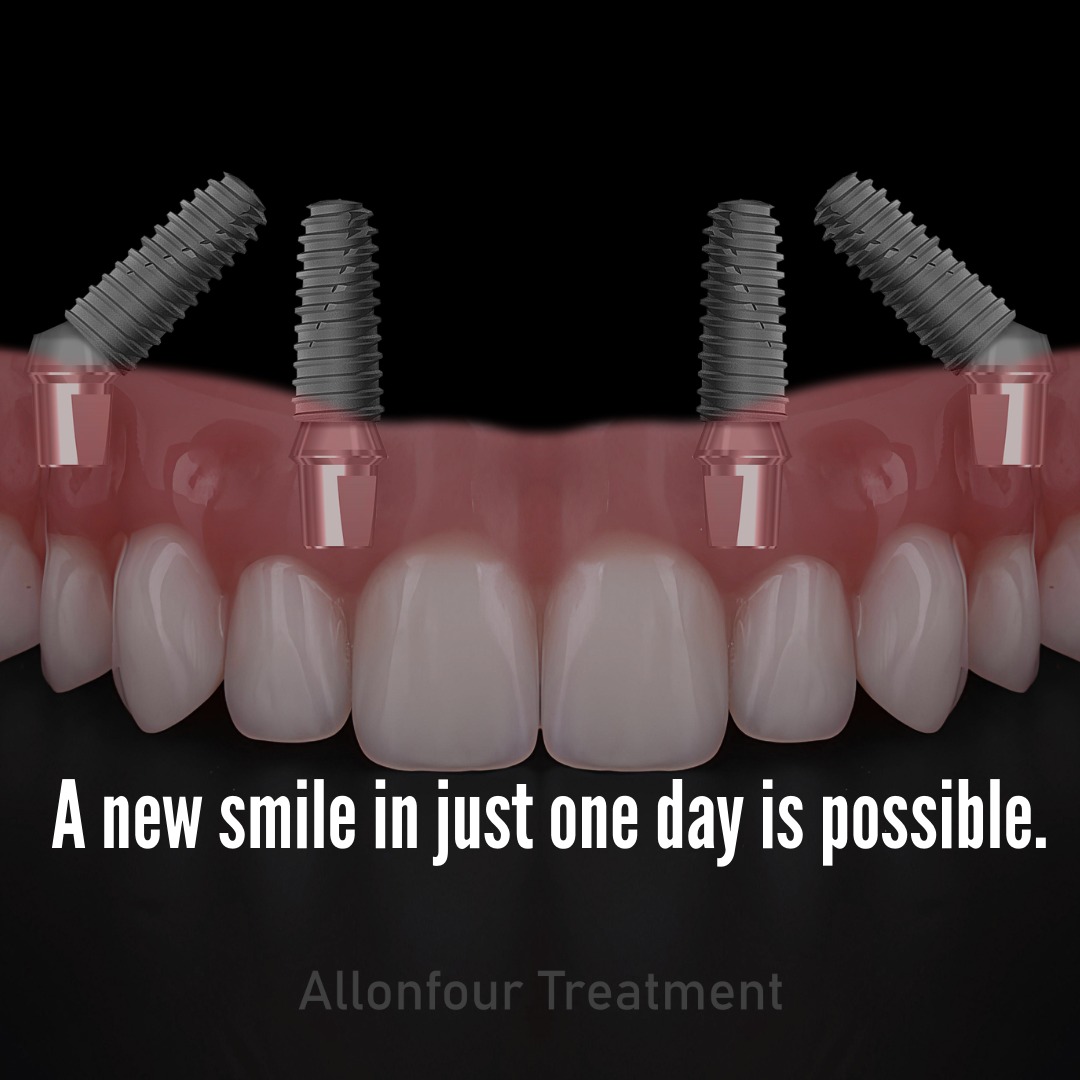
When you hear “new smile in one day with All-on-4,” it means that on the day of surgery, the implants are placed and you leave the clinic with fixed, temporary teeth. However, these are not the final permanent prostheses. The permanent teeth are made after the implants have fully fused with the bone.
How can same-day fixed teeth be safe?
The key factor here is primary stability: the implant needs to sit tight and secure in the bone right when it's placed. On day one, the implant hasn't biologically fused with the bone yet; it's only mechanically anchored. If that anchoring isn't strong enough, even tiny movements from chewing could break the bond. That's why it's critical to insert implants with the right tightness.
But that's only part of the story. Another key point is linking all the implants together with one rigid temporary prosthesis. In other words, the four implants don't carry load individually; they function like a connected bridge. This means chewing forces aren't concentrated on just one implant; they're spread across the entire system. With the load distributed, the stress on each implant is lower and the risk of tiny movements is reduced.
What is All-on-4?
All-on-4 is a full-arch, screw-retained approach for jaws that are completely toothless (or planned for all teeth to be removed, i.e., “hopeless” teeth). It uses four implants to support a fixed bridge. The typical setup is:
- Front: 2 straight (axial) implants
- Back: 2 tilted implants (usually up to about 45° in most cases)
The main goal of this design is to make the most of the existing bone — especially in patients with limited bone height at the back — by placing the support points further back. This way, you can get a fixed set of teeth with less additional surgery (if needed for your specific case).
Why not every patient can have same-day All-on-4 treatment
The following situations can make same-day fixed prosthesis difficult:
- Insufficient initial stability: If we can't achieve enough tightness (torque) or stability (ISQ) during implant placement, it might be safer to wait for the implants to fuse with the bone before loading.
- Simultaneous major bone grafting or sinus surgery: If extensive bone augmentation or sinus lift is done at the same time, then bone healing becomes the priority, so immediate loading might not be appropriate. The decision depends on each patient's clinical situation.
- Uncontrolled bruxism (teeth grinding): Grinding can increase the risk of implant loss and mechanical complications.
- Heavy smoking: Studies (meta-analyses) have found a higher risk of early implant failure in smokers.
- Poor oral hygiene or low maintenance compliance: This increases the risk of peri-implant disease; in the long run, good care and follow-up are essential.
Conclusion
All-on-4 can give you that “new smile in one day” with fixed temporary teeth immediately in many cases. But whether it's safe to do so depends on evaluating your bone and anatomy, checking the primary stability during surgery, and considering how the load is distributed.
This article is just for your information and does not replace a proper diagnosis or treatment plan. The best answer comes from a personal dental exam and CBCT scan.
Dt. Dilek Aksu Güler
Cosmetic Dentist, Dental Implant Specialist
Dt. Dilek Aksu Güler specializes in implantology, digital smile design and cosmetic dentistry. She is the founding dentist of Antlara Dental Oral and Dental Health Clinic.