
A black dot on a tooth is rarely the thing most people assume it is. Whether you call it a dot, a spot, a dark mark, a line or a stain, in the surgery it turns out to be decay, hardened tartar, or simply coffee sitting in a groove.
The short answer first. A spot that feels rough, and that the dentist's probe catches on, is usually decay. A spot that stays smooth and polishes away is usually a surface stain. You cannot reliably tell the two apart in a bathroom mirror, and that is exactly why people wait too long.
One thing matters more than the rest: a black dot almost never hurts at the start. With this finding, no pain is the normal state of affairs, not reassurance.
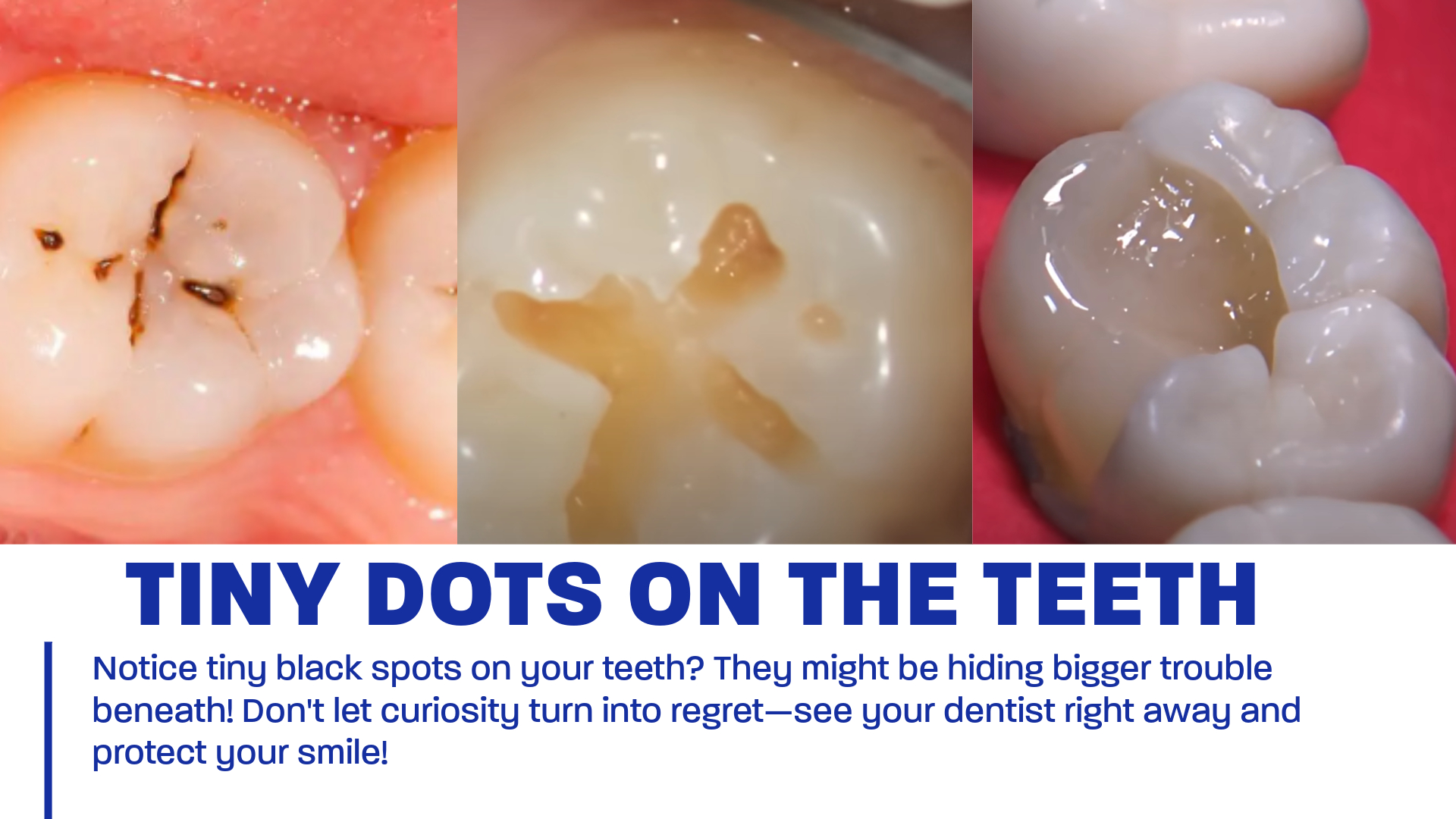
It is quite natural to panic when you notice small black spots or lines suddenly appearing on your teeth. While these tiny spots may appear innocent at times, they can also indicate a deep-rooted cavity. But what are these black spots really a sign of? Is it a simple stain or the initial indication of a more serious issue?
What you may not know is that these little black dots are special and stubborn stains that often never come out with the usual dental care routine but can be removed with the intervention of professional hands. In our article, you will find out the real causes of black spots on teeth, how to effectively diagnose them, and which treatment methods can help you get rid of them for good. If you want to solve the mystery behind blackheads on your teeth and be able to smile easily again, read on!
Is a Black Dot on a Tooth Always a Cavity?
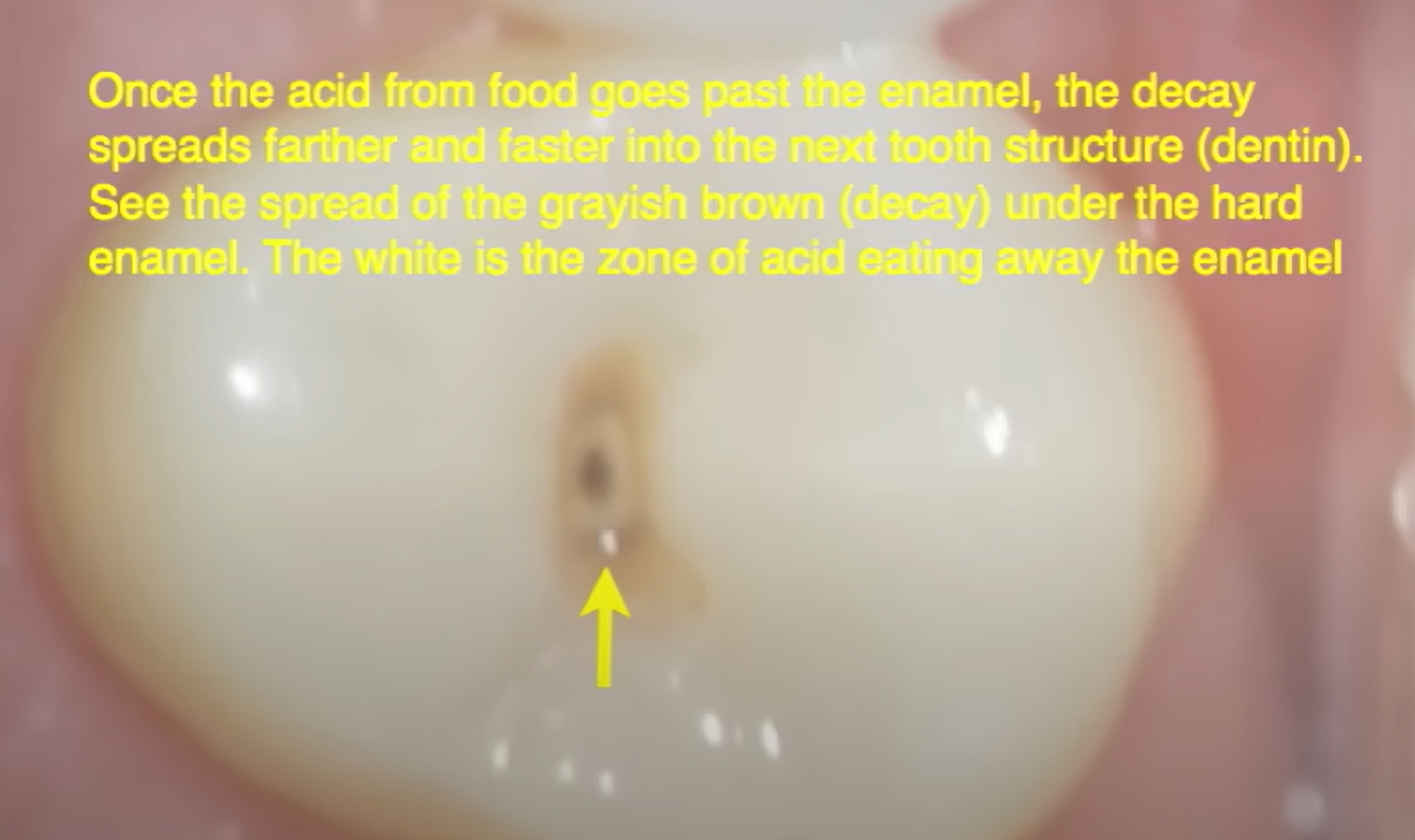
No. Decay is the most common cause but far from the only one. The reverse is also true: decay is not always black. Early decay often shows up as a white, chalky patch, and only after it has been there a while do pigments soak in and turn it brown or black. So a black dot can be old, slow moving decay, while an unremarkable white patch is the more active problem.
These are the six causes we see most often:
- Tooth decay: The spot feels rough, usually sits in a groove on a chewing surface or between two teeth. It cannot be brushed away and it grows over months.
- Stained tartar: Sits at the neck of the tooth right along the gumline, and it is hard. Coffee, tea and tobacco darken it. It comes off with a professional clean but never with a toothbrush. We cover this in our guide to deep dental cleaning.
- Surface staining: Coffee, black tea, red wine, tobacco and chlorhexidine mouthwashes settle into fine grooves. These marks are smooth and superficial.
- Black stain from chromogenic bacteria: A thin dark line following the gumline, common in children and in people whose oral hygiene is otherwise very good. Harmless, stubborn, and it often returns after cleaning.
- An old filling showing through: Amalgam releases dark particles into the surrounding tooth over the years. The tooth looks grey or black even though it is sound.
- A dead tooth after a knock: Here it is not a dot but the whole tooth that darkens, usually months or years after the injury. That is a case for root canal treatment.
Which of the six applies is not settled by looking. It is settled by feeling the surface with a probe and, where decay between teeth is suspected, by a small x-ray.
Why You Should Not Try to Remove a Black Spot Yourself
Searching for how to remove black spots on teeth at home is one of the most common things people do with this problem, and the impulse makes sense. The mark is visible, it bothers you, and the internet offers a remedy for everything. We would still advise against it, for four specific reasons.
Scraping makes decay worse. If the spot is decay, there is softened enamel underneath. A pin, a toothpick or a fingernail opens that layer and gives bacteria a more direct route inward. A small problem can become a deep one within weeks.
Tartar scrapers bought online damage the tooth neck. At the gumline the tooth is covered not by enamel but by much softer root cementum. Working on it with a metal instrument leaves grooves where new deposits settle faster than before.
Baking soda and charcoal wear the enamel down. They brighten in the short term because they abrade the top layer. Enamel does not grow back. After a few months the yellower dentine underneath starts to show and the tooth looks darker than when you started.
Whitening does not work here. Teeth whitening lightens the tooth itself. It removes neither tartar nor decay, and it will not lighten a dark filling. For a black dot it is the wrong tool.
What does work: if the mark is a stain or tartar, a professional clean removes it in a single visit, often with an air polishing device that is gentler than any home remedy. If it is decay, the tooth needs a filling. Both are straightforward while the problem is small.
Where the Spot Sits Often Tells You the Cause
The position on the tooth is a good first clue to what you are dealing with.
On the chewing surface of a back tooth
By far the most common place. The chewing surfaces of molars have deep grooves, called fissures, and they are narrower than any toothbrush bristle. Deposits collect there that you simply cannot reach. A dark dot in one of those grooves is either a harmless fissure stain or early fissure decay, and the two are almost impossible to tell apart by eye.
Between two teeth
Decay between teeth is the sneakiest version, because it stays hidden for a long time. It is often spotted only when it shows as a dark shadow through the tooth or appears on a bitewing x-ray. If you use floss regularly and it catches or shreds at one particular spot, take that seriously.
At the gumline
Here the cause is more often tartar or a dark bacterial line than decay. In people with receding gums, however, root decay becomes a real possibility, and it progresses faster than decay in enamel.
On a front tooth
Dark marks in the visible zone are usually staining or old composite fillings that have discoloured at the edges. Where this bothers you cosmetically, a new filling, veneers or a crown are the usual routes.
No Pain, and It Appeared Overnight: Two Misunderstandings
"It does not hurt, so it cannot be serious." Enamel contains no nerves. Decay that sits only in enamel therefore cannot hurt. Pain begins once the defect reaches the dentine underneath, and by then it is considerably larger. A black dot without pain is the rule rather than the exception, and it is the moment when treatment is still small and simple.
"That spot was not there yesterday." Decay develops over months, often years. What feels sudden is usually the moment the defect breaks through the surface and becomes visible. The exception is a chipped piece of tooth or a filling that has come out after biting something hard. If your tongue finds a sharp edge, that should be looked at promptly.
Something different applies if symptoms join the dark spot: persistent pain, tenderness when you bite down, swelling of the gum, or a bad taste in the mouth. At that point it is no longer just a discolouration. We explain how to read a gum boil and what a tooth abscess involves in separate guides.
What is a Black Dot on Tooth?
Black dots on teeth are a special type of discoloration, commonly known as "Extrinsic Black Tooth Stain" or EBS for short. This occurs on the outer surface of the teeth and appears as small black dots or dark-colored fine lines, especially in the areas close to the gums, i.e. the cervical triad of the teeth. Occasionally these spots may merge to form longer, dashed lines and may even appear on the recessed and protruding parts of the teeth (pits and fissures).
Unfortunately, EBS stains cannot be removed with routine daily oral care. These stains, which are firmly attached to your teeth, are very difficult to remove with brushing or toothpaste. These stains can only be removed with a professional cleaning procedure (scaling or debridement) by your dentist. However, even after professional cleaning, it is quite common for these stains to reoccur in a short time.
EBS is a special type of plaque that, when examined under a microscope, contains a high concentration of Gram-positive bacilli and cocci. They are also known to contain calcium particles and iron compounds. The metabolism of these bacteria produces black-colored substances or inorganic substances like iron sulfide, which are believed to cause these stains.
How to diagnose EBS;
Different scientists have set various criteria to diagnose EBS. For instance, Koch's criteria (1) say that EBS can be diagnosed if there is a group of dark spots smaller than 0.5 mm on the tooth surfaces that are parallel to the gingival margin on at least two different teeth. Other researchers have presented different classifications according to the amount, continuity, and extent of pigmented plaque.
Although these black spots do not cause any physical discomfort, they can seriously disturb people aesthetically. Especially in children, this is known to cause self-confidence problems. Many people may hesitate to smile or speak because of these black spots on their teeth, which can be socially uncomfortable.
In short, these small black spots on the teeth usually do not pose a health risk, but can be aesthetically striking. Therefore, regular professional cleanings with the help of your dentist will help keep this problem under control.
Common Causes of Black Dots on Tooth
Black spots on the teeth can be a common complaint of many people. Although these spots sometimes seem small and harmless, they actually give important clues about your dental health. So, what are the common causes behind these blackheads?
Dental Caries (Cavities)
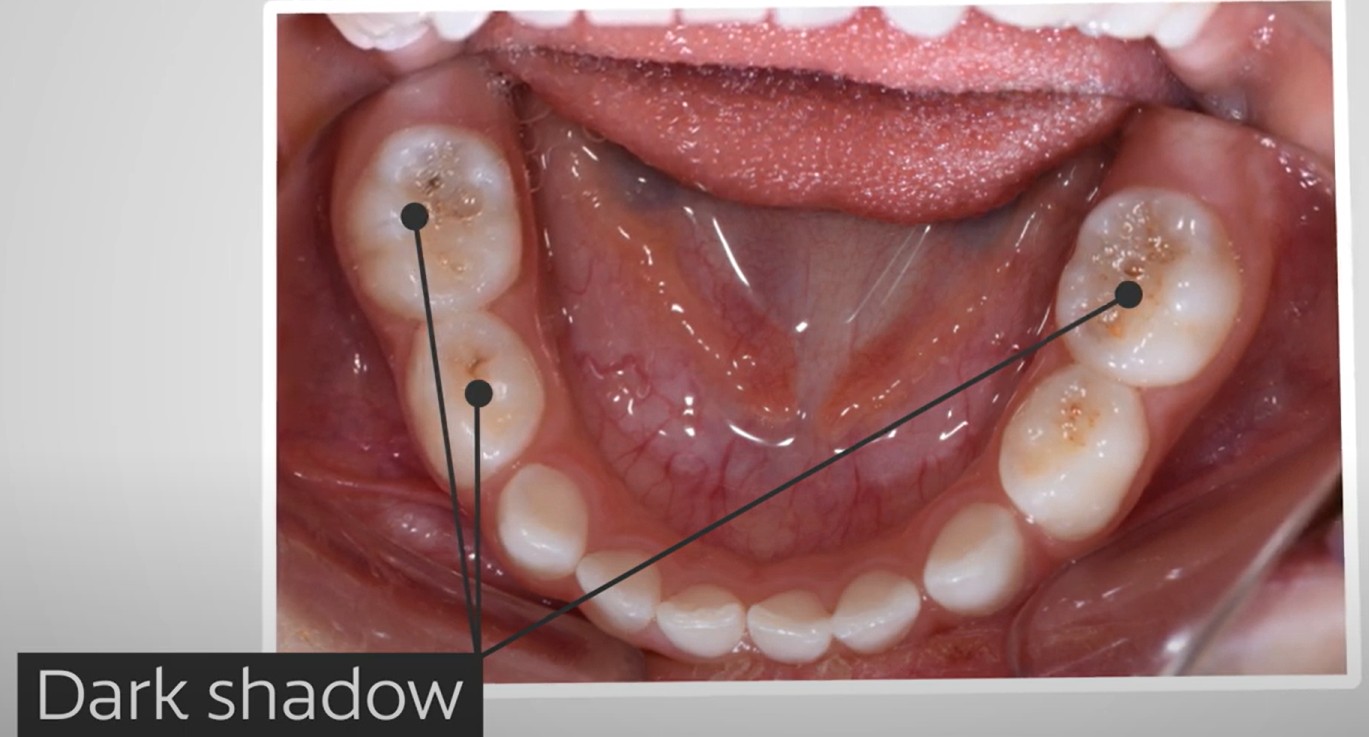
First of all, one of the most common causes of black spots on teeth is tooth decay. Initially, cavities appear as white spots; however, over time, they progress on the tooth surface and cause discoloration. These progressive decays begin to appear as dark shadows or black spots, especially between the teeth or near the gum line. These spots indicate that the decay has progressed and now requires deeper treatment.
Dental Plaque and Tartar
Another common condition is "extrinsic black teeth stains", also known as black plaque. These stains appear as small black dots or lines on the tooth surface or near the gum line. This is caused by the accumulation of certain types of bacteria in the mouth. These bacteria accumulate in dental plaque and combine with calcium to form black stains over time.
Stains from Foods and Beverages
What we eat and drink can also cause black spots on teeth. In particular, tannins found in beverages such as tea, coffee and wine attach to the surface of the teeth and form brown or dark stains. In addition, the compounds in these drinks can interact with iron in the mouth, creating black-toned stains.
Smoking and Tobacco Use
Smoking and tobacco use can cause dark discoloration of the teeth, but usually in shades of brown or yellow. Although not directly linked to blackhead formation, it contributes to the overall darkening of teeth and can make other existing stains more visible.
Dental Trauma
Finally, dental trauma can also cause discoloration, but this is usually related to the internal structure of the tooth. Post-traumatic tooth discoloration may appear in shades of gray, pink or brown, but it does not appear as small black dots on the outer surface.
To summarize; when you see black spots on your teeth, there may be various reasons for this, such as decay, plaque accumulation or your eating habits. You can prevent black spots and protect your oral health with regular teeth cleaning and routine check-ups.
Less Common Causes
There are actually some not so common causes of black spots on the teeth.
Fluorosis
Let's start with a condition called fluorosis. Fluorosis is usually caused by too much fluoride intake in childhood. However, this usually does not cause black spots, but white lines or stains on the teeth. If the condition is more severe, the white spots can turn brown over time and even cause slight roughening of the enamel. So there is no clear information that fluorosis directly causes blackheads.
Medication Side Effects
Let's talk about medicines. Especially antibiotics are known to cause tooth discoloration. The most well-known example is tetracycline group drugs. These can cause internal discoloration of the teeth, but usually these discolorations are in yellow or brown tones, not in the form of black spots. In addition, although antiseptics containing chlorhexidine are also known to cause external stains, we cannot say that they cause blackheads.
Aging and Wear
There is also the aging factor. As we age, the enamel of our teeth wears away and the dentin layer underneath becomes more prominent. This causes the teeth to appear darker in general. However, discoloration caused by aging is usually in the form of a general color tone change. In particular, it is not seen as dotted black spots, but as a general darkening or yellowing.
In short, fluorosis, which is a rare cause of black spots on teeth, usually causes white streaks, antibiotics usually cause yellowish or brownish stains, and aging causes general darkening. The main and most common cause of black spots on teeth is a condition called "extrinsic black teeth stain (EBS)", which is caused by the combination of certain types of bacteria and minerals.
Diagnosing Black Dots on Teeth
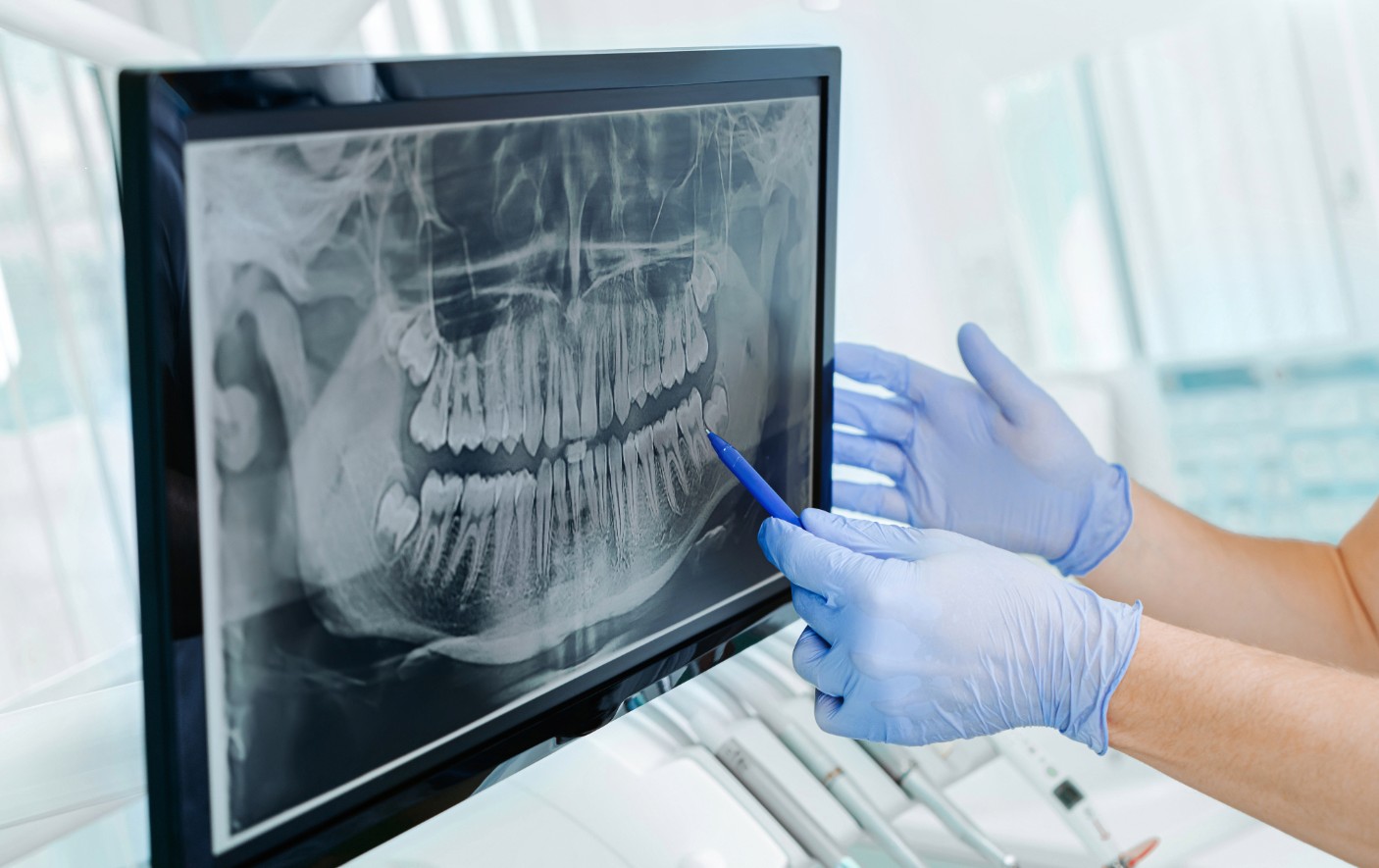
You can visit a professional dentist to understand why black spots appear on the teeth. Because black spots can be caused by different reasons; sometimes it can be a simple surface stain, while sometimes it can be a sign of a serious decay. Therefore, a detailed evaluation by the dentist can reveal the real cause of the problem.
To diagnose black spots, the dentist first performs a detailed visual examination. In this examination, the number, size, color and position of the black spots on the tooth are examined. Particular attention is paid to how close the spots are to the gum line. This is because some black spots appear as small dots or fine lines, especially around the gum line, and this appearance makes them easier to diagnose.
For example, in the case of what we call "extrinsic black teeth stain (EBS)", the black spots are usually in the form of thin dark lines or dotted spots that follow the gum line. Dentists can recognize these types of stains immediately because they have a very distinctive and characteristic appearance.
In some cases, the dentist may also ask for an X-ray to be sure. But here's an important detail: X-rays are not actually used to directly diagnose the black spot. X-rays may be needed to see if there is a cavity underneath the black spots. This is because sometimes black spots may look like a simple stain on the outside, but may actually be a sign of a hidden cavity underneath. X-rays can clearly show the depth and size of these bruises.
Treatment Options for Black Dots on Teeth

Although black spots on the teeth are usually not a serious problem, they can be visually disturbing. Fortunately, there are several different treatment options:
1. Professional Teeth Cleaning (Scaling and Polishing)
The most common and effective treatment for black spots on teeth is professional teeth cleaning. Unfortunately, daily brushing or flossing at home is not enough to remove such stains. Because these spots are actually a special type of plaque that adheres very tightly to the tooth surface. These stains can be easily cleaned by the dentist using special tools.
The treatment takes about 15-20 minutes and is not painful at all. The dentist first scrapes away the stains and then polishes the teeth with special brushes and pads. Finally, they may apply some creams that strengthen and protect the enamel. However, it should not be forgotten that these stains can reoccur over time, so regular teeth cleaning is essential.
2. Dental Fillings
The use of dental fillings is more related to tooth decay. In other words, if the black spots are actually the beginning of a decay or a symptom of an advanced decay, then the dentist can clean the decay and cover that area with a filling. However, this procedure is generally preferred not for superficial stains, but for situations that damage the tooth structure.
3. Teeth Whitening Procedures
Teeth whitening methods are usually used for general discoloration. It is not clear whether these methods are particularly effective against black spots, which are strongly attached to the surface of the tooth. Since black spots contain complex compounds made up of minerals such as iron or sulphur, whitening agents may not be effective enough against such spots. Therefore, bleaching is not recommended for black spots.
4. Dental Veneers and Crowns (Veneers)
Veneers (laminates) and crowns are usually used for more serious aesthetic problems. Veneers may be considered if black spots are widespread, if professional cleaning has failed to achieve adequate results, or if there is a general need to improve the appearance of the teeth. But it is definitely not the first option for simple and small black spots. These are more often preferred in cases with major aesthetic problems that cannot be solved in other ways.
In conclusion, if you have black spots on your teeth, the best approach is to first seek a solution with a professional dental cleaning. If the spots are caused by decay, a filling is necessary. Bleaching is generally not very effective for black spots and cosmetic procedures such as veneers are only considered in very advanced cases. For the most accurate determination of all these, it is absolutely necessary to consult a dentist.
Black Dot on Tooth: Common Questions
The questions patients ask us most often about dark marks on teeth.
No. Decay is the most common cause, but stained tartar, coffee and tobacco deposits, a dark bacterial line at the gumline, an old filling showing through, or a tooth that died after a knock all look similar. The reverse is also true: decay is not always black, since early decay often appears as a white chalky patch. Only an examination with a probe, plus an x-ray where decay between teeth is suspected, gives a definite answer.
We would advise against it. If the mark is decay, scraping opens the softened enamel and speeds the process up. Tartar scrapers leave grooves at the tooth neck where new deposits settle faster. Baking soda and charcoal only lighten because they abrade enamel, and enamel does not grow back. A professional clean removes staining and tartar in one visit without damaging the tooth.
Because enamel has no nerves in it. As long as a defect sits only in enamel it cannot cause pain. Sensitivity to cold and sweet things comes later, once it reaches the dentine underneath, and proper pain later still. Freedom from pain is therefore not reassurance with this finding. If anything it suggests the problem is still early and can be dealt with using a small filling.
Decay forms over months or years. What seems sudden is usually the point at which the defect breaks through the surface and becomes visible. Something genuinely fast is either a chipped piece of tooth or a filling that has come out, typically after biting something hard such as a fruit stone. If your tongue can feel a sharp edge, book an appointment promptly rather than waiting.
The chewing surfaces of molars have deep grooves called fissures. They are narrower than a toothbrush bristle, so deposits gather there that you cannot reach mechanically. A dark dot in a fissure is either a harmless stain or early fissure decay, and the two look almost identical to the naked eye. That is why back teeth are the classic place for a check rather than a guess.
Yes, where the mark is surface staining, tartar or a dark bacterial line. These deposits sit on the tooth and lift off with ultrasonic scaling and air polishing. What a cleaning cannot do is remove decay or lighten a discoloured filling. In those cases the tooth needs a filling or a new restoration rather than a polish.
Most often it is black stain, a thin dark line produced by chromogenic bacteria. It turns up particularly in children whose oral hygiene is good, and it carries no health risk. It can only be removed professionally and it frequently comes back. A dentist should still look once, to rule decay out with certainty rather than by assumption.
Usually not. Whitening lightens the tooth substance itself. It removes neither tartar nor decay and it does not change the colour of fillings, crowns or veneers. For a black dot it is the wrong tool. Whitening only makes sense afterwards, once the cause has been treated and you want to change the overall shade of your teeth.
Without symptoms, an appointment within the next few weeks is enough. Sooner if you can feel a sharp edge, if the tooth reacts to cold or sweet things, or if there is pressure when you bite. Go straight away if there is persistent pain, swelling of the gum or a bad taste, because those usually mean an infection is already established.
Conclusion
In conclusion, while it is true that black spots on teeth do not usually cause serious health problems, they can sometimes be a sign of deeper problems. For example, black spots can be superficial bacterial stains (EBS) or a sign of advanced tooth decay. Therefore, a thorough examination and diagnosis by your dentist is important. Since stains are usually not removed by routine brushing, professional cleaning (scaling and polishing) is the only effective method.
However, these procedures alone may not be permanent; the bacterial load in the mouth should be checked regularly to prevent recurrence of stains. If the stains are seriously bothering you visually and you are worried about them recurring, it would be helpful to seek advice from your dentist about more permanent solutions (e.g. cosmetic procedures).
Resources;
1- Black Stain - A Review Valerie Ronaya/Thomas Attina - Oral Health Prev Dent 2011; 9: 37-45. Submitted for publication: 01.09.2009; accepted for publication: 10.05.10.

Dt. Dilek Aksu Güler
Cosmetic Dentist, Dental Implant Specialist
Dt. Dilek Aksu Güler specializes in implantology, digital smile design and cosmetic dentistry. She is the founding dentist of Antlara Dental Oral and Dental Health Clinic.