
Smoking doesn't automatically disqualify you from getting a dental implant. Yes, smoking is harmful to implants, but it doesn't completely ruin an implant's stability on its own. However, there's one important thing: avoid smoking for the first 48 hours after your surgery.

Let's explain with an example. One patient was strongly urged not to smoke for the first 48 hours after surgery. By hour 36 he just couldn't hold out and admitted he smoked — and what he said next sums it up perfectly: “If you don't want to deal with infections like I did, wait at least two days!”
Why the first 48 hours is so critical
Think of the first 48 hours after treatment as part of the healing process. In this time, bleeding hasn't fully stopped, swelling is still coming down, and the anesthesia hasn't completely worn off. The only thing that's over is the actual procedure. This means smoking in the first 48 hours is almost like smoking during the surgery. Here are some key reasons why smoking during this time can cause problems.
Clot and early healing
The first 24-48 hours after implant surgery are crucial, as this is when your body kick-starts healing. As soon as the surgery is over, a fibrin-rich blood clot forms in the area — acting like a “biological scaffold.” On day one, neutrophils rush to the site; around days 2-3, monocytes turn into macrophages and the first steps of new blood vessel growth (angiogenesis) begin.
At this point, good blood flow and oxygenation to the tissue are absolutely vital, and smoking sabotages that process. Nicotine constricts blood vessels and cuts blood flow, while carbon monoxide from smoke binds to hemoglobin much more strongly than oxygen, blocking oxygen transport to tissues. The solid fibrin matrix and healthy cellular response that need to form on the first day can be weakened by this. If these crucial first steps of healing are disrupted, it becomes harder for the implant to securely bond with the bone.
Oxygen, blood vessel development, and the start of osseointegration
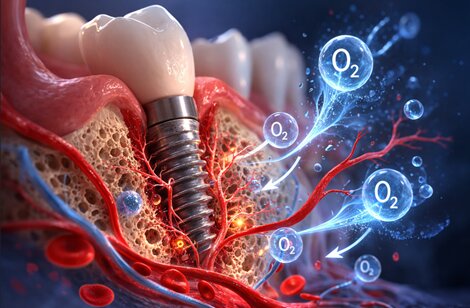
These first two days are also when new tiny blood vessels begin to form. The bone around the implant gets nourished by this new vessel network and healing continues. But vasoconstriction and tissue hypoxia caused by smoking can negatively affect this early vessel development, compromising the healing environment.
Tissue oxygen supply:
Smoking introduces toxic gases like nicotine, carbon monoxide (CO), and cyanide into the body. Nicotine kicks the sympathetic system into gear, causing peripheral vasoconstriction that restricts blood flow. CO binds to hemoglobin much more strongly than oxygen (about 200-300 times stronger), blocking oxygen transport to tissues. Cyanide directly interferes with cells' use of oxygen. The result is a hypoxic (oxygen-starved) tissue around the implant. This lack of oxygen reduces the activity of healing cells (fibroblasts, osteoblasts, endothelial cells) and weakens the formation of new connective tissue.
Inflammation and infection risk:
In the early days after surgery, white blood cells rush into the wound to control any microbes and guide healing with growth factors. Smoking interferes with the function of these immune cells, which means the infection risk goes up. In fact, smokers have a much higher chance of implant infections and peri-implantitis. With the immune system weakened and poorer tissue repair, there's also a higher risk of the wound reopening (dehiscence) and implant loss.
Chemical effects:
Chemicals in cigarette smoke, like nicotine and cotinine, directly disrupt the metabolism of tissue-producing cells. This reduces the number of connective tissue cells and collagen production. So during healing, the granulation tissue (the healing bed) is weaker and the wound strength is reduced. While carbon monoxide mostly harms the cardiovascular system, its effect of depriving tissues of oxygen also delays bone regeneration in the medium to long term.
Dt. Dilek Aksu Güler
Cosmetic Dentist, Dental Implant Specialist
Dt. Dilek Aksu Güler specializes in implantology, digital smile design and cosmetic dentistry. She is the founding dentist of Antlara Dental Oral and Dental Health Clinic.