
There can be lots of different reasons why your tooth hurts. Sometimes the pain is a sudden, sharp jolt; other times it feels like a throbbing, mild-but-constant ache. It may come and go, or it can bother you so much at night that you can't sleep. The most common causes of tooth pain include decay, a dental abscess, a cracked tooth, a loose/broken filling, gum disease, or teeth grinding. When the nerve-and-blood-vessel tissue inside the tooth (the pulp) gets inflamed, or an infection develops at the root tip, you can get severe pain that throbs, worsens at night, or gets worse when you bite. In a situation like this, here are the key points you should pay attention to.
Pain relievers and medications
For toothache, the first step is usually pain relievers. The strongest and fastest effect is seen with a combination of ibuprofen and paracetamol.
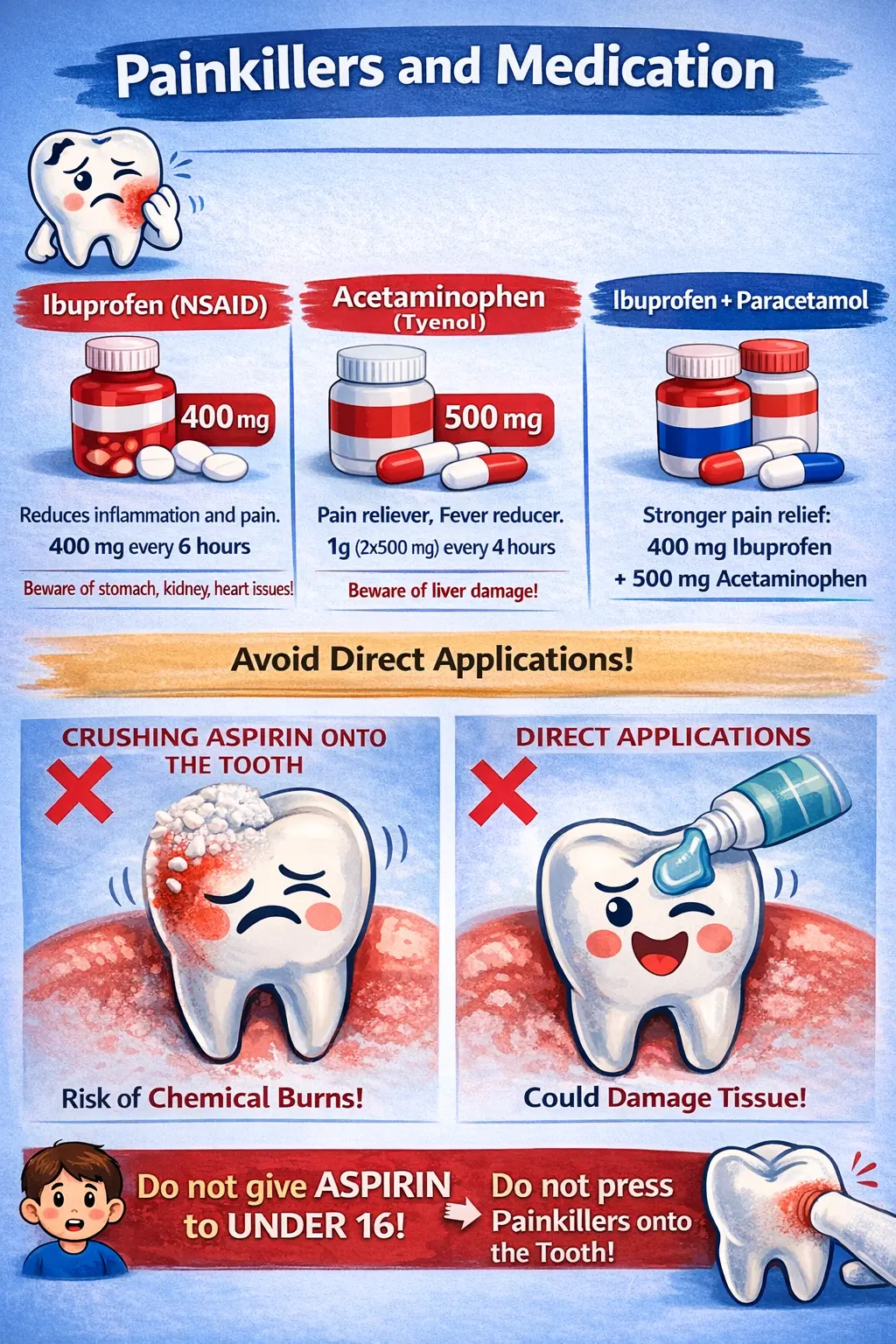
Ibuprofen (NSAID): Ibuprofen (an NSAID) reduces inflammation and pain. It works quickly and can ease pain for hours. For adults, 400 mg tablets can usually be taken every 6 hours (max 1200–2400 mg per day).
Paracetamol (Acetaminophen): Use caution if you have stomach ulcers/bleeding, kidney or heart problems, asthma, or an NSAID allergy. Paracetamol (acetaminophen) is a pain reliever and fever reducer. It's the primary option for people who can't use NSAIDs. On average, it starts working within about 1 hour and lasts a few hours. For adults, it's typically taken as 1 g (2 tablets) of 500 mg, can be repeated every 4 hours, and the daily maximum of 4 g should not be exceeded. Overdosing can cause liver damage, so be careful not to exceed the dose.
Combination Use: Taking ibuprofen and paracetamol together, since they work in different ways, can provide more effective pain relief. For example, 400 mg ibuprofen + 500 mg paracetamol can be taken together. Make sure you stay within the maximum daily dose for both medications.
Avoid aspirin and topical applications: Placing aspirin directly on the tooth or gum can cause serious chemical burns. Also, giving aspirin to children under 16 is absolutely not recommended. Pressing a painkiller against the tooth isn't “quick relief”—it's a risk of tissue damage.
Gargles and mouth rinses
Warm saltwater rinse: Dissolve half a teaspoon of salt in a mouthful of warm water and gargle (don't swallow). It can be soothing through mechanical cleansing and a mild antiseptic effect. Even though the effect is short-lived, it can take the edge off the pain. (The NHS recommends this for toothache.) It isn't recommended for children due to the risk of swallowing. Chlorhexidine mouthwash: It's effective for gum inflammation and plaque control, but it isn't expected to stop tooth pain immediately. Routine short-term use (with your dentist's recommendation) can reduce plaque. Because side effects can include staining on teeth/tongue, taste changes, and mouth irritation, don't use it long term. It isn't recommended for children under 6.
Natural methods
With severe tooth pain, natural methods can offer some relief, but if the pain is very intense they usually aren't enough.
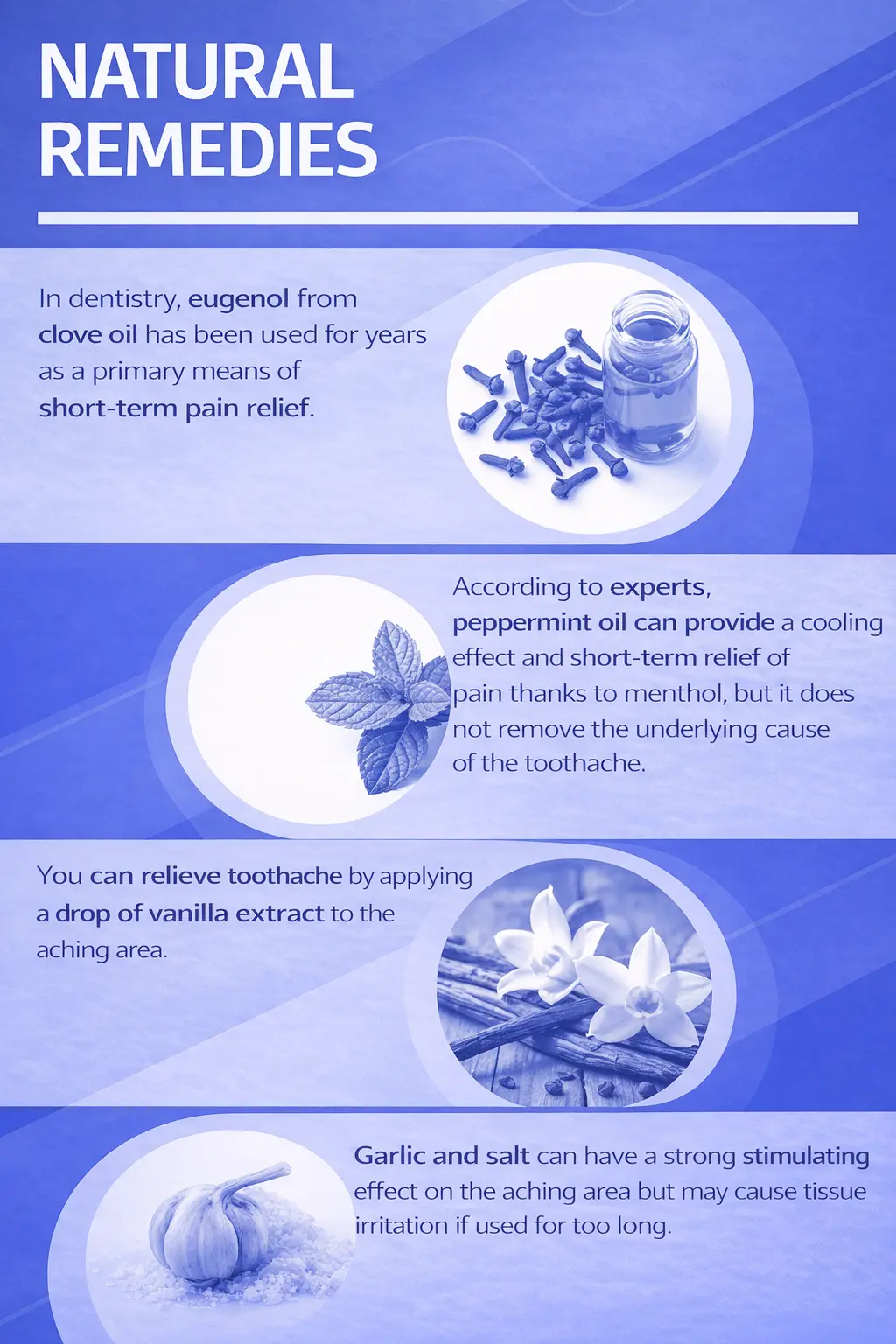
Clove oil (eugenol): Clove oil is a natural local anesthetic. Even if it doesn't reduce inflammation, it can work as a short-term pain reliever. Using a cotton swab, apply a very small amount to the painful area (for 1–2 minutes). Its effect starts within a few minutes, but it doesn't last long. Don't swallow it; if swallowed, it can be toxic. It should not be used in young children. Clove powder: The powdered form of clove can be used in a similar way, but because it isn't standardized, its effect is uncertain. You can mix some clove powder with a little liquid oil into a paste and apply it to the painful tooth.
Coconut oil: Coconut oil is usually used as a carrier/diluent for essential oils (clove, mint, etc.). On its own, it isn't an analgesic for toothache. If you don't have an allergy, you can use a few drops to dilute an essential oil.
Peppermint oil (menthol): Menthol can reduce the perception of pain by creating a cooling sensation. It's quite effective when used together with clove oil. A very small amount of peppermint oil can be applied by letting it touch the painful area for a few minutes. Because of its high menthol content, it can irritate the mucosa; in children, gargling/topical use requires caution.
Peppermint tea bag: Briefly pressing a warm peppermint tea bag against the painful tooth can reduce swelling and the feeling of pain. (Pay close attention to the temperature; if it's too hot, it can cause burns.) (Keep in mind the child/choking risk.)
Garlic and salt: Garlic contains compounds like allicin, but putting crushed garlic on a tooth can cause a chemical burn. For that reason, it should be applied only briefly and then rinsed off with water. It can be especially risky if you try to apply a garlic + salt paste together.
Vanilla extract: In the case of toothache, a small amount of vanilla extract can also be applied. Vanilla extract's effect is very limited, it carries an irritation risk, and it creates a swallowing hazard for children.
Clove oil on a cotton ball: Putting a tiny amount of clove oil on a cotton ball and pressing it onto the tooth for 5–10 minutes may give a temporary effect. Again, it should never be used in children.
Cold compress and physical methods
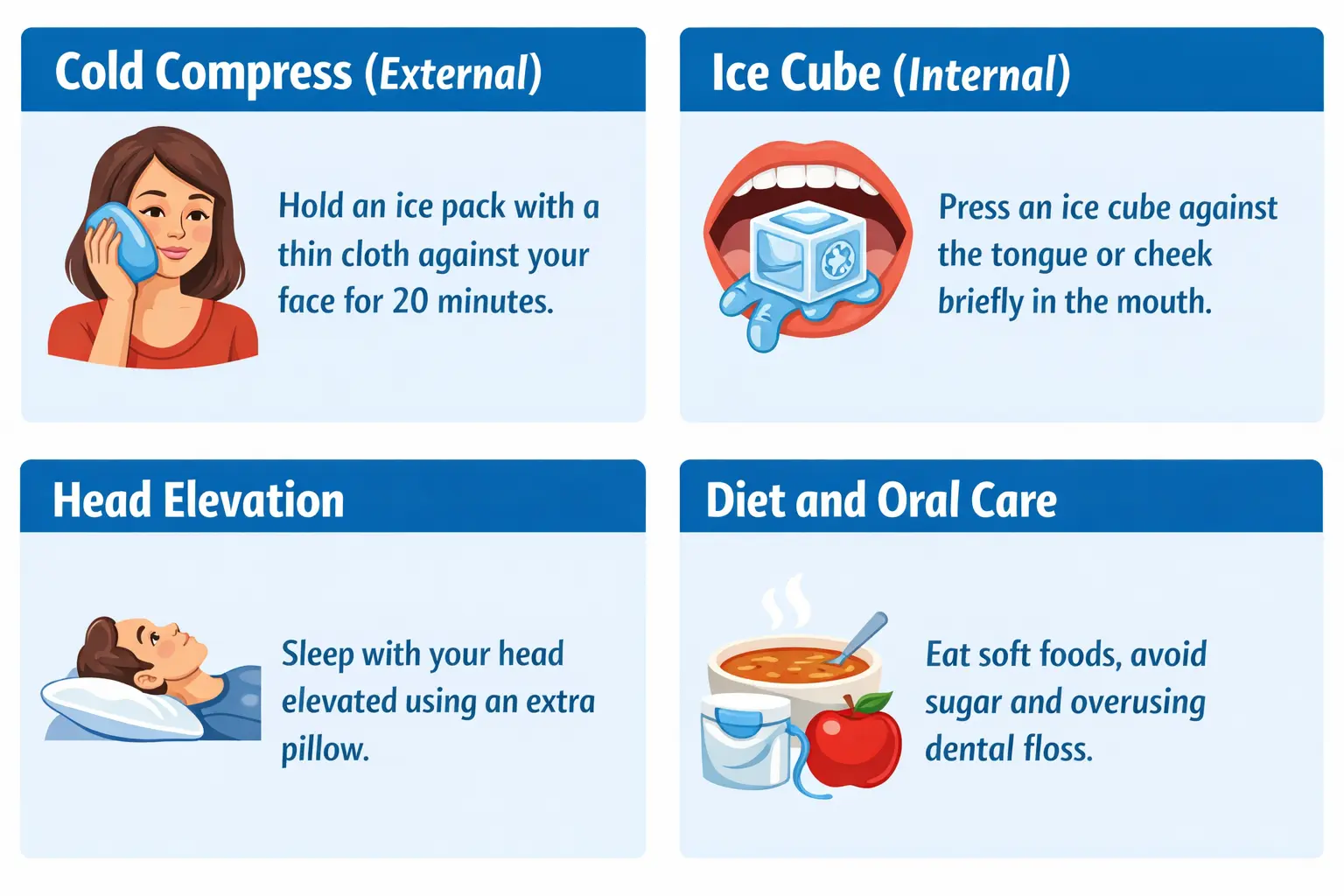
Cold compress (outside): Applying ice or an ice pack to the outside of the face reduces pain and helps limit swelling. Keep it on your face for 20 minutes with a thin cloth in between, then take a break. (It's often recommended, especially to prevent swelling after a tooth extraction.) The effect is short-lived, and it shouldn't be used for long periods (overuse can cause a cold burn on the painful area).
Ice cube (inside): Although it may be suggested to touch an ice cube directly to the tooth inside your mouth, it can irritate the area if it's very sensitive. Try applying it briefly by holding the ice behind your tongue or pressing it gently from inside the cheek. Be careful—extreme cold sensitivity can make the pain worse.
Head elevation: Keeping your head raised when you sleep at night can ease throbbing pain. Lie at an incline by putting an extra pillow under your head. (In post-op surgical aftercare, this is also recommended to reduce facial swelling while you're lying down.)
Diet and oral care: During a painful period, avoid very hot/very cold and sugary foods, and choose soft foods. Since sugar increases the risk of tooth decay, stay away from it both in the moment and over the long term. If food is stuck between your teeth (and the pain is specifically there), you can carefully try cleaning with floss, but stop right away if the pain increases. (Because around an inflamed tooth, flossing can cause bleeding/discomfort.)
Applying Pressure to Acupressure Points:
With tooth pain, applying pressure to the relevant acupuncture points can reduce the pain somewhat. However, as the pain gets more severe, the effect of acupuncture will also start to decrease. Applying pressure is recommended on points such as the tip of the chin, the groove above the upper lip, the wrist, the space between the fingers (LI4), and the inside of the elbow.
In theory, it can distract you and reduce the sensation of pain. It isn't reliable analgesia on its own, but if you want to try it, you can apply pressure for 10–15 seconds to places like the raised area of skin between the thumb and index finger (LI4) or the point on the chin tip (a shallow hollow). But if you have the listed “signs that point to an abscess” (swelling, fever), don't spend time on acupressure.
When should you seek emergency help?
Some signs point to an emergency, and you need to go to a healthcare facility right away instead of waiting. If you have any of the following, get medical help immediately: Sudden swelling of the face or around the eyes, difficulty breathing/swallowing, or trouble speaking (if this happens, call A&E).
If you have tooth pain along with a high fever, jaw/facial swelling, inability to open your mouth, or bad breath, see an emergency dentist or a doctor. (Remember: A dental abscess doesn't go away on its own; it needs urgent treatment.) If you don't have these serious signs, buy time at home by following the three-step emergency plan below and get a dental appointment right away.
Conclusion
Home methods can suppress the pain for a short time, but they don't eliminate the problem. The real solution is a dentist's intervention that treats the problem at its source. Especially with infections like an abscess, waiting increases the risk; these situations don't resolve on their own.
The longer you delay, the pain can increase, the infection can spread, and treatment can become more difficult. Whereas early treatment often provides a solution that's both faster and more comfortable. If the pain lasts more than two days, or you have symptoms like swelling, fever, or difficulty breathing, don't put it off and make an appointment with a dentist.

Dt. Dilek Aksu Güler
Cosmetic Dentist, Dental Implant Specialist
Dt. Dilek Aksu Güler specializes in implantology, digital smile design and cosmetic dentistry. She is the founding dentist of Antlara Dental Oral and Dental Health Clinic.