
Without an underlying issue, healthy gums typically do not bleed. Gum bleeding is frequently an indication of a number of gum conditions, including gingivitis, which is typically brought on by bacterial plaque. In the early stages, gum bleeding can usually be reversed with proper oral hygiene. Nonetheless, deficiencies in vitamins, hormonal fluctuations, or specific systemic diseases may also induce gum haemorrhaging.
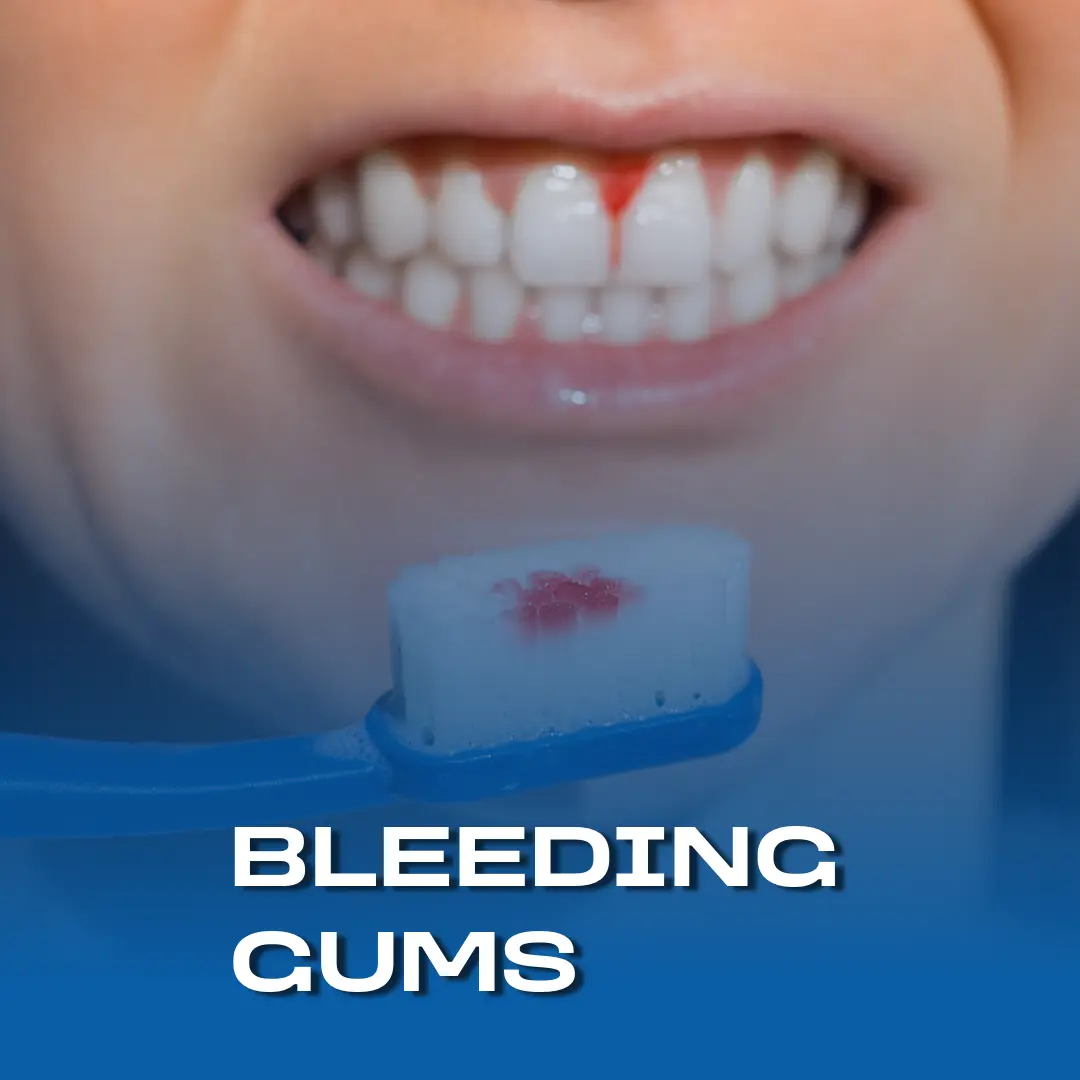
Yet, research suggests that bleeding gums may be associated with a person's overall health and even specific systemic diseases, rather than just being an oral issue. Research has shown a connection between respiratory illnesses and bleeding gums, especially in young people.
What causes bleeding gums?
Healthy gums are characterised by the absence of inflammation, including redness, swelling, or bleeding. As a result, even the slightest bleeding may be an early indicator of a gum-related issue and should not be disregarded.
Inflammation of the gums may arise as a consequence of hormonal fluctuations, vitamin deficiencies, certain blood disorders, incorrect brushing techniques, advanced periodontal disease, or the administration of specific medications.
1. Dental plaque and tartar
The most prevalent cause of bleeding gums is the accumulation of bacterial plaque at the transition point between the gum and the tooth, as well as between the teeth. Over time, this plaque will harden into tartar and induce gum inflammation if it is not removed.
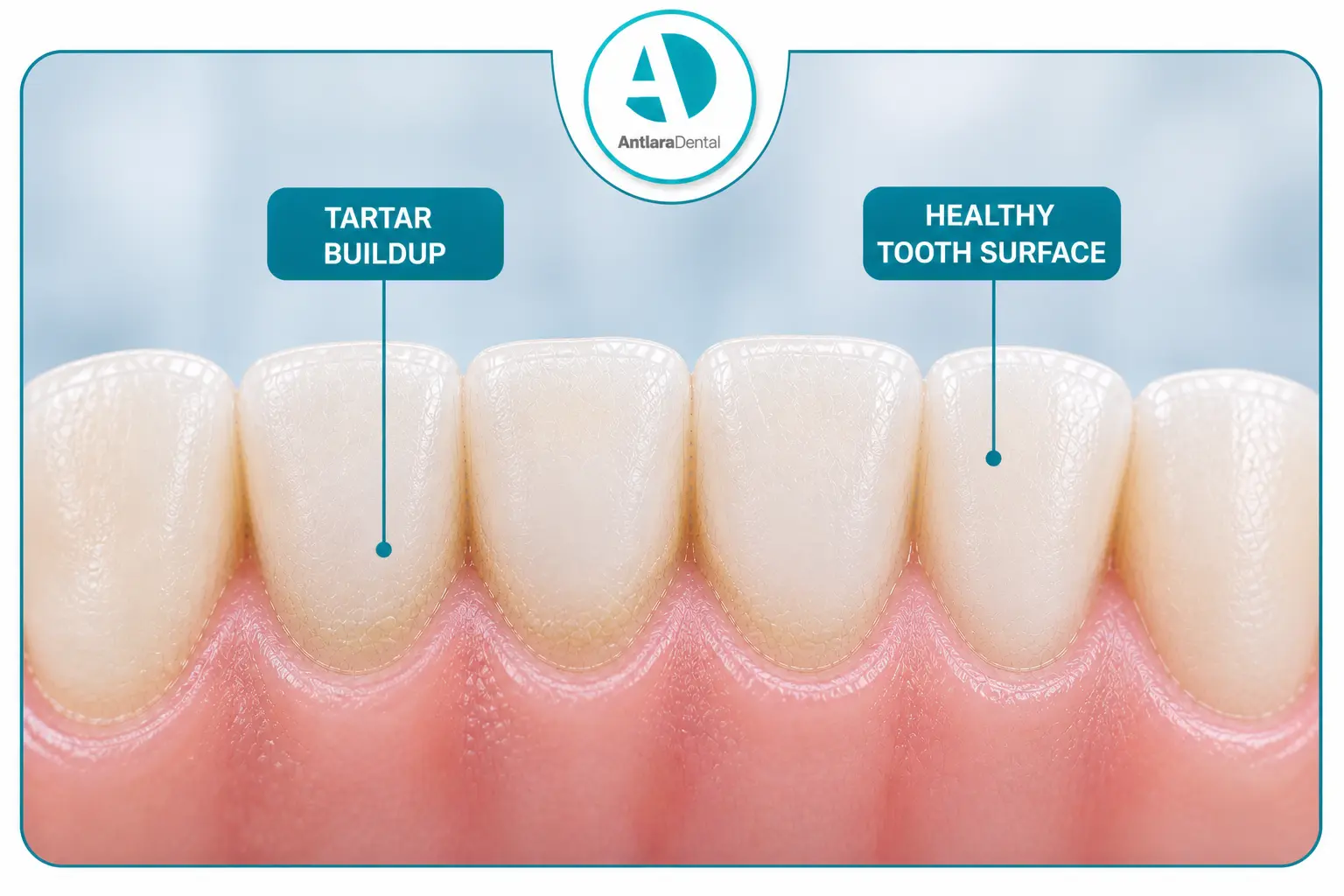
In the initial stages of this process, gum inflammation is typically limited to the gum tissue. For the most part, this condition can be reversed through consistent and appropriate oral hygiene, which minimises plaque accumulation. However, if plaque and tartar remain, the inflammation may progress.
2. Gum inflammation (gingivitis)
Gingivitis resulting from plaque accumulation is a localised inflammation of the gums. The gums typically exhibit redness, swelling, and a propensity to bleed during brushing or dental examinations. Still, the bone and tissues that support the teeth are not permanently damaged at this point. That is, the gums can get healthy again if the plaque is taken off.
The disease may worsen if this condition continues for an extended period of time and the patient also has other risk factors, like diabetes or smoking. At this stage, the ligaments and bone supporting the tooth begin to deteriorate. This is known as periodontitis. Unfortunately, the loss of tissue and bone that occurs at this stage is irreversible.
According to a study conducted in 2018, for gums to be considered healthy, there must be less than 10% of the mouth showing bleeding areas, and gum pockets must not be deeper than 3 mm. If bleeding exceeds 10% but there is no loss of the tissues holding the tooth in place, this condition is classified as gingivitis, or inflammation of the gums.
This inflammation is further classified as follows:
- If it is between 10% and 30%, it is referred to as limited (localised) gingivitis; if it is over 30%, it is referred to as widespread (generalised) gingivitis.
In short, a single spot of bleeding in the mouth is not the same as general inflammation of the gums.
2. Other reasons
Poor interdental cleaning: Tartar forms when plaque accumulates in the spaces between teeth, which occurs when the surfaces between teeth are not adequately cleaned. For this reason, the use of auxiliary products such as dental floss or interdental brushes plays an important role in maintaining gum health.
Poorly fitted fillings and dentures: Certain structural conditions within the mouth can also perpetuate inflammation. Poorly fitted fillings, overhanging restorations, poorly designed dentures or surfaces prone to plaque build-up can increase bacterial retention around the gums, thereby creating conditions conducive to bleeding.
Incorrect brushing habits (brushing too hard, brushing horizontally): Another major cause of bleeding gums is trauma. Using hard-bristled toothbrushes, brushing teeth horizontally and with excessive pressure, or using dental floss with the wrong technique can damage the gums. Over time, such habits can lead to receding gums, sensitivity and bleeding.
Using a hard-bristled toothbrush: The safest approach to daily oral care is to use a soft-bristled toothbrush and clean your teeth using a gentle technique. Avoiding excessive pressure protects your gums and prevents damage that may occur in the long term.
3. The effect of extraoral factors on gum bleeding
- Systemic conditions: Diabetes, blood disorders, clotting disorders and certain hormonal changes can cause the gums to become more sensitive and prone to bleeding.
- Diabetes: Whilst uncontrolled diabetes can increase the risk of gum disease, advanced gum disease can also make it more difficult to control blood sugar levels.
- Vitamin deficiencies: Vitamin C, in particular, is essential for maintaining healthy gum tissue. A deficiency can lead to swelling, sensitivity and bleeding of the gums.
- Dietary habits: An inadequate intake of fruit and vegetables, restrictive diets and certain chronic conditions can have a negative impact on gum health.
- Lifestyle habits: Poor oral hygiene, irregular brushing, failure to clean between teeth, lack of sleep and stress can increase gum bleeding.
How to prevent bleeding gums?

Brushing
The brush should be positioned at an angle of approximately 45° to the gum line and used with small circular or vibrating movements so that it makes contact with both the tooth and the gum. Plaque is then removed using sweeping motions. Applying excessive pressure and using a horizontal ‘sawing’ motion can damage the gums. Electric toothbrushes can also be used as an alternative to manual brushes; models with pressure sensors are particularly useful in preventing excessive pressure.
Interdental cleaning
Brushing alone is not enough, as a toothbrush cannot reach the interdental spaces properly. Gum disease often starts in these areas. Therefore, interdental cleaning should be carried out in addition to brushing. If there is a gap, an interdental brush should be used; if the teeth are very close together, dental floss should be used.
Mouthwashes and home remedies
Therapeutic mouthwashes containing chlorhexidine may reduce plaque and gingivitis when used for a short period in addition to mechanical cleaning. However, side effects such as tooth discolouration, changes in taste and oral sensitivity may occur with use of four weeks or more. For this reason, they should be used as a supportive measure rather than as the primary treatment. Home remedies such as salt water may provide temporary relief, but their therapeutic effects are not scientifically proven. In particular, the regular use of acidic mixtures (such as vinegar) is not recommended. No home remedy can remove tartar.
Diet and Vitamin C
A balanced diet rich in fruit and vegetables supports gum health. Vitamin C is important for gum tissue; a deficiency can lead to swelling, sensitivity and bleeding. However, it is not correct to attribute every instance of bleeding to a vitamin deficiency. The most common cause is plaque build-up. Therefore, dietary support should complement, rather than replace, oral hygiene.
Certain gum bleeding conditions
Below, you can find out what to do if your gums bleed in certain situations.
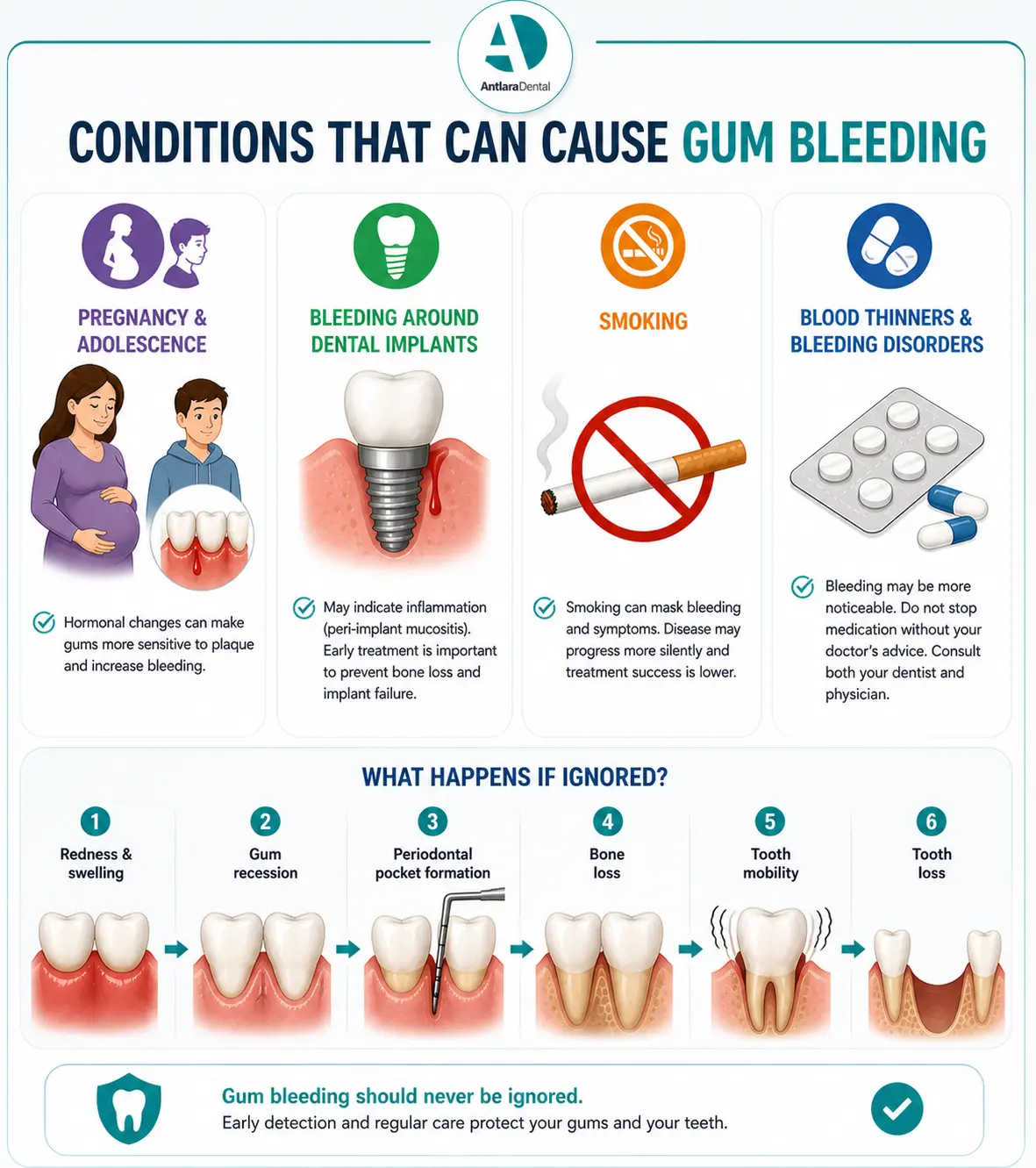
- Pregnancy and adolescence: The gums are more susceptible to plaque buildup, and bleeding may occur more frequently during periods of significant hormonal changes, such as adolescence, the menstrual cycle, and pregnancy.
- Bleeding around the implant: Bleeding even with light touch may indicate inflammation around the implant (peri-implant mucositis). If not addressed promptly, this condition can advance to osseous deterioration and may ultimately result in the loss of the implant.
- Smoking: Smoking is one of the most misleading risk factors for gum disease. It can mask the condition by reducing bleeding; therefore, the absence of bleeding does not mean that the gums are healthy.
- Blood-thinning medications and coagulation disorders: Gum bleeding may be more pronounced in people taking anticoagulant (blood-thinning) medication or in those with a coagulation disorder. However, it is not advisable to stop taking these medications without consulting a doctor.
- What happens if it is left untreated? The most significant risk of bleeding gums is that it usually progresses without causing pain. As a result, it can go unnoticed. If left untreated, the condition may progress as follows:
- Redness and swelling of the gums
- Receding gums
- Formation of periodontal pockets
- Loss of alveolar bone
- Tooth mobility
- Tooth loss
- This progression may lead to irreversible damage.
Conclusions and practical recommendations
Gum bleeding is an important warning sign that can often be brought under control in the early stages but which can progress to irreversible tissue loss if neglected. The primary cause is usually bacterial plaque accumulating along the gum line and poor oral hygiene habits. However, delayed intervention, incorrect habits, hormonal changes, systemic diseases or problems around dental implants can further exacerbate the condition. Smoking, meanwhile, can complicate the situation further by masking the symptoms.

Dt. Dilek Aksu Güler
Cosmetic Dentist, Dental Implant Specialist
Dt. Dilek Aksu Güler specializes in implantology, digital smile design and cosmetic dentistry. She is the founding dentist of Antlara Dental Oral and Dental Health Clinic.