
Zirconium and porcelain crowns are currently the two veneer materials most people choose. Both materials do a great job of looking like real teeth; however, your choice should be based on your aesthetic expectations, durability requirements, usage area, and habits.
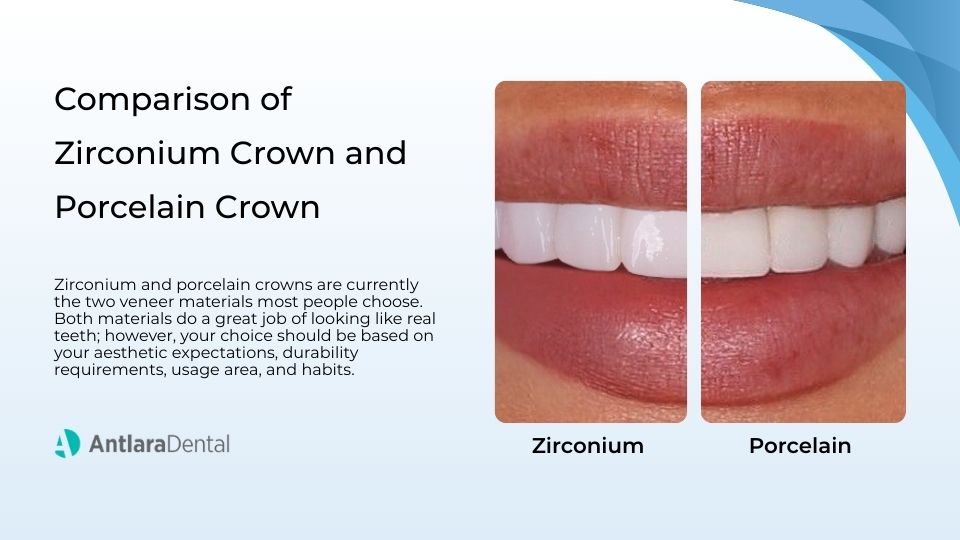
This article provides an in-depth analysis of zirconium and porcelain crowns, comparing them on every front: appearance, durability, longevity, expert opinions, and patient experiences. If you are looking for answers to questions such as "Which crown looks more natural?", "Which one lasts longer?" or "What is the best option for my smile aesthetics?", read on.
Aesthetic comparison;
Porcelain crowns are often thought of as more aesthetically pleasing than zirconium ones. Nevertheless, zirconium crowns provide a blend of visual appeal and durability. Here, the patient and dentist should work together to make the best decision based on the tooth's position and the patient's aesthetic expectations.
Light transmittance and natural appearance
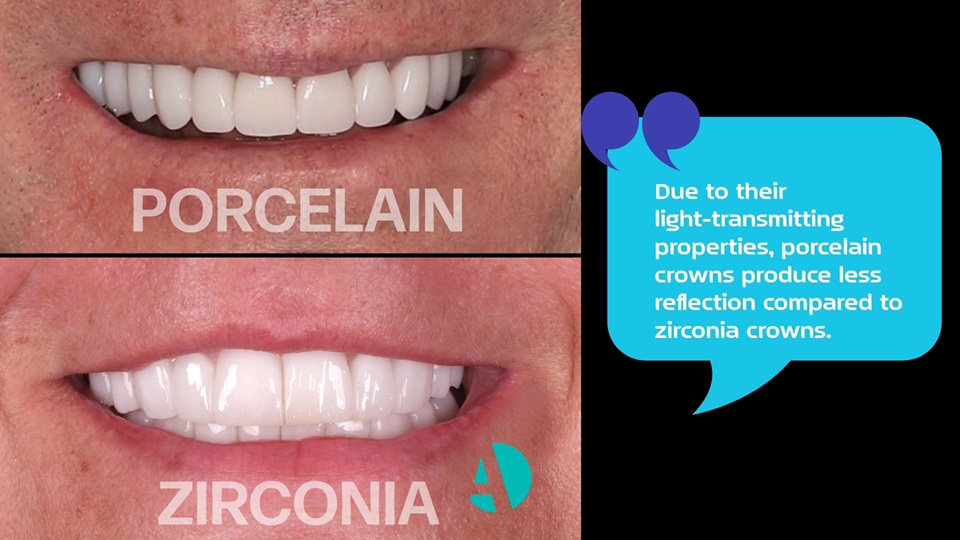
Light transmission is one of the most aesthetically noticeable differences. Porcelain crowns, especially the metal-free full ceramic versions, transmit light very close to natural tooth enamel. This gives the tooth a vibrant and natural shine. While high-transparency zirconium crowns are now available, they still don't let light through nearly as well as full porcelain. Zirconium veneers can take on a more muted, opaque look as a result.
Colour harmony and aesthetic depth
Porcelain crowns can be produced in multiple layers to mimic the tooth colour exactly. Thanks to these layers, the tooth is given depth, and colour transitions are more natural. In addition, fine details such as shading, colour transitions and opacity can be applied more precisely with porcelain crowns. In this way, fine stains, translucent areas or light plays in the natural structure of the tooth can be imitated. In zirconium, these details remain limited.
Compatibility with gums
Porcelain crowns create a quite natural transition in the area where they merge with the gum. The high light transmittance prevents the formation of a dark line on the gum. This is a great advantage, especially for patients whose gum level is visible when smiling. Zirconium crowns are also metal-free and gum-friendly; however, they may not offer as smooth an appearance as porcelain in aesthetic transitions.
Personalised aesthetic applications
One of the biggest advantages of porcelain crowns is that they can be shaped in detail and artistically in the laboratory environment. Dental technicians can process porcelain crowns in layers, so that details such as enamel cracks, microspots on the natural tooth surface, age-related shade differences can be reflected exactly on the crown. This kind of customisation is of great importance for patients who want to achieve a natural and personal smile in anterior dental aesthetics.
Evaluation in terms of durability
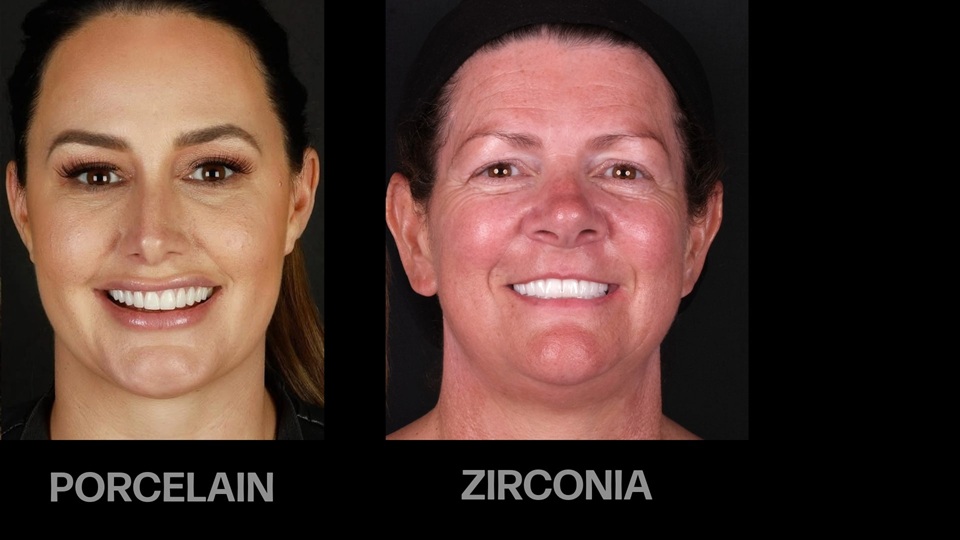
The longevity of zirconium crowns is comparable; in fact, meta-analyses have shown that zirconium single crowns have an average 5-year survival rate of 98.3%. In the long term, zirconium crowns can last 10-20 years or more with appropriate care. The average life expectancy for metal-supported porcelain veneers is around 5-15 years. In addition, according to new studies, properly polished zirconium surfaces cause much less opposing tooth enamel wear compared to other ceramic materials such as porcelain.
In this respect, zirconium crowns are preferred in patients with teeth clenching (bruxism) or grinding habits. Both literature and clinical practice show that zirconium crowns have the advantage of high fracture resistance and long-term use, while porcelain crowns are frequently used in front teeth for their natural appearance.
Areas of use:
Modern transparent materials have greatly enhanced the aesthetic properties of zirconium crowns, which have led to their widespread use on both back and front teeth. Thanks to this advancement, zirconium is now the material of choice for applications in the anterior region, where it provides long-lasting durability and aesthetically pleasing results that imitate the skin.
Having said that, zirconium and porcelain crowns may typically have different optimal use areas. While zirconium crowns are generally used in posterior teeth (close to the molars), in areas exposed to high chewing force; porcelain crowns stand out especially in front teeth where aesthetic expectations are high.
In cases where there is an excessive crowding of teeth or when building an under-bridge, the strong structure of zirconium offers considerable benefits. Also, people who clench or grind their teeth (bruxism) tend to find it more durable than porcelain.
Advantages and disadvantages:
Zirconium and porcelain crowns have their advantages and disadvantages, which are detailed below.
Advantages of zirconium crowns
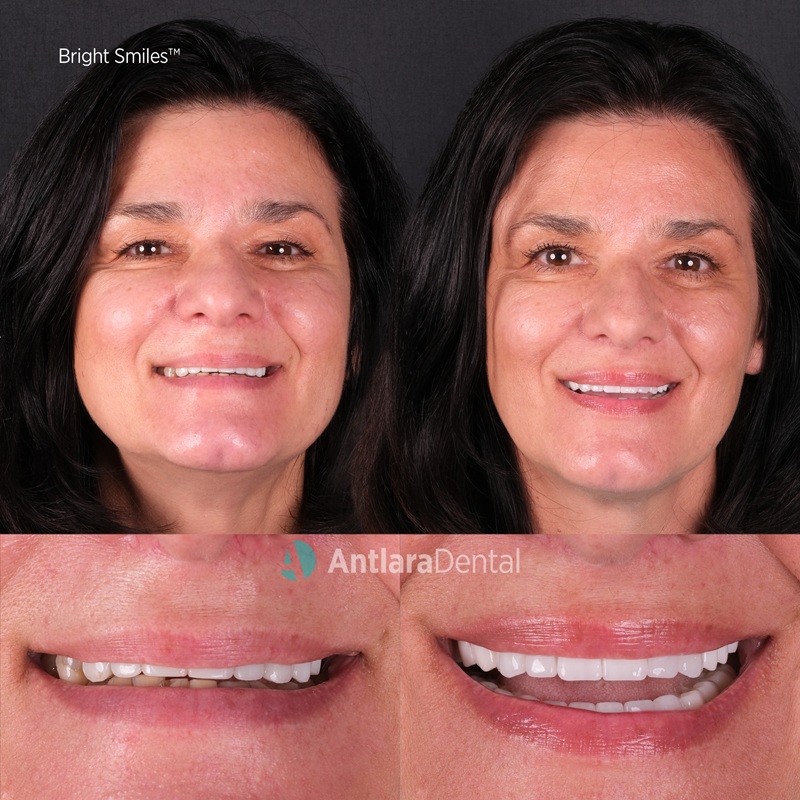
Zirconium crowns offer long-lasting use thanks to their high durability and fracture resistance. These qualities make them a safe choice, particularly for the back teeth, which endure the most intense chewing forces. The absence of metal makes them biocompatible, which in turn removes any possibility of allergies. There won't be any unsightly issues, like dark lines in the gums, caused by the lack of metal infrastructure.
Zirconium material has a wide range of colours that can imitate the natural tooth colour. New generation zirconiums with high transparency provide an aesthetic very close to natural teeth. Furthermore, polished zirconium surfaces have a negligible abrasive impact on the neighboring teeth.
Disadvantages of zirconium crowns
Previous generations of zirconium were quite opaque and therefore had limited light transmission. Although the versions developed with new technology are more transparent, they may still lag behind porcelain in aesthetics. Zirconium crowns are usually made thicker to maintain structural stability. The procedure may require more material to be removed from the natural tooth, which is a disadvantage, especially in cases where weak or little tooth tissue remains.
In some aesthetic applications, a porcelain layer is added on zirconium. However, this layer may crack or break over time. In addition, the cost of zirconium crowns is generally higher than porcelain crowns.
Advantages of porcelain crowns
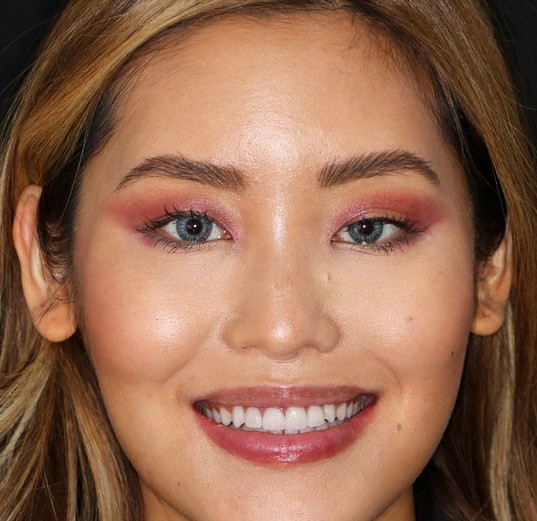
For many years, clinicians have proven the aesthetic success of porcelain crown restorations. Especially in the front teeth, they give very satisfactory results thanks to their natural light transmittance and colour harmony. It is the perfect option for patients who have high standards for appearance in this regard.
The thin preparation of porcelain crowns eliminates the need to file down the tooth before placing them. In addition, its durability is increased when used in combination with a metal substructure. The fact that the method is traditional and widespread makes it easy to work with this material both at the laboratory and clinical level.
Disadvantages of porcelain crowns
In metal-supported porcelain crowns, the metal infrastructure may become visible when the gums begin to recede over the years. This can cause an aesthetically unfavorable appearance. The porcelain outer layer can wear down over time; even cracking or small fractures can be seen with hard foods.
Older types of high-hardness glossy porcelain can have an abrasive effect on opposing teeth. In addition, porcelain crowns with metal in the substructure may cause hot-cold sensitivity in some patients. In general, porcelain crowns are not as strong as zirconium and therefore, care should be taken when using them on the back teeth.
Conclusion: Choose what's best for you
The general consensus among dentists is that zirconium is a durable material, particularly for back teeth. It is a safer option if there are problems such as grinding and squeezing. By and large, patients who get zirconium crowns report that they are pleased with how long they last. Conversely, those who use porcelain appreciate the sensation of "naturalness," yet may express dissatisfaction regarding potential cracks that can develop over time. The following table summarizes the characteristics of both types of crowns.
|
Criteria |
Zirconium Crown |
Porcelain Crown |
|
Resilience |
Very high |
High (if metal-backed) |
|
Aesthetics |
High (especially new generation) |
Highest |
|
Area of Use |
Back teeth, bridges |
Front teeth |
|
Texture Matching |
Biocompatible, no allergy risk |
There may be sensitivity if there is metal |
|
Cost |
Usually higher |
More suitable options available |
A good smile changes everything. Let's make the right choice together for a healthy and aesthetic smile!
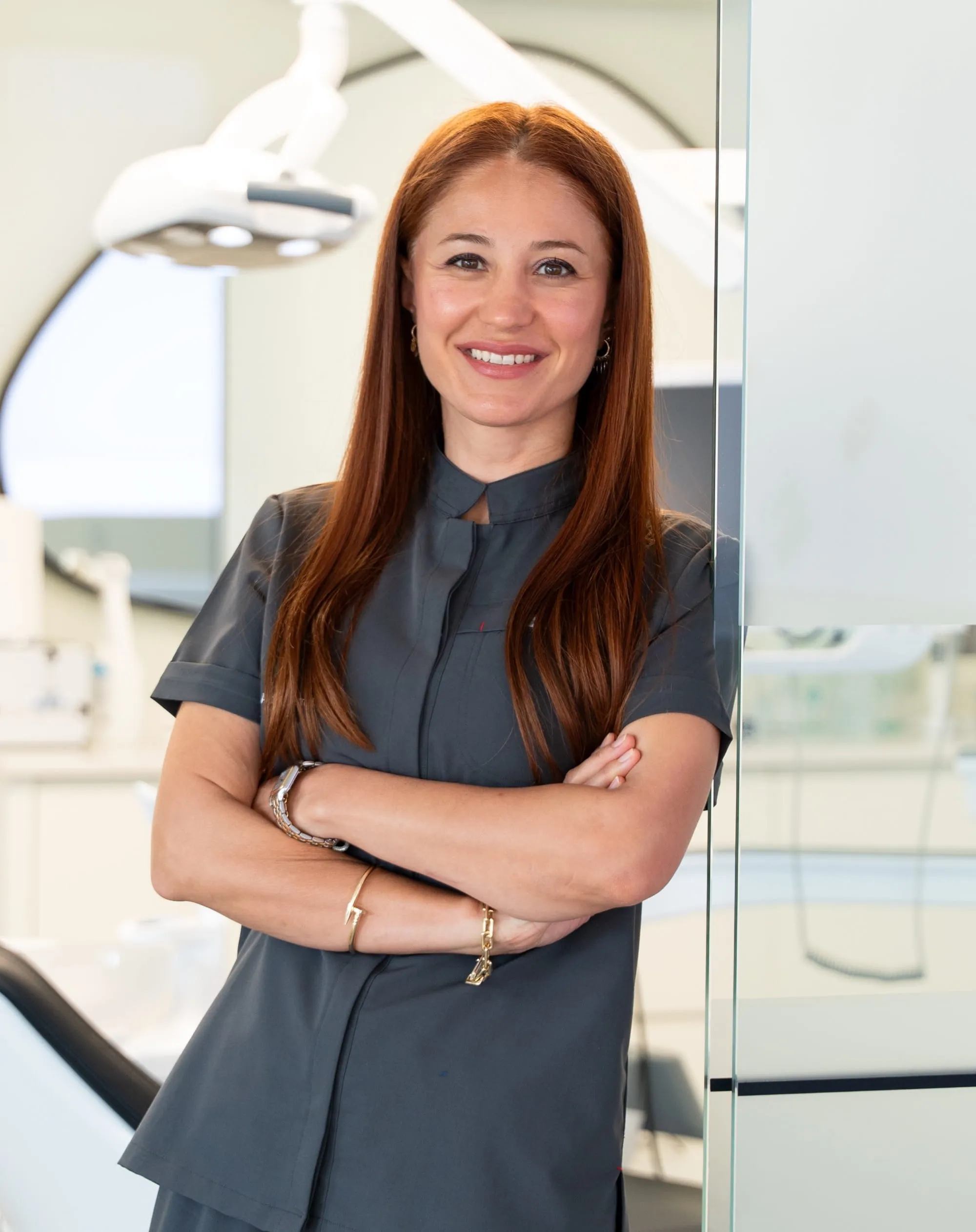
Dt. Dilek Aksu Güler
Cosmetic Dentist, Dental Implant Specialist
Dt. Dilek Aksu Güler specializes in implantology, digital smile design and cosmetic dentistry. She is the founding dentist of Antlara Dental Oral and Dental Health Clinic.